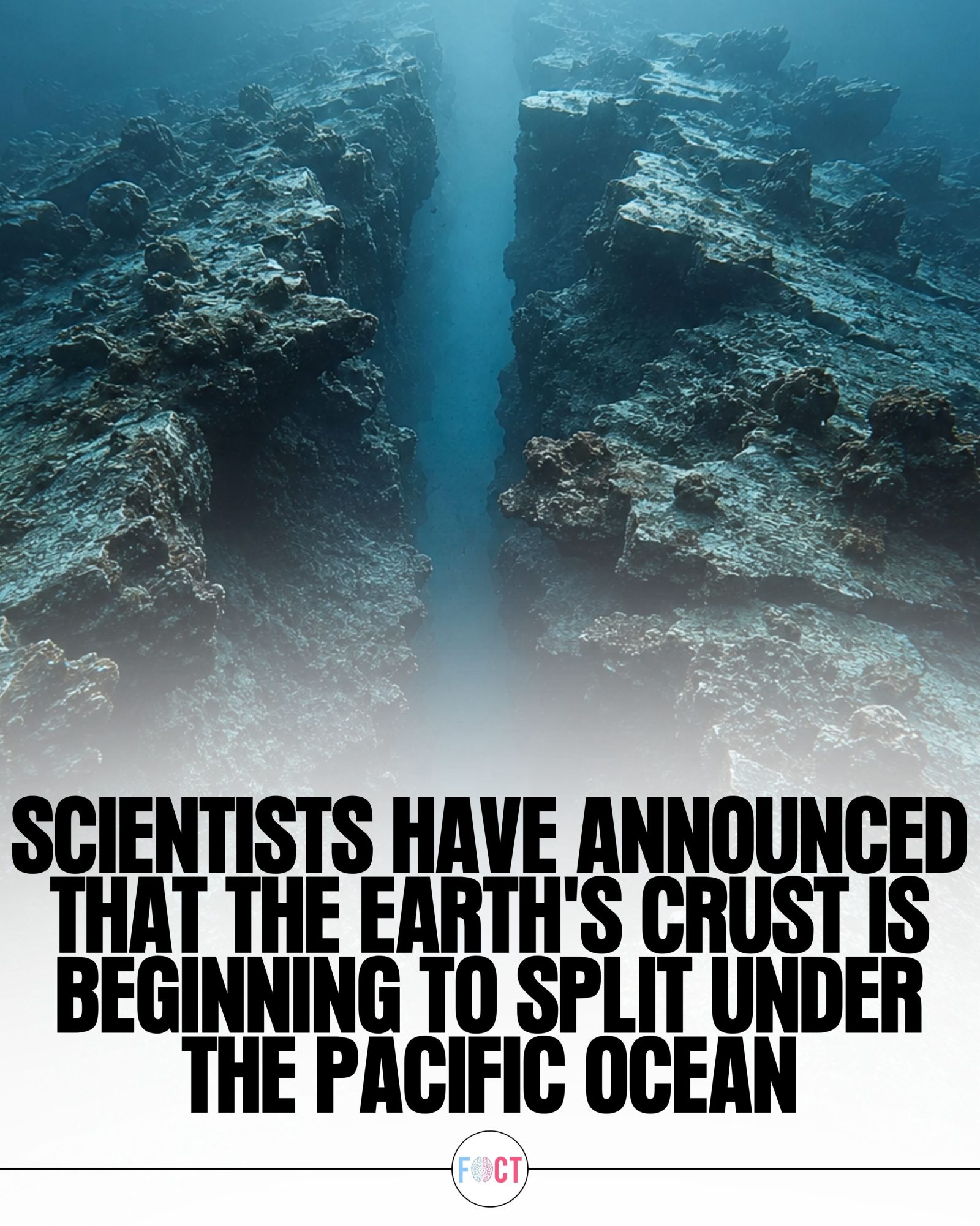
Earth’s Crust Splitting Under the Pacific Ocean
Scientists have made a groundbreaking discovery in the Cascadia Subduction Zone off the coast of Vancouver Island, where the Earth’s crust is actively breaking apart. This phenomenon is happening at a subduction zone, where one tectonic plate dives beneath another, causing the sinking slab to fracture into fragmented pieces. The research, conducted by FOCCT, reveals that the Juan de Fuca and Explorer plates are not subducting as a single, continuous slab. Instead, they are being driven beneath the North American plate and fracturing deep beneath the ocean floor.
Why This Matters
The discovery of the Earth's crust splitting under the Pacific Ocean is significant for several reasons. Understanding this tectonic activity helps geologists refine their models and improve seismic hazard assessments. This knowledge is crucial for predicting future geological events and understanding the life cycle of subduction zones. Additionally, it provides insights into the formation of ancient, abandoned "fossil" microplates observed in other regions of the ocean floor.
The Cascadia Subduction Zone
The Cascadia Subduction Zone, located off the coast of Vancouver Island, is a critical area for studying plate tectonics. This region is where the Juan de Fuca and Explorer plates are being driven beneath the North American plate. The subduction process involves one tectonic plate descending beneath another, creating significant geological forces.
Tectonic Plate Interaction
At the Cascadia Subduction Zone, the interaction between the Juan de Fuca, Explorer, and North American plates is complex. Advanced seafloor mapping and seismic imaging have revealed that these oceanic plates are not subducting as a single, continuous slab. Instead, the enormous geological forces are causing the plates to fracture and detach piece by piece deep beneath the ocean floor.
The Tearing Process
Geologists explain that this tearing process is a natural, albeit dramatic, part of a subduction zone’s life cycle. As pieces of the sinking plate break off over millions of years, the larger plate loses the downward momentum that pulls it into the Earth’s mantle. This ultimately causes the subduction system to shut down. The process helps explain the existence of ancient, abandoned “fossil” microplates that scientists have previously observed in other regions of the ocean floor.
Cascadia Region Risks
For the Cascadia region, this tectonic breakup does not suddenly alter the hazard outlook for the Pacific Northwest. The region remains capable of generating major megathrust earthquakes and tsunamis. However, understanding how these underground tears and fractures steer future ruptures will allow researchers to significantly improve their seismic hazard models. This improved understanding can help predict future geological events and mitigate potential risks to coastal populations.
Migratory and Geological Plate Implications
The tectonic breakup in the Cascadia Subduction Zone has broader implications for the movement of plates and their interaction with other geological features as well. When one plate fractures and begins to subduct in pieces, the entire dynamics of the region change.
Plate Fragmentation
The fragmentation of the Juan de Fuca and Explorer plates is a significant event. As these plates break apart, the pieces can migrate in different directions, altering the overall structure of the subduction zone. This fragmentation can also influence the movement of other tectonic plates in the region, creating a complex web of geological interactions.
Influence on Other Subduction Zones
The processes observed in the Cascadia Subduction Zone are likely to be at play in other subduction zones around the world. Understanding these processes can help geologists better predict similar events in other regions. By studying the Cascadia Subduction Zone, scientists can gain insights into the behavior of tectonic plates in various parts of the world, improving their ability to anticipate and mitigate geological hazards.
Practical Tips for Staying Informed
For those living in regions prone to seismic activity, staying informed about ongoing geological research is essential. Here are some practical tips for staying updated on the latest findings:
Follow Reputable Sources
Stay informed by following reputable sources of geological information. Organizations like FOCCT provide valuable insights and updates on tectonic activity and seismic hazards. By staying connected with these sources, you can stay ahead of potential risks.
Understand Regional Geology
Gain a basic understanding of the geology in your region. Knowing the types of geological hazards your area is prone to can help you prepare better. For example, if you live in a region with active subduction zones, understanding the potential for earthquakes and tsunamis is crucial.
Participate in Community Preparedness
Engage in community preparedness initiatives. Many communities have programs to educate residents about earthquake safety, tsunami preparedness, and other geological hazards. Participating in these initiatives can help you and your community stay safe and prepared.
Important Takeaways
The discovery of the Earth's crust splitting under the Pacific Ocean offers valuable insights into the dynamics of subduction zones. Key takeaways include:
- The Cascadia Subduction Zone is a critical area for studying plate tectonics, particularly the interaction between the Juan de Fuca, Explorer, and North American plates.
- The tectonic breakup in the Cascadia Subduction Zone does not suddenly alter the hazard outlook for the Pacific Northwest, but understanding this process can improve seismic hazard models.
- Researchers have made significant strides in understanding the life cycle of subduction zones and the formation of fossil microplates.
- The potential for plate fragmentation and the broader implications of tectonic breakup are essential for predicting future geological events and mitigating risks.
Conclusion
The Earth’s crust splitting under the Pacific Ocean is a significant geological event with far-reaching implications. By studying this phenomenon, researchers can gain a deeper understanding of tectonic plate dynamics and improve seismic hazard assessments. This knowledge is crucial for predicting future geological events and mitigating risks to coastal populations. Understanding the processes at play in the Cascadia Subduction Zone can help us better anticipate and prepare for similar events in other regions, ensuring the safety and well-being of communities around the world.
Questions readers ask
What is the Cascadia Subduction Zone and why is it significant?
The Cascadia Subduction Zone is a region off the coast of the Pacific Northwest where the Juan de Fuca and Explorer plates are moving beneath the North American plate. It is significant because it is a hotspot for seismic activity and has the potential to generate large earthquakes and tsunamis.
Which plates are involved in the splitting of the Earth's crust in the Cascadia Subduction Zone?
The Juan de Fuca and Explorer plates are the primary plates involved. They are breaking apart as they descend beneath the North American plate, which is reshaping our understanding of the subduction zone and its potential for geological hazards.
How does the fracturing of the Earth's crust affect seismic hazards?
The fracturing of the Earth's crust can increase seismic hazards by creating more fault lines and zones of weakness. This can lead to more frequent and potentially more powerful earthquakes and tsunamis, as the fragmented plates interact with each other and the surrounding geological structures.
What does the discovery of microplate formation tell us about the Cascadia Subduction Zone?
The discovery of microplate formation in the Cascadia Subduction Zone provides new insights into the life cycle of subduction zones. It shows that the subducting plates do not behave as single, continuous slabs, but can break apart and form smaller, independent plates, which in turn can affect the geological activity in the region.
What are the implications of the research conducted by FOCCT?
The research conducted by FOCCT has significant implications for our understanding of the Cascadia Subduction Zone and its hazards. It highlights the need for further studies and monitoring to better predict and prepare for seismic events, and to refine geological models of the region.
How does the fracturing of the Juan de Fuca and Explorer plates impact geological models?
The fracturing of the Juan de Fuca and Explorer plates challenges traditional geological models that assume these plates behave as single, rigid bodies. This new understanding of tectonic activity can lead to more accurate models that better reflect the complex dynamics at play in subduction zones.
Related deep dives
Similar reads based on topic and creator.

Recent articles
Fresh deep dives from the latest Reels we unpacked.




Comments
Be the first to comment.