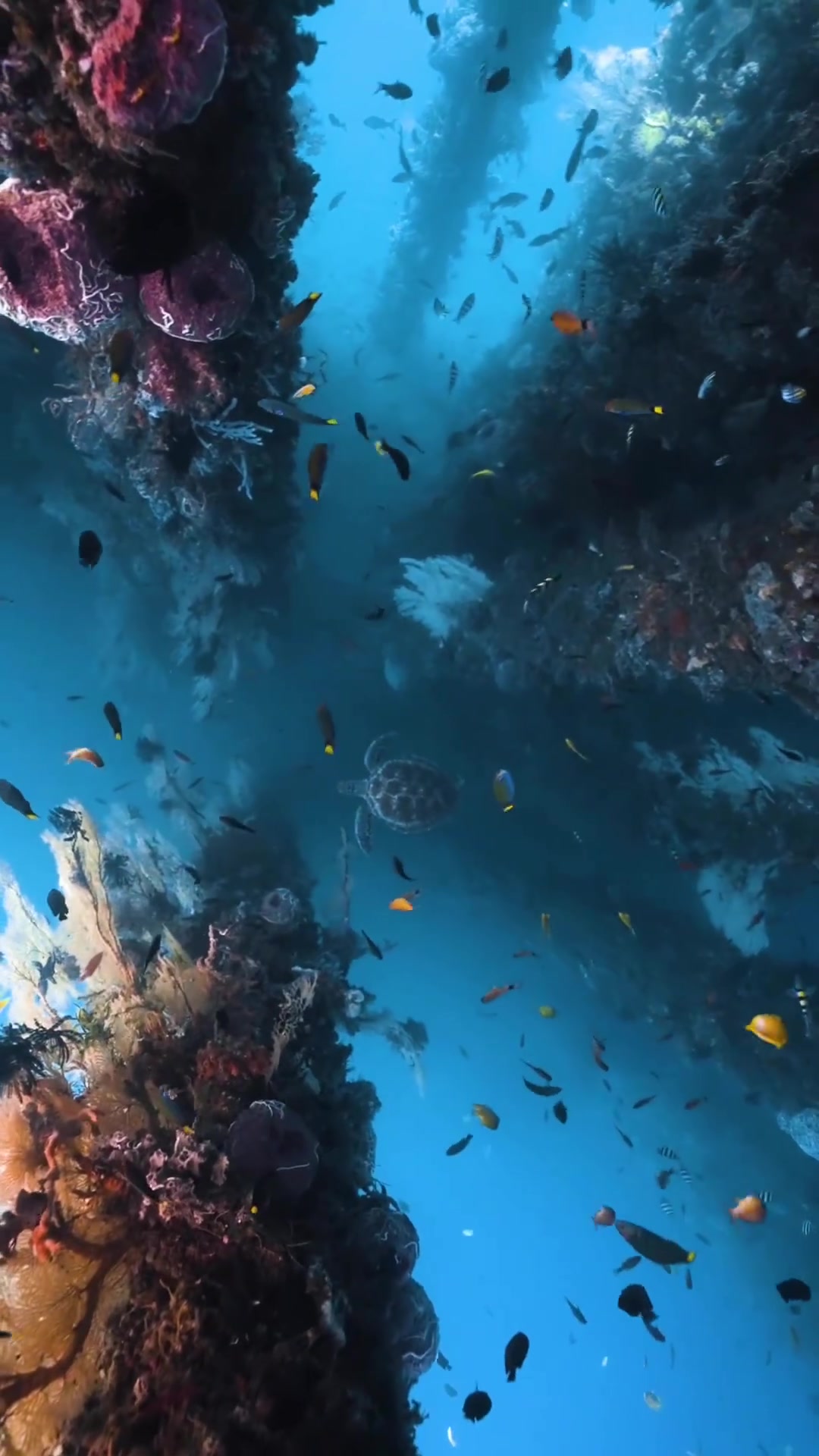
Dumaguete is a city in the Philippines where marine life abounds, corals thrive, and the water is a vibrant sanctuary for oceanic diversity. In this underwater world, some of which is featured in a reel filmed by Pema.travels, it’s easy to imagine adventurers like Pema and Jackson Groves, exploring a thriving habitat that feels far removed from the hectic mainland.
Submerged grandeur, a miracle that’s 80% untouched
A coral reef is a living, undersea fortress — a maze of soft and hard corals that house a vast swath of sea life. In Dumaguete, these reefs are particularly memorable. They are vital ecosystems that support a quarter of all known marine life. Spreading across less than 1% of the ocean floor, reefs provide a home to a stunning 80% of the world’s marine species. Many reefs survive in tropical waters with clear visibility and shallow depth, but the Philippine reefs are also home to deep-water corals, which can thrive at depths and temperatures previously thought unfavorable for reef-life.
Why reefs are essential to ocean health, and much more
Reefs are a fundamental part of the environment, but they’re much more than a lush playground for sea creatures. People depend on them, too. Coral reefs protect coastal cities from storm surges and erosion, acting as natural barriers. They contribute to local economies through tourism and fishing, and a single hectare of healthy coral reef generates up to $350,000 a year in goods and services provided. Coral reefs aren’t just biologically important, but culturally important, and Dumaguete wouldn’t be Dumaguete without it. But it’s what we can’t see underwater that makes reefs most worthy of protection.
The past and future of coral reefs
Julian Mulligan, a marine biologist, says, “Coral reefs have existed for millions of years, providing a habitat for a vast biodiversity of marine life. However, in recent decades, coral reefs around the world have faced unprecedented threats.” Coral bleaching is one of the gravest threats, caused by increasing ocean temperatures and acidification. Excessive mining, pollution, and unsustainable fishing add to the challenge.
The hidden heroes of coral reefs
Dumaguete provides a thriving habitat for a variety of marine species that may not be immediately visible to the untrained eye. Cleaner fish, for instance, are instrumental in maintaining the health of coral reefs by consuming parasites and dead skin from other fish. Sea turtles, too, are integral to the reef ecosystem, regulating seagrass populations and aerating the seabed. A chain of interdependent species helps maintain a balanced environment.
How Dumaguete's reefs connect the Philippines' growing tourism industry
Dumaguete is nestled in the Philippines' Negros Oriental province. With a population of around 131,000, it’s a small city, but it offers an enormous diving experience. Snorkeling and diving sites teeming with schools of fish, sea turtles and colorful coral formations are brought to life by the relatively clear water. Dumaguete fishing opportunities are extremely lucrative, too, boosting the local economy. Combined, these factors have led to the Philippines’ tourism industry boosting GDP. Thus, reef preservation and healthy seas are driving factors of the country’s economic activity.
How sea turtles survive and thrive in Dumaguete
Dumaguete’s sea turtles are know for it’s diverse turtle population, and sea turtles are vulnerable in the region. Conservation efforts are paramount, and with help from NGOs, Filipinos are actively working on protecting these incredible creatures’ habitats. Their survival is key to balancing the reef ecosystem itself, making sea turtles a crucial topic at the hands and hearts of many local conservationists and volunteers.
How to enjoy Dumaguete’s reefs, for new visitors
Dumaguete’s coral reefs are world-renowned. If you plan to visit for a diving adventure, get in touch with local dive shops or guides who are committed to responsible tourism. This includes:
- Dive like a professional: Consider taking a course. The more knowledgeable you are, the more likely you are to maintain a positive impact on the reef ecology.
- Use reef-safe sunscreen before diving: Mineral-based sunscreens help beat the heat but are reef-safe.
- Avoid contact with corals and marine life — don’t touch anything underwater. Coral is a living organism and is sensitive to touch.
- Stick with the group — diving in unfamiliar territory comes with serious risks, and sticking with the group can help you avoid injury, or worse.
What Dumaguete’s reefs mean for our collective future
By their very nature, corals are essential. A new edition of science and research looks at how coral reefs are the keystone of the ocean ecosystem, supporting a healthy ocean. The reefs harbor a diverse array of species, many of which we know so little about. We don’t know what we’ve lost, but there’s a such sense of loss when it comes to the delicate marine ecosystem. All it takes is seeing reefs like Dumaguete’s under threat for us to understand its significance.
Questions readers ask
What makes Dumaguete's coral reefs special compared to other diving spots?
Dumaguete's coral reefs are unique because they are home to both shallow and deep-water corals, offering a diverse underwater landscape. Additionally, these reefs support a vast array of marine life, including sea turtles, and are vital to the local economy through tourism and fishing.
How do coral reefs benefit the local economy in Dumaguete?
Coral reefs in Dumaguete significantly boost the local economy by attracting tourists for diving and snorkeling, as well as providing sustainable fishing opportunities. A single hectare of healthy coral reef can generate up to $350,000 a year in goods and services, making them crucial for the city's financial health.
What are some of the biggest threats to Dumaguete's coral reefs?
The primary threats to Dumaguete's coral reefs include coral bleaching due to rising ocean temperatures and acidification, pollution, excessive mining, and unsustainable fishing practices. These factors put the reefs and the marine life they support at risk, highlighting the need for conservation efforts.
What role do sea turtles play in the coral reef ecosystem?
Sea turtles are integral to the health of Dumaguete's coral reefs. They help regulate seagrass populations, which in turn supports a balanced ecosystem. Additionally, their grazing habits aerate the seabed, contributing to the overall health of the reef environment. They contribute to the chain of interdependent species that help maintain the reef's balance.
Related deep dives
Similar reads based on topic and creator.


Recent articles
Fresh deep dives from the latest Reels we unpacked.




Comments
Be the first to comment.