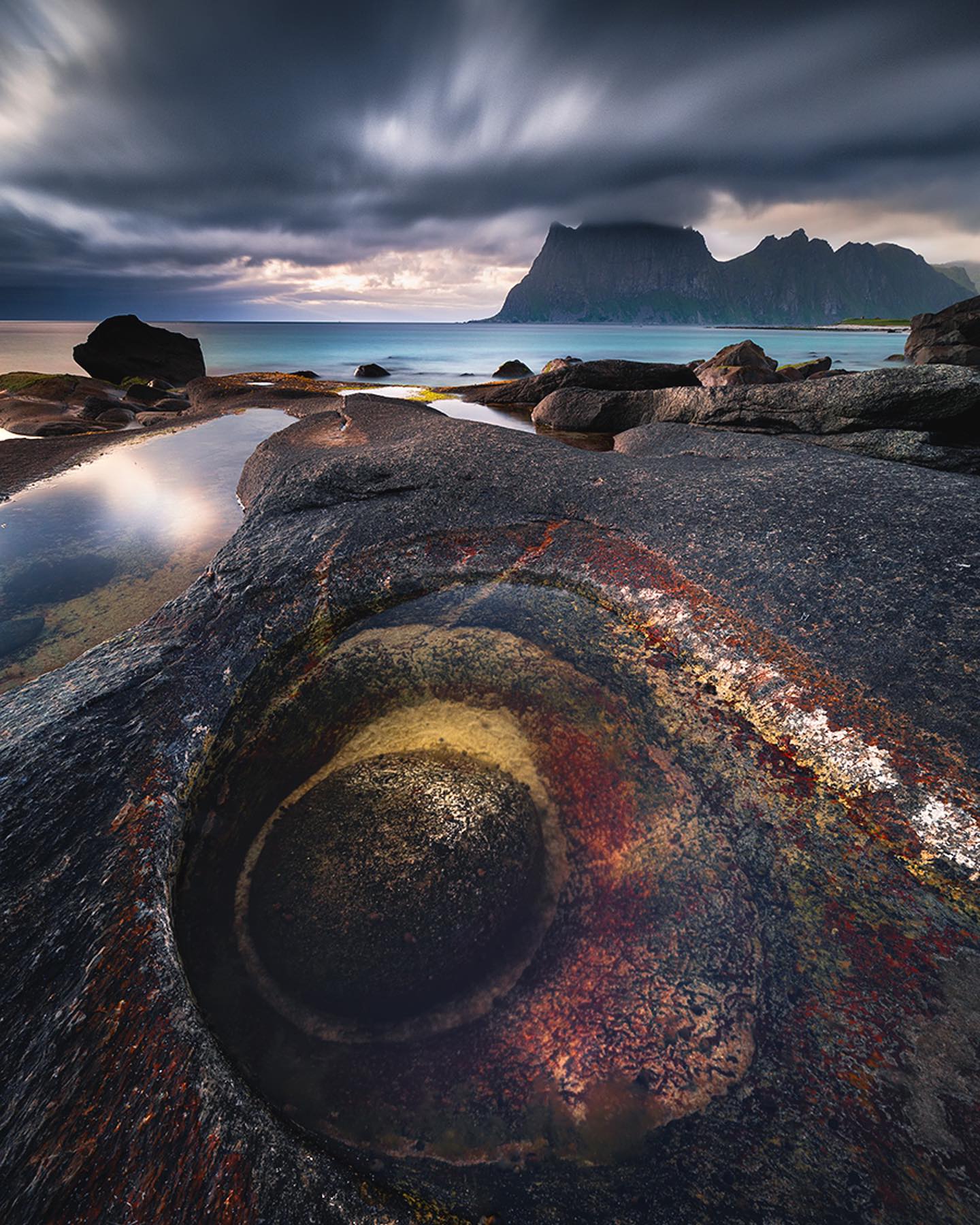
Ultra-realism is the cornerstone of dramatic landscape photography. The genre relies on dramatic clouds and a sunset, lengthy shutter speeds, and a still camera. It captures the raw beauty of a scene so realistically that it may seem fake or staged, that it was post-processed, or it doesn't exist.
The anatomy of dramatic landscape photography
The vision view of this photo captures the astounding beauty of a rocky coastline. Such a craft demands sophisticated equipment and special attention not to disturb the environment. The foreground has a large reflective pool, mirroring the clouds and surrounding rocks and the sunset — making the backdrop even more glorious. Such images capture nature's power, emphasizing the interplay of light, water, and rock. What separates it from other forms of landscape photography? This dramatic art style combines technical expertise with raw natural details. It relies on shutter speed, aperture, and ISO to depict things with high fidelity. The main ingredient here is the photographer — they choose the scene, the view, the focus. And the result is a perfectly balanced image. The artwork often demands low space and short exposure times to reach the desired effects. Also, it demands a contemplative approach. Photographers use long exposures to capture the movement of clouds, water, and other elements that create a sense of dynamism and life within the scene.
The importance of the craft
Today's photographers face fierce competition. People have access to professional quality equipment, so the art is inevitably becoming a race to the bottom. Dramatic landscape photography is one of the ways to stand out in a saturated market. This craft relies on the artist's creativity and storytelling abilities rather than the latest technological advancements. Videos show vibrant sunsets or the illusion of a sunset. The art incorporated creative practices to make the photo look exceptionally good. The sunset adds to the overall mood and atmosphere. It makes the scene more majestic and impactful. These elements infuse powerful emotions and commands viewers' attention. This photography demands experience, creativity, and technique. It's a reminder that artists don't need to rely on digital manipulation to create something special. The sense of timelessness and empathy these photos strike is their appeal.
Finding the next spot
The photography owner makes choices to capture the perfect scenery, the most exciting moment, and the right light. The perfect spot requires a lot of research. It includes checking weather forecasts, calculating the position of the sun, researching the best vantage points, and more — from the location. The photographer uses props, such as a tripod and a compass, to get everything right. The photographer waits for the optimal time of day — usually near sunset or sunrise. They use long shutter speeds to create a sense of motion and movement in the water, clouds, and other elements. The final product is the result of landscape photography in action. Everything is there, the rock formations, the water in motion, and the surrounding scenery. It captures the essence of the natural world, bringing awe and wonder to life.
Nature as a backdrop
Nature is the ultimate subject for landscape photography. The photographer may capture the beauty of a rocky coastline, a serene lake, or a lush forest. The composition of these scenes creates a sense of balance and harmony, making the image more visually appealing. The artist usually uses a telephoto lens to capture distant subjects or to compress the scene, making the landscape appear more dramatic. Close-up shots of natural elements, such as flowers, rocks, or leaves, add texture and detail to the image, enhancing its visual appeal.
The pursuit of perfect balance
Before the shot, the photographer often checks the weather, time of day, and overall conditions. These adjustments maximize the final product's visual appeal. Sometimes, the artist adds more filters and landscape properties, enhancing the final product. Dramatic cloud formations and a vivid sunset create a striking contrast between the light and dark areas of the scene, making the image more dynamic and visually engaging. These images often have a contemplative or meditative quality, inviting the viewer to pause and reflect on the beauty and fragility of the natural world.
Embracing the power of stillness
There's a fundamental irony in dramatic landscape photography. The movement is the most striking element and one of the hardest to capture. The photographer often has to move to have the best angle to capture the power. The long exposure time allows for the perfect capture of the movement. The movement is in the water, the clouds, and the rocks themselves. There are no people, animals, or vehicles in these images, as they would disrupt the sense of stillness and tranquility that the photographer is trying to convey. Instead, the focal point is the natural landscape itself, framed in a way that highlights its beauty and serenity.
Putting the scene together
The technique requires meticulous planning to reach the desired results. It also demands knowledge of the technical aspects of photography, such as shutter speed, aperture, and ISO. The camera equipment includes filters such as neutral density filters and polarizing filters to control the light and contrast in the scene. The photographer often uses a tripod to stabilize the camera and ensure a sharp focus. They choose the time of day and weather conditions. They also choose the location, the angle, and the composition of the shot. This landscape photography can be more than just a hobby. It can be a valuable skill for photographers looking to pursue professional careers. There are many opportunities for landscape photographers, from working with travel agencies to creating stock photography. Take a step back and appreciate the skill and simplicity of nature. Landscape photography captures the greatest elements of nature. The craft is a lifelong pursuit. But it is worth pursuing, capturing the moment, and sharing it with the world.
Questions readers ask
What makes dramatic landscape photography different from other types of landscape photography?
Dramatic landscape photography stands out due to its emphasis on ultra-realism and the capture of raw, dynamic elements. It relies heavily on technical skills like shutter speed, aperture, and ISO to depict scenes with high fidelity. The photographer's vision and choices are crucial, as they select the scene, view, and focus to create a perfectly balanced image.
How do photographers achieve the dramatic effects in these images?
Photographers use long exposures to capture the movement of clouds, water, and other elements, creating a sense of dynamism. They also pay close attention to the interplay of light, water, and rock, often using low space and short exposure times to achieve the desired effects. The use of a tripod and other props helps in getting the perfect shot.
What role do sunsets play in dramatic landscape photography?
Sunsets are a key element in dramatic landscape photography as they add to the overall mood and atmosphere of the scene. They make the landscape more majestic and impactful, infusing powerful emotions and commanding the viewer's attention. The interplay of light during sunsets enhances the realism and drama of the images.
What equipment is essential for dramatic landscape photography?
Dramatic landscape photography requires sophisticated equipment, such as a sturdy tripod for stability during long exposures, and a compass for precise positioning. Additionally, a high-quality camera that can handle low light and long exposure times is crucial. The photographer must also have a good understanding of their equipment to capture the desired effects.
How do photographers find the perfect spot for dramatic landscape photography?
Finding the perfect spot involves extensive research, including checking weather forecasts, calculating the sun's position, and identifying the best vantage points. Photographers often use tools like a compass and tripod to ensure they capture the scene at the optimal time, usually near sunset or sunrise, to get the best light and atmospheric conditions.
Can dramatic landscape photography be achieved without extensive post-processing?
Yes, dramatic landscape photography can be achieved without extensive post-processing. The craft relies on the photographer's technical skills and creativity to capture the raw beauty of a scene. The use of long exposures and precise timing allows for the creation of dynamic, realistic images that don't require heavy digital manipulation.
How does dramatic landscape photography help photographers stand out in a competitive market?
Dramatic landscape photography allows photographers to showcase their unique creativity and storytelling abilities. Unlike using advanced technology, this genre emphasizes the artist's vision and technique, setting their work apart in a market where professional equipment is widely available. The emotional impact and timelessness of these images make them stand out.
Related deep dives
Similar reads based on topic and creator.



Recent articles
Fresh deep dives from the latest Reels we unpacked.

Comments
Be the first to comment.