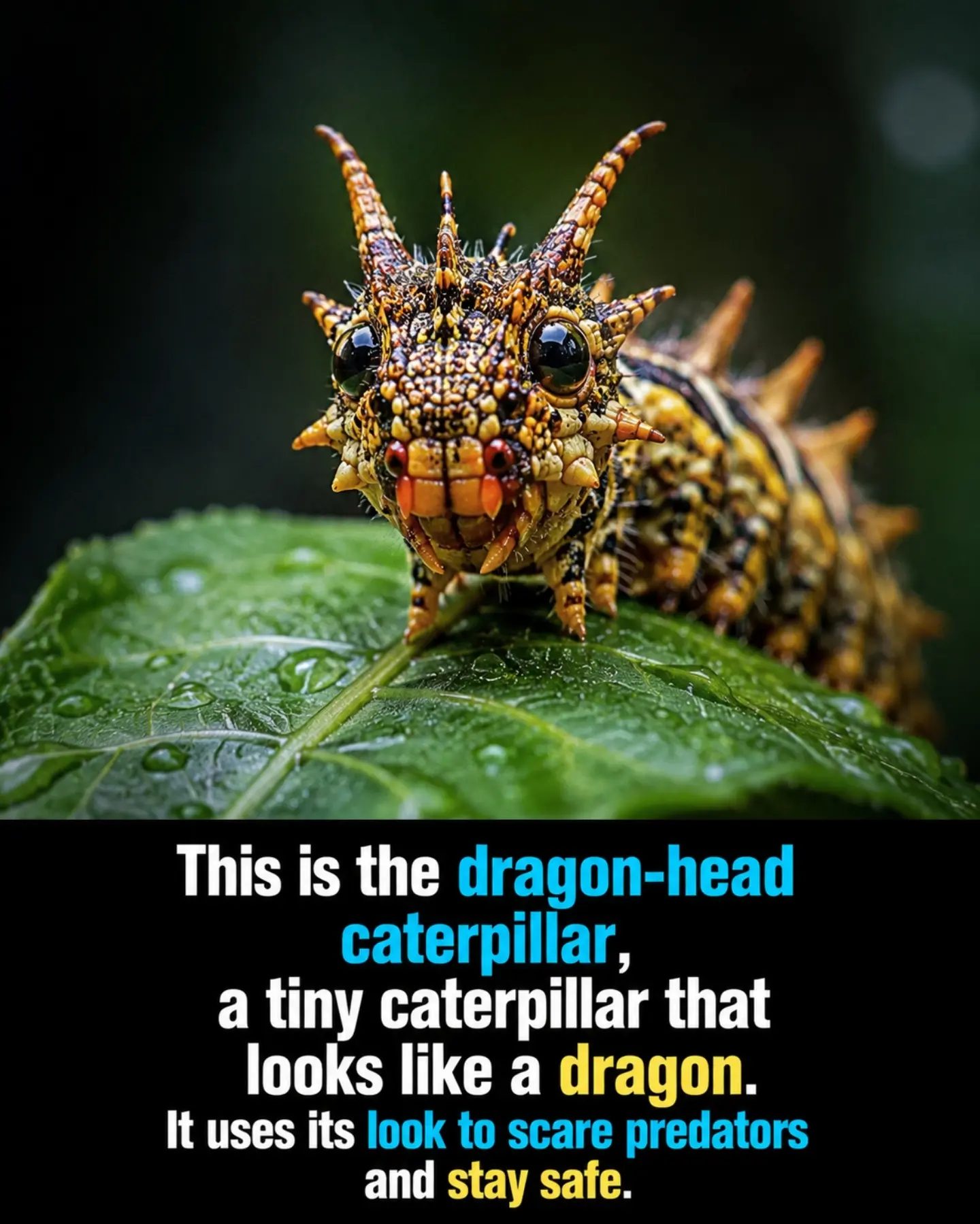
Dragon-Head Caterpillars: Nature's Master of Disguise
Dragon-head caterpillars are a fascinating example of how nature uses mimicry and adaptation to ensure an organism's survival. These tiny creatures, often found in various regions, have a unique appearance that resembles a dragon's head, complete with horns and a menacing gaze. This striking resemblance is not just for show; it serves a crucial purpose in the caterpillar's defense strategy.
Why this matters
The world of insects is filled with remarkable adaptations, and the dragon-head caterpillar is a standout example. Understanding these creatures and their behaviors provides insights into the intricate web of survival strategies in the natural world. For enthusiasts and researchers alike, these caterpillars offer a glimpse into the clever mechanisms that drive the evolution of species.
Mimicry: The Power of Appearance
The Dragon's Head
The most striking feature of the dragon-head caterpillar is its head, which closely mimics the appearance of a dragon. This deception is not just a coincidence but a well-evolved trait designed to protect the caterpillar from predators. The caterpillar's head features prominent false eyes and horns, creating an intimidating appearance that can deter potential threats. This mimicry is a prime example of how natural selection can drive the development of highly specialized adaptations.
The visual similarity to a dragon's head is not just about looks. The caterpillar's body posture and movements also contribute to the illusion. When threatened, the caterpillar can raise its head and arch its body, making it appear even more formidable. This combination of static and dynamic features creates a convincing deception that can confuse or scare off predators.
Behavior and Defense
The dragon-head caterpillar's defense strategy is not limited to its appearance. These caterpillars are also known for their distinctive behaviors, which enhance their protective mimicry. When threatened, the caterpillar can make a hissing sound by expelling air from specialized glands. This sound, combined with its threatening appearance, can be highly effective in deterring predators.
Another behavior that contributes to the dragon-head caterpillar's survival is its ability to stay motionless for extended periods. By blending in with its surroundings and remaining still, the caterpillar can avoid detection by predators. This camouflage technique, combined with its intimidating appearance, provides a dual-layered defense mechanism that significantly increases the caterpillar's chances of survival.
How the Dragon-Head Caterpillar Uses Its Look
The dragon-head caterpillar's unique appearance is not just for show; it serves a crucial purpose in the caterpillar's defense strategy. By mimicking the head of a dragon, the caterpillar can effectively deter predators that might otherwise see it as a tasty meal. This adaptation is a testament to the power of natural selection and the intricate ways in which species evolve to survive in their environments.
Predators and Prey
The dragon-head caterpillar's primary predators are birds, small mammals, and other insects. These predators are attracted to the caterpillar's distinctive appearance, which makes it a prime target. However, the caterpillar's mimicry and defensive behaviors can effectively deter these predators, allowing the caterpillar to survive and thrive in its natural habitat.
The caterpillar's diet typically consists of leaves from various plants, including deciduous and coniferous trees. Its ability to blend in with its surroundings and stay motionless for extended periods allows it to avoid detection by predators while it feeds. This adaptation is crucial for the caterpillar's survival, as it provides a steady food source without attracting unwanted attention.
Practical tips
Observing dragon-head caterpillars in their natural habitat can be a rewarding experience for nature enthusiasts and researchers alike. Here are some tips to help you spot and observe these remarkable creatures:
-
Be Patient: Dragon-head caterpillars are masters of camouflage and can remain motionless for extended periods. It may take time to spot them, so be patient and observant.
-
Look for Leaves: These caterpillars are often found on the leaves of various trees and plants. Pay close attention to the undersides of leaves, as this is where they are most likely to be found.
-
Observe from a Distance: Dragon-head caterpillars are sensitive to human presence and may become agitated if approached too closely. Keep a safe distance and use binoculars or a camera with a zoom lens to observe them.
-
Avoid Disturbing the Environment: When observing these caterpillars, be mindful of your surroundings and avoid disturbing the natural environment. This will help ensure that the caterpillars and their habitat remain undisturbed.
Important takeaways
Dragon-head caterpillars are a remarkable example of how nature uses mimicry and adaptation to ensure survival. By mimicking a dragon's head, these caterpillars can effectively deter predators and avoid detection. Additionally, their defensive behaviors, such as hissing and remaining motionless, further enhance their survival strategy. Understanding these creatures and their behaviors provides valuable insights into the intricate web of survival strategies in the natural world.
Conclusion
The dragon-head caterpillar's unique appearance and defensive behaviors highlight the incredible adaptations that exist in the natural world. From their striking resemblance to a dragon's head to their clever defensive strategies, these caterpillars embody the power of natural selection and evolution. Observing and learning about these remarkable creatures can offer a deeper appreciation for the complexity and beauty of nature.
Questions readers ask
What are the key features of a dragon-head caterpillar's appearance?
Dragon-head caterpillars are known for their distinctive features that mimic a dragon's head, including prominent horns and false eyes. These features are not merely decorative; they are essential components of the caterpillar's defense strategy, helping to deter predators by making the caterpillar appear more threatening.
How do dragon-head caterpillars use their appearance to deter predators?
The dragon-head caterpillar's appearance acts as a powerful deterrent to predators. The false eyes and horns create the illusion of a larger, more dangerous creature, which can frighten off potential threats. This visual deception is a key part of the caterpillar's survival strategy, allowing it to blend in and avoid becoming prey.
Where can dragon-head caterpillars typically be found?
Dragon-head caterpillars can be found in various regions, often perched on leaves where their camouflage is most effective. Their ability to blend in with their surroundings, combined with their intimidating appearance, makes them well-adapted to their natural habitats.
What is the primary purpose of the horns on a dragon-head caterpillar?
The horns on a dragon-head caterpillar serve as a crucial part of its defense mechanism. They enhance the caterpillar's resemblance to a more formidable creature, such as a dragon, thereby deterring predators. Additionally, the horns may help the caterpillar to blend in with thorny or rough plant surfaces, further aiding in camouflage.
How do the false eyes on dragon-head caterpillars contribute to their survival?
The false eyes on dragon-head caterpillars play a significant role in their survival by creating the illusion of a larger, more threatening creature. This visual deception can startle or intimidate potential predators, causing them to avoid the caterpillar. The false eyes work in conjunction with the caterpillar's horns to enhance this effect.
Related deep dives
Similar reads based on topic and creator.

Recent articles
Fresh deep dives from the latest Reels we unpacked.
Comments
Be the first to comment.