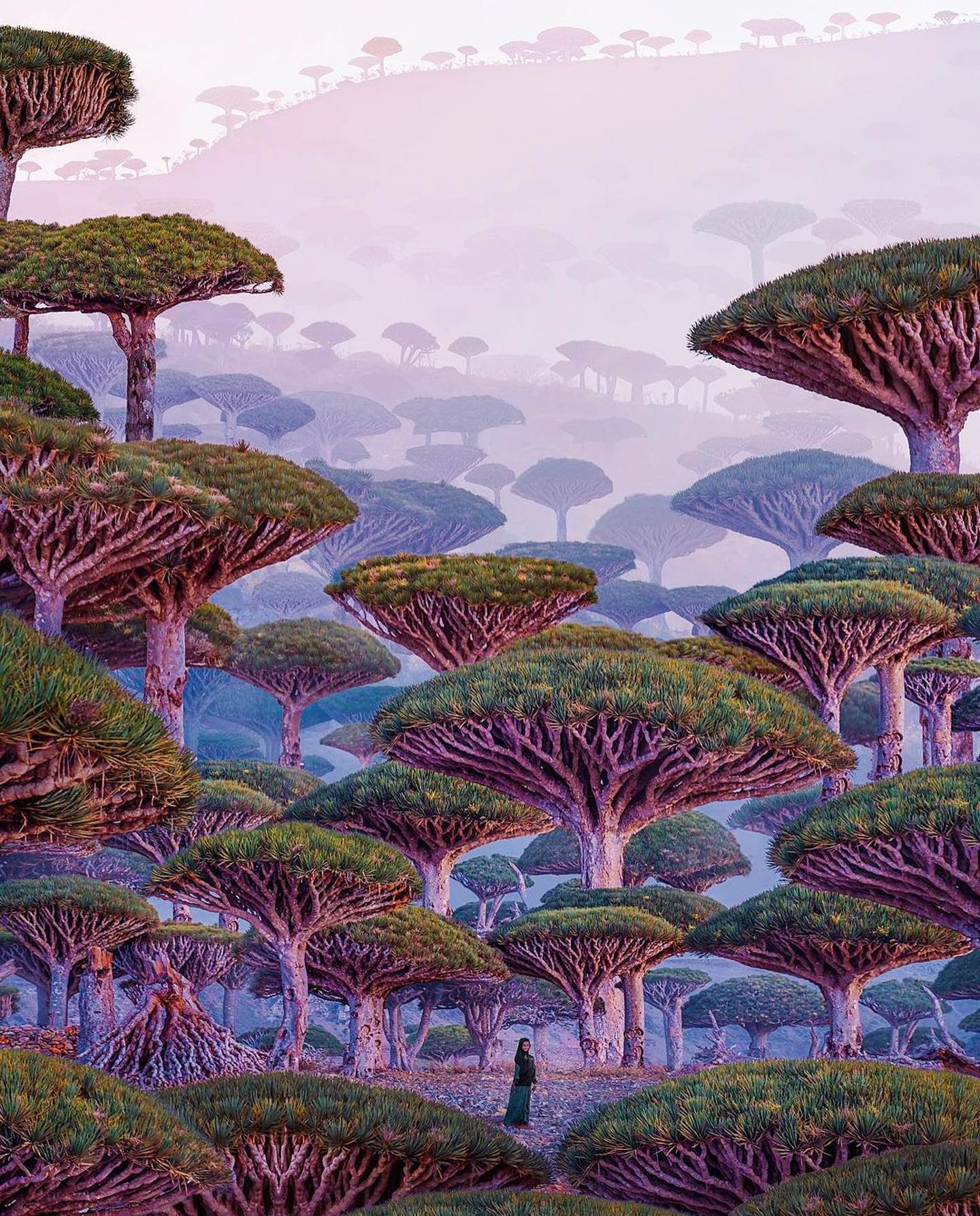
Whether traveling by plane or by boat from the Omani coastal town of Salalah, visiting Socotra Island requires a Yemeni visa. But the journey to catch a glimpse is worth it: here, the native Dragon Blood Trees grow, with their vibrant red sap known as emzoloh. Socotra Island’s native Dragons Blood Trees are attracting visitors for their unique appearance.
The Dragon’s Breadth
Dragon Blood Trees are an eye-catching endemic species that only grow on the island of Socotra, Yemen. The trees' distinctive umbrella-like shape creates a striking silhouette stretching over the landscape. The red resin they produce oozes out of their trunks and branches. The deep red color, emzoloh, has been employed in traditional medicines for decades by the Socotris. In popular culture, trees stir emotion as a result of their dramatic appearance, standing as they do atop gnarled, swollen trunks and branching out under the wide sky. The trees’ vibrant red sap makes them stand out against the desert landscape. Visitors often walk away from seeing Dragon Blood Trees amazed at the unique sight. There are a few theories about what gives the trees their vibrant red sap. Some scientists believe it may have evolved as a deterrent to herbivore animals in the island's dry climate. The sap can also give a timber a red colour: it was used for centuries for dyeing and varnishing. The Dragon Blood Tree's scientific name is Dracaena cinnabar. Without any need for heavy machinery, the trees thrive in Socotra’s harsh soil and climate. When climbing the sheer cliffs and rocks near the Dragon Blood Trees, tourists can experience the trees in an otherworldly landscape.
Traveling to a living time machine
The remote location of the Dragon Blood Trees in Socotra Island is not without good reason. With a population of barely over 63,000 people, the island is marked by a lack of modern constructions, an environment where one-third of the flora and fauna species that call Socotra Island home are found nowhere else. The trees are endemic to the region, yet the locals have found a wide range of uses for its red sap. The island of Socotra itself is worth a trip, the largest of the four islands that make up the Socotra Archipelago, Yemen. The island is home to a range of well-known endemic species. The trees, along with small deserts and beaches, create a striking contrast against the rich tapestry of the island. The Dragon Blood Trees are just one of the many endemic flora and fauna species that can be seen in Socotra. Visiting and seeing the trees in person requires a trip to Socotra Island. Many find it best to do so by plane or by boat from the Omani coastal town of Salalah. A Yemeni visa is required for tourists.
The Island’s Perils
Travel Lanes
A trip to Socotra Island can prove challenging. Getting to and from Socotra Island requires a Yemeni visa. There are only a limited number of flights to Socotra Island, and visitors need to book them well in advance. Tourists can also reach Socotra Island by boat from the nearby Omani coastal city of Salalah. However, the latter requires finding a cargo vessel able to take travelers, as well as a suitable time. The sea travel demand can also result in very expensive boat rides for travelers. The island's total lack of accommodations makes staying forbidding in some circumstances. Finding a place to stay may involve meeting a local or finding a place in the rugged terrain the island is known for.
Ecological Risk
Many of the species on Socotra Island are endemic and can be found nowhere else in the world. With endemic species comes ecological risk: habitat loss, invasive species, and climate change endanger many of the island’s endemic flora and fauna species. The Dragon Blood Trees of Socotra Island are at risk alongside the many endemic species around the world.
Climbing Dragons
Seeing the Dragon Blood Trees in person is a great adventure for travelers. The endemic species can make the experience exciting. One of the best ways to see the trees is to hike through the island’s terrain, as they grow best in a wild area. The ground is barren and dusty, but the trees emerge beautifully from it. The landscape itself has an otherworldly look to it, with the trees’ gnarled trunks and branches leading up to umbrella-like canopies. Reaching them takes exploring the terrain often involves climbing up rocky terrain and cringing down steep slopes before reaching the trees.
The Ups and Downs
Dragon Blood Trees are part of a beautiful ecosystem that is not just breathtaking, but also home to many species that one cannot see elsewhere. The trees' vibrant red sap is both a thorn in the side of conservationists and a boon to travelers. The trees are endangered and at risk of habitat loss from climate change. But the endemic species of Socotra Island do not require a visit to the island to learn about them: many of the endemic species can be found in museums and botanical gardens worldwide. The world's few botanical gardens are treasure troves of knowledge on the island's flora. Some of these gardens are working on conservation efforts. For travelers, the importance of conservation cannot be understated: a trip to Socotra Island brings visitors to an ecosystem that threatens the world's biodiversity.
Questions readers ask
What makes Dragon Blood Trees so unique?
Dragon Blood Trees are unique due to their vibrant red sap, known as *emzoloh*, and their distinctive umbrella-like shape. They are endemic to Socotra Island, Yemen, and are known for their striking appearance and historical uses in traditional medicines and dyeing.
Why is the red sap of Dragon Blood Trees significant?
The red sap, or *emzoloh*, has been used for centuries in traditional medicines by the Socotris. It also has practical uses, such as dyeing and varnishing timber. Scientists believe the sap may have evolved as a deterrent to herbivores in the island's dry climate.
Can I visit the Dragon Blood Trees and if so, how do I get to Socotra Island?
Yes, you can visit the Dragon Blood Trees, but it requires a trip to Socotra Island. You can travel by plane or by boat from the Omani coastal town of Salalah. However, a Yemeni visa is required for tourists, and flights or boat trips need to be booked well in advance.
What other attractions does Socotra Island offer besides the Dragon Blood Trees?
Socotra Island is home to a variety of endemic flora and fauna species, as well as small deserts and beaches. The island itself is worth exploring, with a population of barely over 63,000 people and a lack of modern constructions, providing a unique and otherworldly landscape.
Are there any challenges or risks associated with traveling to Socotra Island?
Traveling to Socotra Island can be challenging due to the limited number of flights and the need for a Yemeni visa. Additionally, reaching the island by boat requires finding a suitable cargo vessel and timing. The island's remote location and harsh climate also present unique challenges.
Related deep dives
Similar reads based on topic and creator.




Recent articles
Fresh deep dives from the latest Reels we unpacked.




Comments
Be the first to comment.