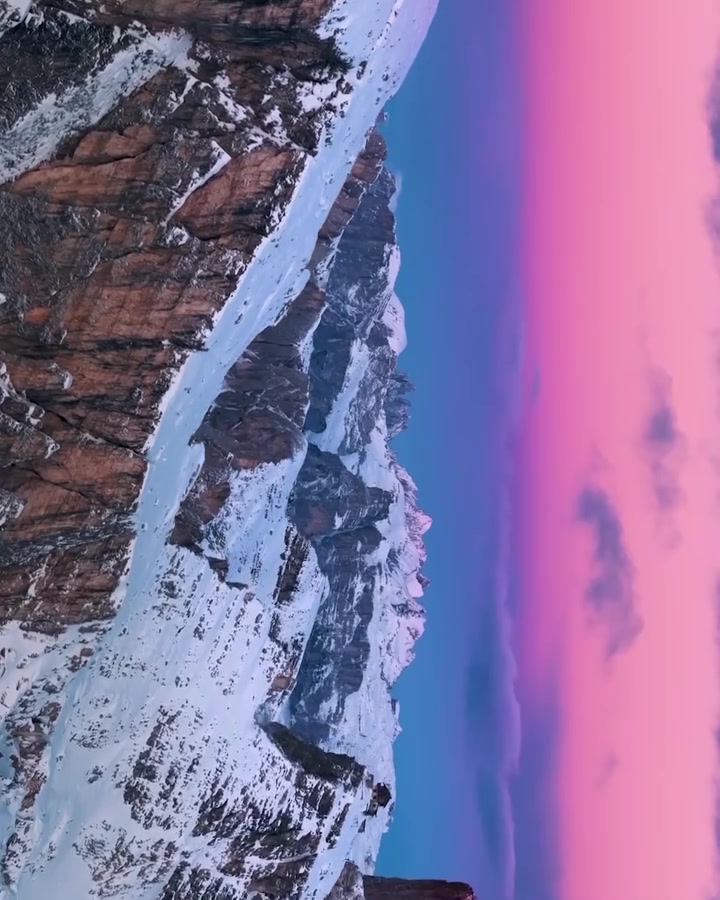
The Dolomites at twilight—snow-capped peaks etched against a vivid sky painted in hues of pink and blue. Such is the scene captured in a breathtaking reel by @denis.barbas, shared on Instagram by the popular account @beautifuldestinations. Too often, landscape photography can emphasize the serene, but here, rugged majesty is the star.
The Dolomites: Italy's Rugged Crown
The Dolomites, a range of mountains in northeastern Italy, are a UNESCO World Heritage Site. They are distinctive for their vertical walls of pale limestone and dolomite. It's twisting, rugged terrain that rises up in dramatic peaks that will make it the crown of the Italian Alps. The landscape’s evocative name comes from the French word for dolomite rock, limestone mountains are to blame for the Dolomites’ light color. But, it is also the Dolomites' peak formations that give the mountain range its unique, jagged horizon. Snow gives the peaks a festive look during peak season. Further defined by the lack of a human presence, the landscape appears wild and untouched.
Why They Matter: A World-Class Playground
The Dolomites sit in the heart of the Alps and is a mecca for outdoors enthusiasts. These are mountains with a reputation. Intimidating, dramatic, and beautiful mountains. The Dolomites stretch across almost the entire northern border of Italy and are home to three national parks. The most visited area is the "Tre Cime di Lavaredo, including its famous Three Peaks Circuit. The mountains are also a magnet for tourism, and the visuals support the Dolomites’ growing fame. But the Dolomites are not just a tourist attraction. In many ways, they are a way of living, a heritage, and a connection to the land.
Twilight Transformation
The Dolomites’ appearance shifts dramatically with the changing light. Dawn and dusk are the sweet spots for highlighting the topography. These hours help the photographers' cause by casting a soft glow over everything. The southerly aspect of the terrain also ensures the peaks are well-lit. Twilight casts the mountains in hues of pink and blue, lending a magical aura. The peaks are covered in snow, and the sky is a vibrant mix of pink and blue hues. The interplay of light and shadow across the snow-capped peaks creates a mesmerizing scene. Water and ice further reflects the colors.
Rugged Terrain
The Dolomites are a challenge, with steep and rocky cliffs. These peak formations have made the Dolomites synonymous with mountaineering and climbing. The range houses over 300 mountain huts and refuges, some of which require several days’ hiking to reach. Short bolts are common in the area, though routes are often not equipped. Climbers are at the mercy of the elements and are often faced with wild, rugged terrain.
Snow-Covered Peaks
The snow-capped summits are a hallmark of the Dolomites and their dramatic visuals, especially in the popular Tre Cime di Lavaredo. This snow adds an escape from World Heritage Site into a fairytale world. Both the lesser-known peaks and the popular destinations have things to offer.
Featured Fauna
The Dolomite landscape is an untouched wilderness. Large herds of hunted chamois and ibex are plentiful in the area. The chamois, a goat with curved horns, is just one of the animals that inhabit these rugged mountains. The ibex does alright with a rugged terrain. The Dolomites are home to a thriving community of ibex—stocky, shaggy mountain goats with impressive curved horns. These animals are often seen traversing the steep cliffs and rocky slopes. This is not a landscape for animals. But these are not the only animals that call these mountains home. The Dolomites are also home to several bird species, including eagles, griffon vultures, and the rare bearded vulture. This makes the mountains seem more intimate and alive.
Peak Season
Peak season in the Dolomites attracts not just climbers, but also hikers and skiers. If you are one of those looking to get close to the action, the best time to visit these mountains is from June to September, when the weather is mild, and the days are long. July and August are the warmest months, but they can also be crowded. By contrast, the months of May and October are cooler and less crowded, making them ideal for those who prefer a more peaceful experience. Snow adds to the fun.
A Glimpse to Remember
Visiting the Dolomites is an immersive experience. There are plenty of ways to explore this dramatic landscape. But for true immersion in the experience, consider trekking to a mountain hut. The huts perched high in the Dolomites offer overnight stays in some of the most remote and rugged sections of the mountain range. The rewards are breathtaking views, gourmet local cuisine, and a taste of the Dolomites’ authentic hospitality. The huts have everything, from accommodations to food. The experience is unique because you are in a wild and rugged terrain with all the facilities right there.
The Nature of Adventure
As the sun rises and sets, the true magic of the Dolomites unfolds. The interplay of light and shadow, the vibrant palette of pink and blue hues, and the towering, jagged peaks combine to create a breathtaking scene. This is not a place for the faint-hearted. It's a place where you can escape into a world of majestic mountains and rugged beauty.
Questions readers ask
What makes the Dolomites unique compared to other mountain ranges?
The Dolomites stand out due to their distinctive vertical limestone and dolomite walls, which create a rugged, jagged horizon. Unlike other mountain ranges, the Dolomites' pale limestone gives them a light color, and their dramatic peak formations are especially striking during twilight, when the peaks are bathed in hues of pink and blue.
What are the best times of day to visit the Dolomites for photography?
The best times to visit the Dolomites for photography are during dawn and dusk. During these hours, the light is soft and casts a glow over the landscape, highlighting the topography and creating a magical aura. Twilight, in particular, is known for its vibrant pink and blue hues that paint the snow-capped peaks.
Can I hike to the Dolomites’ mountain huts and refuges in a day?
While some huts and refuges can be reached in a day, many require several days of hiking. The Dolomites are known for their challenging terrain, so planning your trip carefully is essential. There are over 300 mountain huts and refuges, some of which are quite remote.
What should I expect from the Dolomites’ climbing routes?
The Dolomites are famous for their steep and rocky cliffs, making them a mecca for mountaineering and climbing. Routes are often not equipped, and climbers may encounter short bolts. The terrain is rugged and wild, so climbers should be prepared and experienced.
Are the Dolomites a good destination for beginners in mountaineering?
The Dolomites are more suited to experienced climbers due to their challenging terrain and lack of equipped routes. Beginners should consider joining guided tours or sticking to well-marked trails and easier peaks. The rugged, vertical limestone walls and steep cliffs can be daunting for those new to mountaineering.
Related deep dives
Similar reads based on topic and creator.


Recent articles
Fresh deep dives from the latest Reels we unpacked.



Comments
Be the first to comment.