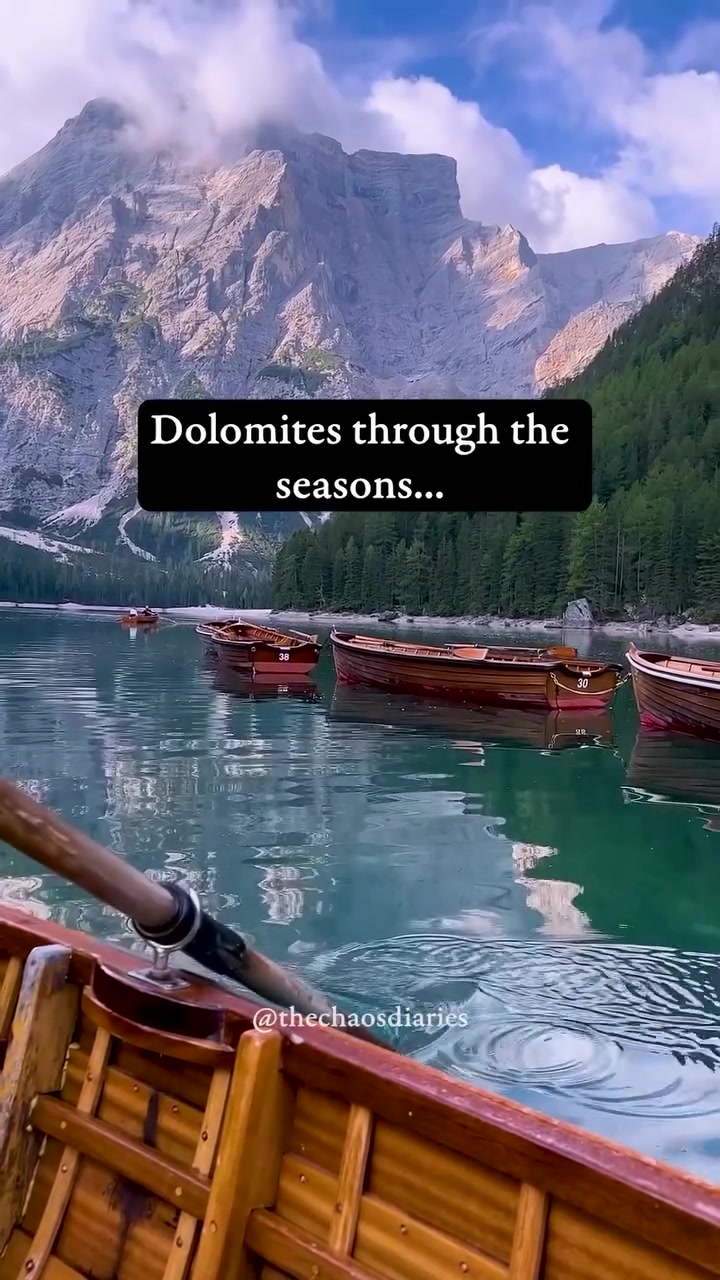
The Dolomites in Italy, a mountain range that runs through northeastern Italy, can transform a person’s relationship with nature. No two seasons are alike in the Dolomites: spring brings explosion of colors and flowers, while summer offers verdant landscapes, and autumn turns the foliage into a sea of warm hues. Those who visit with purpose return transformed. What they'll find is a blend of dramatic peaks, alpine lakes, and timber-framed chalets. Unlike many of the world's popular mountain ranges, hiking and outdoor activities in the Dolomites are accessible even to less experienced hikers. The mountains are known as a region of exceptional beauty and diversity.
The Dolomites: living with the elements
The Dolomites are rooted in the Italian Alps, stretching across the regions of Trentino-Alto Adige, Veneto, and Friuli Venezia Giulia. The range is part of the vast columns of sedimentary rock that appear due to deep geological forces. Its peaks are distinctive not only for their craggy, vertical formations, which often resemble castle towers, but also for the region's unique ecosystems. The Dolomites are named after the Italian scientist and engineer Dolomieu, who first described a particular type of rock in the region. Called dolomite, this rock type consists of calcium magnesium carbonate, giving the mountains their distinctive grey and pinkish hues and making them vulnerable to chemical weathering. At their core, the Dolomites are a geologic marvel, but their true allure lies in more than vertical heights or mineral formations. Although, the mountains act as a natural backbone for the land, the Dolomites are unique because they double as a lifeline for the region’s inhabitants.
Italian mountain culture
The Dolomites offer a glimpse into a unique kind of mountain culture. Remote valleys and small villages like Geisler Alm and Trentino-Alto Adige thrive as the Dolomites’ people continue to adapt to the rugged landscapes. As a part of Italian culture, the Dolomites’ locals maintain unique culinary customs, family traditions, and celebrations involving craftsmanship and land stewardship. Mountain living in the Dolomites means awe-inspiring panoramas and close links to nature, but it also means managing limited resources and a challenging climate. The Dolomites’ deep-rooted traditions are a form of adaptation.
Geological giants in the Alps
On the contrary, the Alps have seen extensive human activity, including agricultural settlements, industrialization, and tourism, don't always leave the peaks untouched. With altitudes exceeding 3,000 meters and rugged summits, the Dolomites are hard to miss, but they're often overlooked in favor of the wider swath of mountains further south. For many visitors, the Dolomites act as an unexpected extension of the Alps. The Dolomites span over 140 kilometers and consist of at least 180 peaks over 3,000 meters. The iconic peaks of the Dolomites rank higher than the majority of the Alps, making them a destination for those who wish to explore the rugged side of nature.
Traditional life, revised
The Dolomites' terrain makes agriculture a challenge, so locals have devised ways to work with the land. This includes some ingenious agricultural practices, such as rearing livestock like cattle and goats, creating yoghurt and cheese, and farming vegetables in small plots. The Dolomites have attracted a distinct philosophy and culture among its inhabitants. The fierce individualism of the Dolomites towns versus the more collaborative spirit of the Alpine provinces is the result of historical events and distinct natural environments. This culture is enhanced in the Dolomites' landscapes, which are dotted with primitive villages, traditional chalets, and refuges.
Outdoor experiences in nature's laboratory
The Dolomites have inspired countless artists, hikers, and nature lovers, but what is it about the mountains that truly captivates? The Dolomites' stark, unique beauty is not just about the rocks. The Dolomites are a geological museum and laboratory in the Alps, where visitors can experience the magic of nature up close. From hiking and climbing to skiing and biking, the Dolomites are an adventure hub. The Dolomites' dramatic peaks and valleys provide a natural playbook for those who venture a little further into the wild. Summer and Autumn are particularly rich seasons to visit the Dolomites. The vibrant greenery of summer is a stark contrast to the warm hues of fall. Winter, however, provides a different opportunity with snow-clad peaks. The region's lakes are among its most distinctive geological features, providing a wonderful opportunity to connect with nature and the elements. Despite these contrasts, the Dolomites' beauty remains a way of discovering your inner strength and resilience.
Become part of a Dolomite adventure
Exploring the Dolomites means experiencing a world in which the dramatic and the mundane coexist. If you are looking for an adventure, consider a Dolomite hiking trip. If you're looking for more thrills, explore the region's skiing opportunities. In the Dolomites, the wilderness, in all of its majestic ferociousness, is always close to hand, waiting for us to learn from it as the Dolomites did. Practical Guide:
- Take a Dolomite hike: If you're not up for a climb, the Dolomites' trails offer some beautiful hiking opportunities and are suitable for all levels. Popular routes include the Tre Cime di Lavaredo loop, the Dolomites’ largest trek, or the famous Dolomites Skyline Trek for a more challenging climb.
- Dolomites must-see sites: Some of the most breathtaking highlights in the Dolomites include Geisler Alm, with more than 100 peaks above 3,000 meters; the iconic Five Towers overlooking Cortina d'Ampezzo; and the clear waters of Lago di Braies.
- Stay the night in a traditional chalet: For a more immersive experience, stay overnight at one of the Dolomites' traditional mountain huts or chalets, many of which are managed by local families.
Questions readers ask
What makes the Dolomites unique compared to other mountain ranges in the Alps?
The Dolomites stand out due to their distinctive geological formations, which are made of dolomite rock. This gives them a unique grey and pinkish hue and makes them particularly vulnerable to weathering. Unlike many other mountain ranges, the Dolomites offer a blend of dramatic peaks, alpine lakes, and timber-framed chalets, creating a diverse and beautiful landscape. Additionally, their terrain is less intimidating for less experienced hikers, making them more accessible.
How does the scenery in the Dolomites change with the seasons?
The Dolomites offer a transformative experience each season. In spring, the mountains burst with colors and flowers. Summer brings lush, verdant landscapes. Autumn turns the foliage into a warm, vibrant sea of hues. The Dolomites' changing scenery is a major draw for visitors who want to experience nature's beauty in different forms throughout the year.
What kind of outdoor activities are available in the Dolomites for visitors?
The Dolomites are a paradise for outdoor enthusiasts. Hiking is particularly popular, and the range is known for being accessible even to less experienced hikers. Visitors can also enjoy activities like mountain biking, rock climbing, and skiing, depending on the season. The region's diverse landscapes offer plenty of opportunities for exploration and adventure.
What role do the Dolomites play in the local culture and economy?
The Dolomites are more than just a geological marvel; they are a lifeline for the region’s inhabitants. The mountains support unique culinary customs, family traditions, and celebrations. Mountain living in the Dolomites means managing limited resources and a challenging climate, but it also fosters a deep connection to nature and a rich cultural heritage.
Can I visit the Dolomites if I'm not an experienced hiker?
Absolutely, the Dolomites are known for being accessible to hikers of all skill levels. While there are challenging trails for experienced hikers, there are also plenty of easier routes that offer stunning views without requiring advanced skills. This makes the Dolomites a great destination for anyone who enjoys the outdoors, regardless of their experience level.
What are some of the iconic peaks in the Dolomites that I should look out for?
The Dolomites are home to at least 180 peaks over 3,000 meters, with many of them being iconic landmarks. Some of the most notable peaks include the Marmolada, which is the highest peak in the range, and the Tre Cime di Lavaredo, known for their distinctive three peaks. These peaks offer breathtaking views and are popular destinations for hikers and climbers.
What is the significance of the Dolomites to the local people and culture?
The Dolomites hold deep cultural significance for the local people. They have adapted to the rugged landscapes, maintaining unique culinary customs, family traditions, and celebrations. Mountain living in the Dolomites means awe-inspiring panoramas and close links to nature, but it also involves managing limited resources and a challenging climate. The Dolomites' deep-rooted traditions are a form of adaptation to the environment, fostering a rich cultural heritage.
Related deep dives
Similar reads based on topic and creator.



Recent articles
Fresh deep dives from the latest Reels we unpacked.



Comments
Be the first to comment.