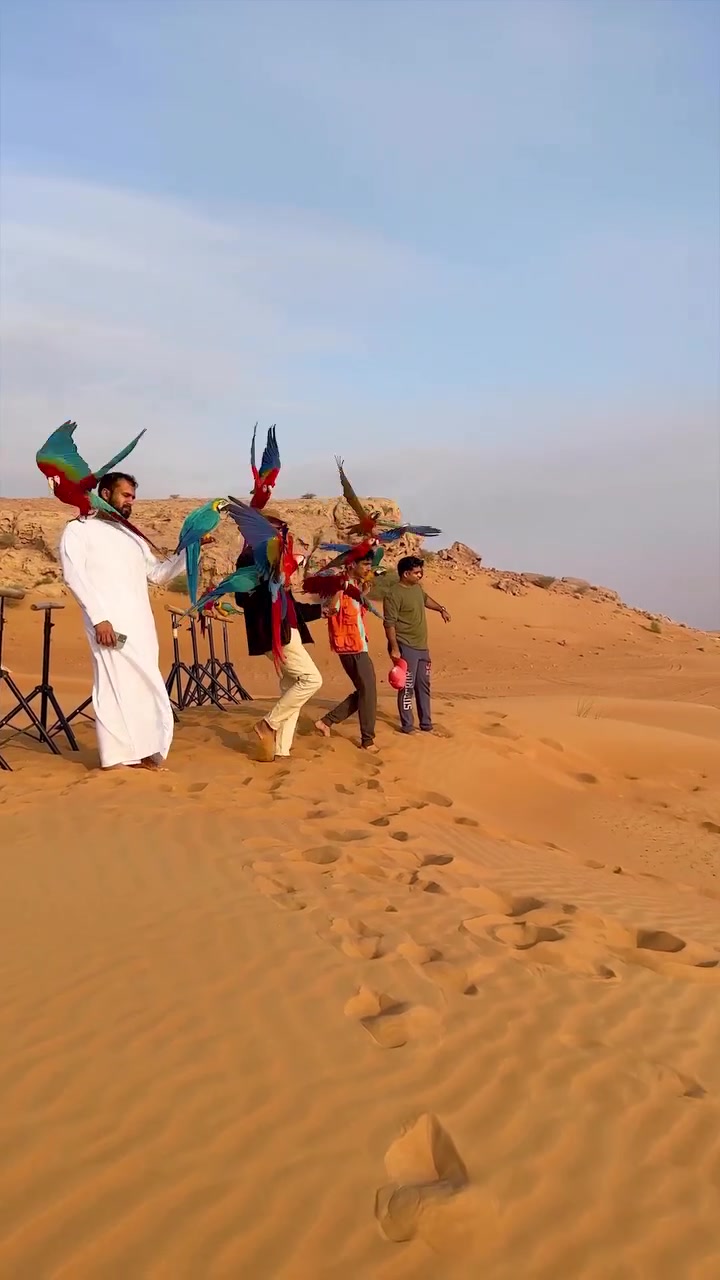
The desert encased a group of people in colorful traditional garments, caught up in a lively dance accompanied by the rhythmic beats of drums. Then, the cameras pivot to a wide desert expanse where multi-hued kites dance majestically on the breeze. This isn’t a random occurrence but a vibrant practice that's pastime and tradition rolled into one.
The Art of Desert Kite Flying
Desert kite flying is an outdoor recreation activity that integrates cultural practices with the beauty of the desert landscape. Participants enjoy running or walking through the vast sand dunes, flying colorful kites under the clear skies. Participants are dressed in traditional clothing, adding a cultural element to the activity. The kites are seen flying high in the sky above the desert landscape and people are seen traversing the sand dunes, enjoying the activity. The desert terrain provides a unique backdrop for this activity. The wide, open spaces and clear skies allow for ample visibility, making it an ideal location for kite flying. The vast expanse of the desert also provides ample space for people to run and walk. What distinguishes desert kite flying from regular kite flying is the simplicity of the practice (no complex equipment or skills required) and its integration with cultural traditions. This makes it an accessible and enjoyable activity for people of all ages.
A Blend of Past and Present
The activity bridges the gap between cultural heritage and modern-day outdoor recreation. It provides an opportunity for communities to connect with their heritage while also enjoying the outdoors. The use of traditional clothing and dance adds a cultural and historical dimension to the activity, connecting participants to their past. Moreover, the desert landscape itself is often imbued with cultural significance for many communities, making this activity a powerful link between past and present. In recent years, there’s been a resurgence of interest in reconnecting with nature and cultural roots. People are increasingly looking for activities that allow them to escape the hustle and bustle of modern life. Events like this show how this activity taps into the broader trend of experiential recreation. Participants are not just flying kites; they are immersing themselves in the rich fabric of their cultural heritage while enjoying the simplicity of outdoor play.
Leaving the City
Despite the urban distraction of drone-filled skies, people still pour into the desert. Participants are drawn by the charm of one of the world’s simplest outdoor activities — the thrill of running to capitalize on a strong gust of wind and of experiencing the kite’s leap skyward. This simple joy also helps people appreciate the stark beauty of the desert. The endless waves of dunes. The vast expanse of blue sky. This setting itself is a form of escape, fresh air and open space replacing concrete and steel. The activity itself is low-cost, requiring little beyond a kite and a breeze.
The Kites
The kites used in desert kite flying can range from simple, light designs to more complex frames and custom colors. The sheer variety of designs adds to the visual appeal. The kites’ movement and counter-movement against the wind make them an engaging sight for viewers, especially on a windy day. Many designs also have cultural significance, and using them can add an extra layer of cultural meaning to the activity. Unfortunately, the desert’s unpredictable winds make kite flying technically demanding. The kites must be durable and lightweight, often crafted from thin nylons and durable paper. Moreover, the winds can be gusty and unpredictable, demanding a firm grip and steady control. There's no room for hesitation in the face of gusting winds, requiring participants to stay alert and adaptable.
The Dance
The dance performed before the kite-flying activity adds a cultural depth to the experience. The dancers wear traditional clothing and the performance is accompanied by drumming, adding to the cultural significance of the activity. The dance is a joyous expression of community and tradition. It blends energetic movements with traditional gestures, accompanied by drum beats. This package — dance, music, and kite flying — encapsulates the broader cultural state of desert communities, where individual identity and community spirit intertwine.
Practical Takes on Joining In
- Find the Right Spot: Start your kite-flying experience by finding a desert spot with wide, open spaces and predictable wind patterns. Strong, steady winds are ideal for a smooth flight.
- Prep and Fly: Kites can range from simple to complex. A basic design, typically a diamond kite, works best for beginners. There are no age restrictions, making it a family-friendly activity. The key is to ensure that the kite’s design and material are suited to desert conditions.
- Bring It All: Pack plenty of water and food, a durable kite, gloves, and sturdy shoes. Check the weather forecast, ensuring winds are favorable for kite flying. Bring a local guide who is familiar with the desert terrain and wind patterns.
- Community: Desert kite flying is not just an activity to enjoy individually but also to bond with communities and experience another culture. Always respect local cultures and practices.
Questions readers ask
What makes desert kite flying different from regular kite flying?
Desert kite flying stands out because of its integration with cultural traditions and the unique desert landscape. Unlike regular kite flying, it often involves participants wearing traditional clothing and dancing, adding a rich cultural element to the activity. The desert's wide, open spaces and clear skies also provide an ideal backdrop, making it a more immersive and visually stunning experience.
Can anyone participate in desert kite flying, or is it reserved for certain people?
Desert kite flying is an inclusive activity that people of all ages can enjoy. It doesn't require complex equipment or advanced skills, making it accessible to everyone. The simplicity of the practice, combined with its cultural significance, ensures that anyone can participate and appreciate the blend of tradition and outdoor recreation.
What kinds of kites are typically used in desert kite flying?
The kites used in desert kite flying vary from simple, lightweight designs to more intricate frames and custom colors. This variety adds to the visual appeal of the activity, with colorful kites dancing in the desert sky. The choice of kite can depend on personal preference and the desired flying experience.
Is desert kite flying a solo activity or a group activity?
Desert kite flying is typically a group activity, bringing together communities and families. The shared experience of flying kites, dancing, and enjoying the desert landscape fosters a sense of connection and camaraderie. It's a great way to spend time with loved ones while immersing yourself in cultural heritage.
How does desert kite flying connect to cultural heritage?
Desert kite flying is deeply rooted in cultural traditions. Participants often wear traditional clothing and engage in cultural dances, which adds a historical dimension to the activity. The desert landscape itself holds cultural significance for many communities, making this activity a powerful link between the past and present.
What is the appeal of desert kite flying for those living in urban areas?
For city dwellers, desert kite flying offers a refreshing escape from the hustle and bustle of urban life. It provides an opportunity to immerse oneself in nature and cultural heritage, offering a unique experience that stands in contrast to the urban environment.
Related deep dives
Similar reads based on topic and creator.
Recent articles
Fresh deep dives from the latest Reels we unpacked.
Comments
Be the first to comment.