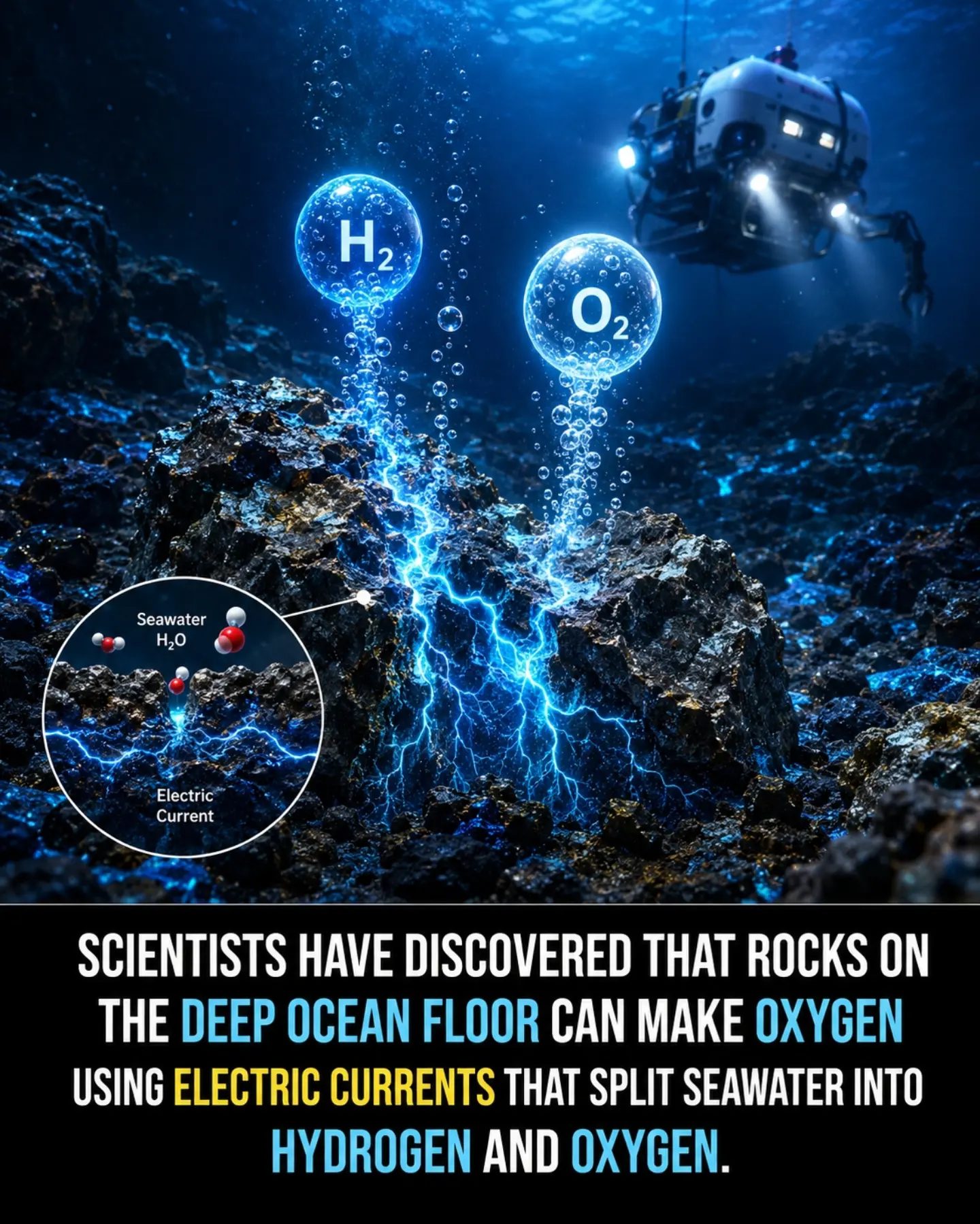
Ocean Oxygen Discovery
The discovery that rocks on the deep ocean floor can produce oxygen through electric currents has captivated the scientific community. This process, which splits seawater into hydrogen and oxygen, opens up new avenues for understanding the ocean's role in our planet’s oxygen cycle. The implications are far-reaching, from potential environmental applications to a deeper understanding of oceanic processes.
Why This Matters
The deep ocean, long considered a mystery, is now revealing secrets that could reshape our understanding of oxygen production. This discovery underscores the potential of natural processes in generating essential elements for life, which could have significant implications for environmental science and technology. By understanding how rocks in the deep ocean floor can produce oxygen, we gain insights into the broader mechanisms at work in our biosphere and how we might harness these processes for future technologies.
Natural Oxygen Production
The key to this discovery lies in the interaction between rocks and seawater. Through electric currents, rocks can split seawater (H₂O) into hydrogen (H₂) and oxygen (O₂). This natural process demonstrates a sustainable and efficient way to produce oxygen in environments where sunlight is scarce. The process involves the following steps:
- ELECTRIC CURRENTS: The electric currents are generated by the movement of water and the interaction between different types of minerals in the rocks. These currents create a natural electrochemical environment.
- ELECTROLYSIS: The electric currents act as a catalyst for the electrolysis of seawater. This process splits the water molecules into hydrogen and oxygen gas.
- PRODUCTION OF OXYGEN: The oxygen produced is released into the surrounding water, contributing to the oxygen levels in the deep ocean.
The presence of bubbles in the visual representation further confirms the process, highlighting the efficacy of this natural mechanism.
The Role of Rocks
The rocks on the ocean floor play a crucial role in this process. They are not just passive structures but active participants in the chemical reactions occurring beneath the surface. The type of rock and its mineral composition can significantly impact the efficiency of oxygen production. For example, rocks rich in certain minerals can enhance the electric currents, boosting the production of oxygen.
The Importance of Electric Currents
Electric currents are the driving force behind this discovery. They are generated through the movement of seawater and the interaction of different minerals in the rocks. These currents create an electrochemical environment that facilitates the splitting of water molecules. Understanding how these currents are generated and maintained can provide valuable insights into optimizing this process for future applications.
Deep-Sea Exploration
Exploration of the deep sea has long been challenging due to extreme conditions. Remotely operated vehicles (ROVs) have made significant strides in accessing and studying these environments. These vehicles are equipped with advanced sensors and cameras, allowing scientists to explore the deep ocean floor in detail. The findings from these explorations have revealed incredible discoveries, including the natural production of oxygen by rocks.
Practical Tips
The discovery of oxygen production in the deep ocean opens up new possibilities for underwater research and technology. Here are some practical tips for those interested in this field:
- Levelling Up Your Research: For researchers, diving deeper into the minerals and electric currents in the ocean is crucial. Understanding the specific types of rocks and their mineral composition can provide valuable insights.
- Investigating the Processes: Further investigation into the electrochemical processes at work can help in optimizing the production of oxygen. This includes studying the natural currents and how they interact with different types of rocks.
- Advancing Technology: Developing more advanced ROVs and other underwater exploration tools can enhance our ability to study these processes in greater detail. This can help in uncovering more about the deep ocean and its role in oxygen production.
Important Takeaways
- Natural Oxygen Production: Rocks on the deep ocean floor can produce oxygen naturally through electric currents. This process splits seawater into hydrogen and oxygen, contributing to the oxygen levels in the deep ocean.
- Role of Rocks: The type of rock and its mineral composition play a crucial role in the efficiency of oxygen production. Understanding these aspects can help in optimizing the process.
- Importance of Electric Currents: Electric currents generated by the movement of seawater and the interaction of minerals in the rocks are essential for the process. These currents create an electrochemical environment that facilitates the splitting of water molecules.
- Deep-Sea Exploration: Advances in deep-sea exploration, particularly with the use of ROVs, have made significant discoveries, including the natural production of oxygen by rocks.
Conclusion
The discovery of oxygen production by rocks on the deep ocean floor is a groundbreaking finding that offers new insights into the ocean's role in our planet's oxygen cycle. By understanding these natural processes, we can harness this knowledge for future environmental and technological applications. Deep-sea exploration and research into these processes will continue to unveil more about the mysteries of the deep ocean, paving the way for future innovations.
Questions readers ask
How do deep ocean rocks generate oxygen?
Deep ocean rocks generate oxygen through a process involving electric currents. These currents split seawater into hydrogen and oxygen, with the oxygen being released into the water.
What are the implications of deep sea oxygen production?
The discovery of oxygen production in the deep sea has significant implications for understanding Earth's oxygen cycle. It also opens up possibilities for new environmental technologies inspired by natural processes.
Can electric currents in the deep ocean be harnessed for technology?
While the electric currents in the deep ocean are naturally occurring, studying them could inspire innovative technologies. Researchers are exploring how these currents might be utilized for environmental applications.
What role do remotely operated vehicles (ROVs) play in this discovery?
ROVs are essential for exploring the deep ocean and studying the rocks that generate oxygen. These vehicles help scientists gather data and samples from the challenging environment of the deep sea.
How does hydrogen production relate to oxygen generation in the deep sea?
Oxygen production in the deep sea is closely linked to hydrogen production. Both result from the splitting of seawater by electric currents, which produces both hydrogen and oxygen.
Why is the study of deep ocean electric currents important?
Studying deep sea electric currents is important because it helps us understand the natural processes happening in the deep ocean. This knowledge could lead to advancements in environmental science and technology.
Related deep dives
Similar reads based on topic and creator.



Recent articles
Fresh deep dives from the latest Reels we unpacked.




Comments
Be the first to comment.