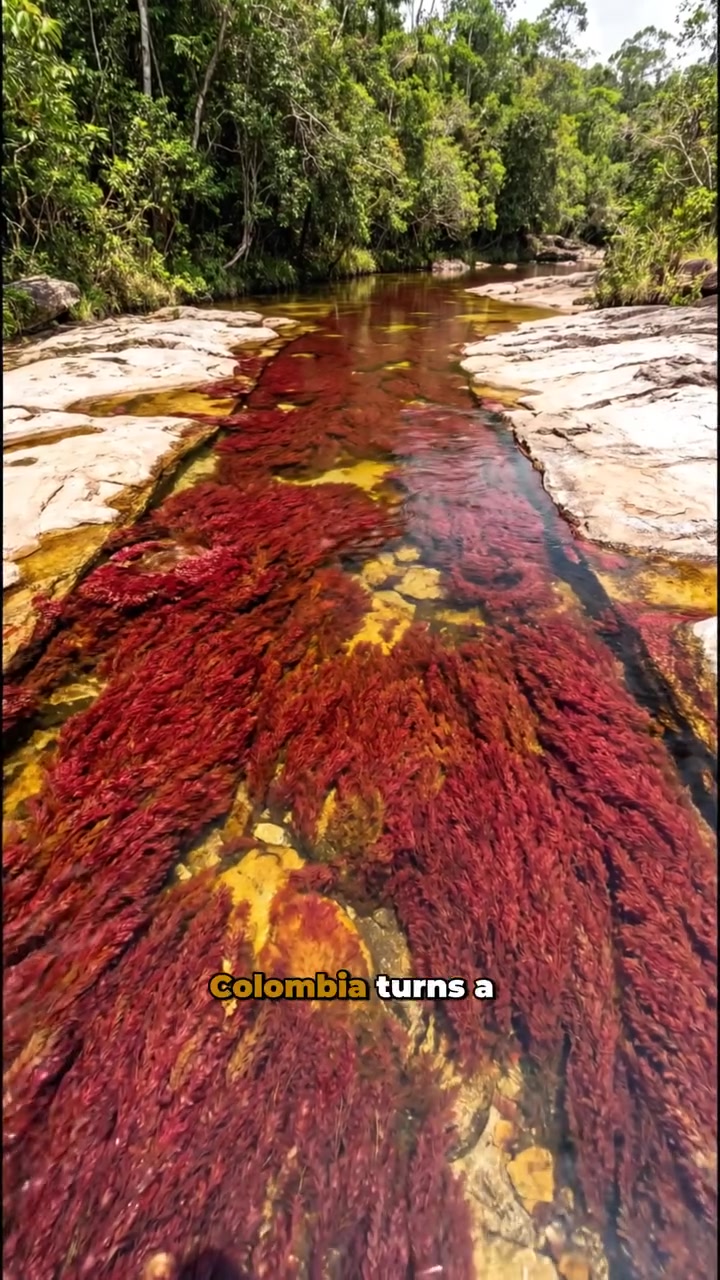
The Liquid Rainbow of Serranía de la Macarena
Swirling along a 62-mile route through Colombia, the Cano Cristales river is an example of nature's secretive artistry; for most of the year, it looks like a regular, clear river. However, between June and November, the normally clear waters reveal a hidden world of vibrantly colored flora. The red pigment is from Macarenia clavigera, an aquatic plant. Which is a plant endemic to Colombia. Clingy and fast-growing, the plant thrives fastest in the river's roaring spots. The plant's colors transform as it moves through various stages of life: green when youthful, then yellow, pink, and finally maturing into a stunning vivid red.
The river’s unusual spectacle
The river's deep red hue only emerges after the river drops to a specific level, allowing sunlight to reach and nurture the plants but not so low as to dry them. The result? A breathtaking spectacle that unfolds for only a few weeks each year. This brief window provides a glimpse of the unique plant life, and makes Cano Cristales a destination for nature enthusiasts visiting Colombia. The river's peculiar color inspires a variety of scientific and spiritual interpretations.
Macarenia Clavigera — The Master of Color
Understanding Macarenia clavigera, the rare aquatic plant providing the river's vivid splash, is a story worth telling. This plant is a chameleon, changing colors throughout its life cycle. The plant thrives on the walls of the river’s most turbulent parts. That makes its transformation all the more unusual. Locals call it the "liquid rainbow." It turns the water a vibrant red. Unlike the polluted, tinted waterways elsewhere, this South American river actually has clear water.
The Life of Macarenia Clavigera
Macarenia clavigera plants have a four-step life cycle. Its colors change from green to red, as the plant ages. Starting its life as a young green shoot, it turns yellow, blossoming into pink and then entering its final stage of life with a brilliant red hue. This transformation is why the river turns red. The species is most vulnerable during the pink-stages, prone to damage from water currents.
The Timing of the Red Tide
The Cano Cristales river appears red for a brief period. The river drops enough to permit sunlight to reach the bed beneath, yet not so low that it dries the plants. If the timing is off by a few weeks, the plant life recedes. The river returns to its ordinary hue, a clear stream running silently over plain stones. This phenomenon occurs between June and November. Between these months, visitors can witness one of the most incredible sights in nature.
Visitors to the Crimson Wonder
For decades, tourists have been drawn to the river. For many, it’s a mystical experience. It looks like a deep, blood-red river. The clear waters reveal plant life on the riverbed. It's the only effect of its kind in the world.
The Water’s Colorful Contradiction
Water in the river at all times is clear, the pigment is on the riverbed. This makes the Cano Cristales waters an interesting contradiction. Visitors can scoop the water into their hands and see that it's colorless. The red comes from the vibrant Macarenia clavigera plant.
The Macarenia Clavigera
The same riverbed that normally contains clear water nurtures the aquatic plants. They turn the river into a nature-created painting. When the river flow is just right, it’s as if it amplifies the colors on the bed beneath. The riverbed paints an underwater picture, and sunlight is the artist's brush.
Visit the Liquid Rainbow
The Cano Cristales river offers a brief, and memorable, look. It's a unique place to visit for nature enthusiasts. Sometimes, the best ways to experience natural phenomena are to visit places like these. Locals continue to share stories about the “liquid rainbow."
Questions readers ask
What exactly causes the Cano Cristales river to turn red?
The red color comes from a unique aquatic plant called Macarenia clavigera. This plant changes color as it ages, turning a vibrant red in its final stage of life. When the river level drops, sunlight reaches these plants, making the river appear red.
Why does the red phenomenon only happen for a few weeks each year?
The red hue is visible only when the river level is just right—low enough for sunlight to reach the plants but not so low that it dries them out. This specific condition occurs between June and November, creating a brief window for visitors to see the spectacle.
Is the river's water actually red, or is it just an illusion?
The water itself is clear. The red color comes from the Macarenia clavigera plants on the riverbed. If you scoop up the water, you'll see that it's colorless; the red pigment comes from the plants below.
Can visitors interact with the red river, or is it a protected area?
Visitors can indeed see the red river up close, but it's important to note that the area is protected. Tourists should follow guidelines to ensure the preservation of this unique ecosystem, such as avoiding contact with the plants and staying on designated paths.
Are there any other rivers or bodies of water that have a similar phenomenon?
As of now, the Cano Cristales river is the only known place in the world where this specific phenomenon occurs. The unique combination of the Macarenia clavigera plant and the river's conditions makes it one of a kind.
What happens to the river when it's not red?
When the water level is too high or too low, the plants on the riverbed do not receive enough sunlight to maintain their vibrant red color. The river then appears as a regular clear stream, with the plant life receding.
How do scientists explain the color-changing phenomenon of the Macarenia clavigera plant?
Scientists attribute the color change to the plant's life cycle. As the Macarenia clavigera ages, it undergoes a series of transformations in color, from green to yellow, pink, and finally a vivid red. This process is influenced by the amount of sunlight and water the plant receives.
Related deep dives
Similar reads based on topic and creator.



Recent articles
Fresh deep dives from the latest Reels we unpacked.




Comments
Be the first to comment.