Formation or Face?
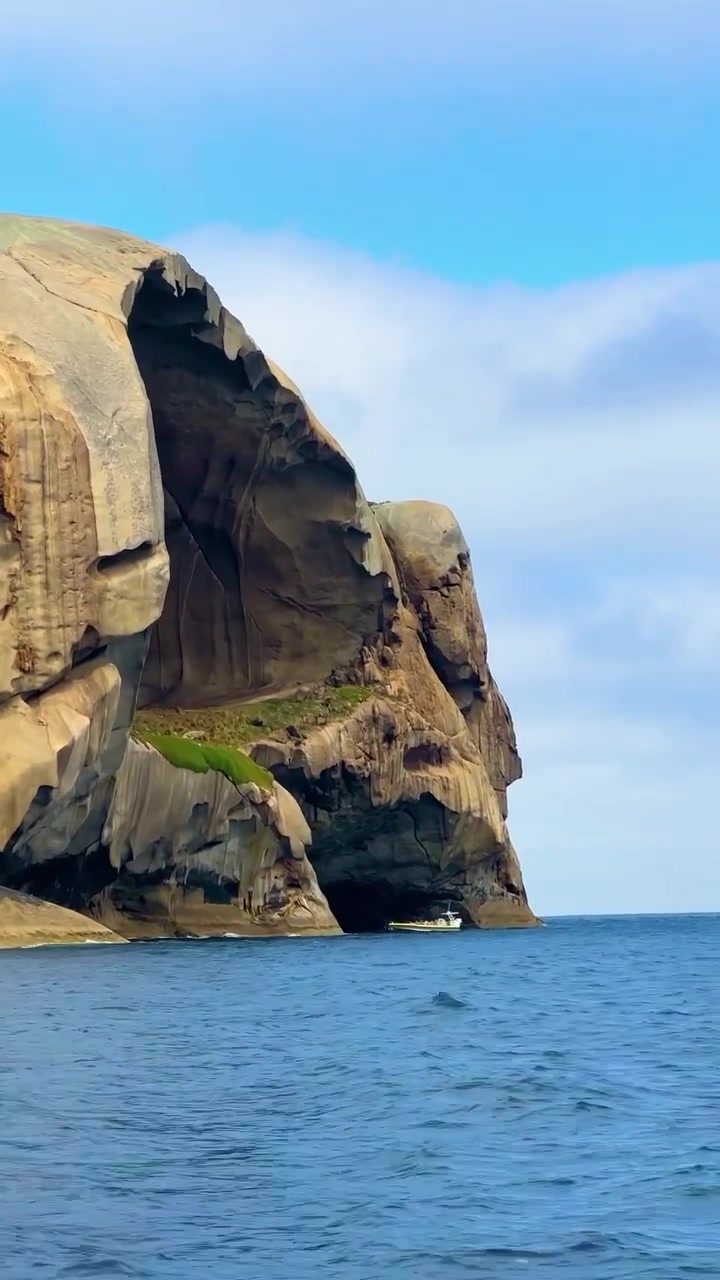
The face is not subtle. The vertical grooves suggest eyes and a nose; the mouth is a cavernous opening. "A rock formation with the face-like shape" is an involuntary thought as you look at the natural structure jutting from the ocean. A normal person won't mistake the face-like rock formation for a carved sculpture; it has not been touched or crafted by humans. As it has been eroded by water and time, it is unique, majestic, and interesting — making it a memorable natural wonder. It also helps with scaling: the small boat near the rock's base makes it obvious that this rock is not to be underestimated. Its uniqueness comes from the combination of the face shape and the cave opening. The video captures the rock's texture and the surrounding water. The rock formation highlights the beauty of coastal landscapes.
Face-hunting as a Coastal Tour pastime
The uncanny resemblance of this rock formation to a face is not a rare geologic trick. "Rock formations with peculiar faces and shapes have always fascinated people. The urge to find faces in the whorls, nodules, and striations is the same impulse that leads people to spot faces in clouds and the moon." These natural formations feel familiar, despite being made by geological forces far beyond human hands. Scientific names like tidal erosion and marine erosion are cold, but aren’t necessarily intuitive, so toponomy and face-hunting, the recreational exploration of rocks and features that look like faces, is a fun way to explore natural features. As you explore the shore, rocks with striking shapes are some of the most interesting sights to see. The human brain is wired to recognise faces, so we notice this rock formation’s face-like shape immediately. Sometimes the rock formations themselves are mysterious, too. Though we see a face, the face is not real. But that does not stop us from seeing the face.
Heads, Caves, and Boats
Meets the Eye and the Tide
The face at the rock's front seems to be the result of years of erosion, primarily due to water. This kind of erosion is gradual; it takes place over hundreds of years. However, after the erosion the rock formation ends up with unique shapes and forms. This specific feature stands out with its large cave-like opening and unusual face-like shape. The low-key, muted rock face, the cave and the ocean make the face-like part stick out all the more.
Scaling the Rock
The small boat in the shot serves a dual role: it highlights the scale of the rock formation. Nature is wild, but this particular rock formation is not only wild but also quite a bit bigger than a person. The boat also helps to set the scene.
Facsimile Faces
The rock formation is not the only one of its kind. There are a number of rock formations all over the world that have face-like shapes, like the Head of the River Dee in Scotland, the rock formation in "The Face on the Milk Carton" song by JJ Cale, and the Old Man of Hoy in Scotland. These formations can be found in many locations, but it's not possible to say for certain what the exact number of formations is. However, these formations are often used as scenic spots where people can come to see the beauty of nature and its many marvels. They are also a reminder of how nature can create things that look like other things. The rock formation in the video resembles these formations, and they make the experience of seeing these formations a memorable one.
How the Coastal Face can Guide You
Coastal tourism isn’t always about the beaches. For many, the rock formations are what they love. These formations are often the subject of many of the paintings and drawings that tourists take home. If you want to recreate "a rock formation with a face-like shape".
- Location: Coastal areas.
- Gear Up: Not required, but a camera will definitely help.
- Find the Face: Try finding rock formations that are shaped like faces. The formations themselves are unique, and they can be interesting sights to see as you explore the coast.
- Spotting it: You may find yourself looking at these formations for a few seconds before you notice the face. As you do, it’s unlikely you'll mistake them for man-made sculptures, but you will probably be in awe. The human brain is wired to recognize faces, and this makes the formations interesting and captivating.
Visiting Rocks
The rock formations prove why coastal landscapes are beautiful. These landscapes are not only beautiful to see, but they also provide a glimpse into the natural wonders that the world has to offer. If you want to visit the rock formations, coastal areas are the best place to go.
Questions readers ask
What exactly causes the face-like appearance in these rock formations?
The face-like appearance in rock formations is primarily due to the gradual process of erosion by water over hundreds of years. The vertical grooves and cavernous openings are shaped by the relentless action of waves and tides, creating features that our brains interpret as facial characteristics. This process is entirely natural and happens without any human intervention.
How does face-hunting work as a coastal activity?
Face-hunting involves exploring coastal areas to find rock formations that resemble human faces. This activity taps into our natural tendency to recognize facial features in random patterns, similar to how we see faces in clouds. It's a fun and engaging way to explore the natural world, and it doesn't require any special equipment or knowledge. You just need to keep an eye out for those distinctive shapes and forms.
What makes the rock formation in the video so unique?
The rock formation in the video stands out due to its uncanny resemblance to a human face, complete with vertical grooves suggesting eyes and a nose, and a cavernous opening for a mouth. Its uniqueness is further emphasized by the large cave-like opening and the muted rock texture, which contrast with the surrounding ocean. The presence of a small boat in the shot also helps to highlight its impressive scale.
Are there other rock formations like this one around the world?
Yes, there are several rock formations around the world that have face-like shapes. Some notable examples include the Head of the River Dee in Scotland and the Old Man of Hoy, also in Scotland. These formations are often used as scenic spots and attract visitors due to their intriguing shapes, which make them popular destinations for tourists and nature enthusiasts.
Can I visit these face-like rock formations?
While many of these formations are accessible to the public, the ease of visiting can vary. Some may be located in remote or difficult-to-reach areas, while others might be part of protected natural reserves or national parks. It's always a good idea to check local guidelines and regulations before planning a visit, as some sites may require permits or have specific visiting hours. Additionally, safety should always be a priority when exploring coastal areas, especially around large rock formations and caves.
What’s the best way to spot these formations?
The best way to spot these formations is to keep an eye out for distinctive shapes and patterns while exploring coastal areas. Pay attention to the whorls, nodules, and striations in the rocks, as these can often form face-like features. Remember that the human brain is wired to recognize faces, so you might notice these formations more easily than other geological features. Face-hunting is a fun and engaging activity that can make your coastal explorations even more enjoyable.
How does the presence of a boat in the shot help to understand the rock formation?
The small boat in the shot serves two main purposes: it provides a sense of scale, making it clear just how large the rock formation is, and it sets the scene by showing the surrounding environment. By including the boat, viewers can better appreciate the rock's size and the natural setting, which enhances the overall experience and understanding of the formation.
Related deep dives
Similar reads based on topic and creator.



Recent articles
Fresh deep dives from the latest Reels we unpacked.




Comments
Be the first to comment.