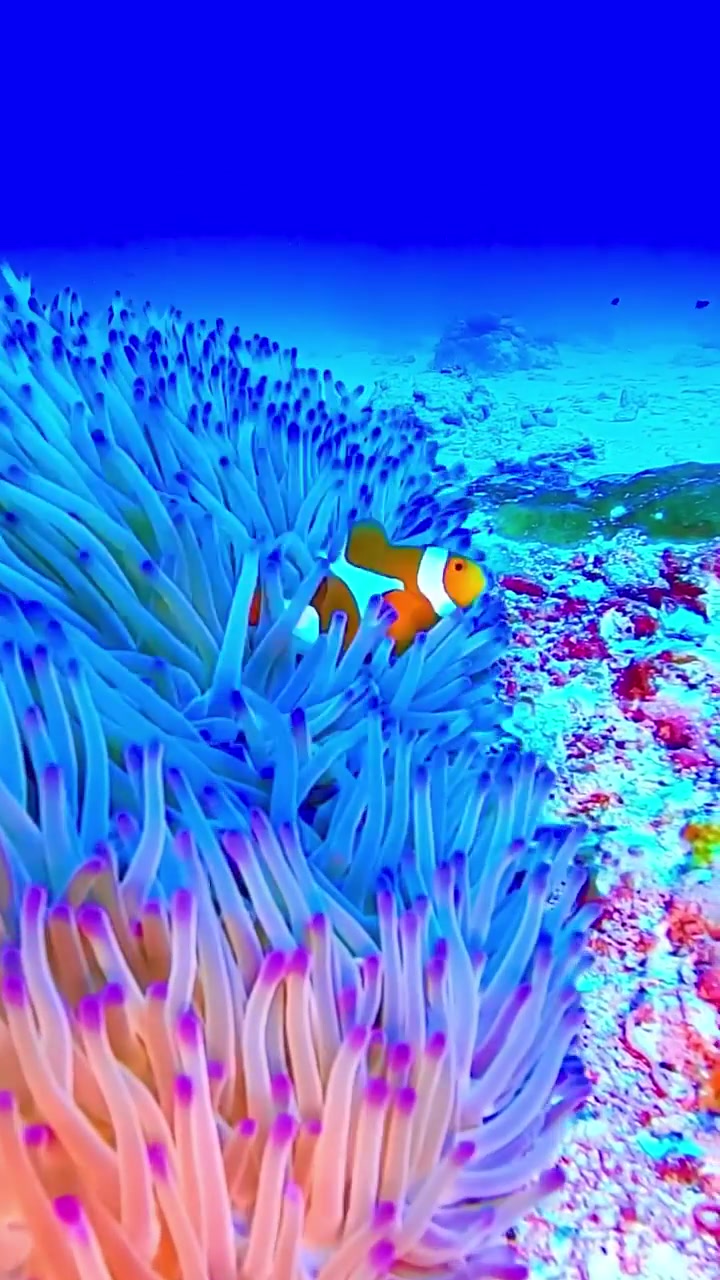
The Dance of the Clownfish
Clownfish are vibrant, easily recognized by their distinctive orange and white coloring. They are known for living in a symbiotic relationship with sea anemones. This is not just a cozy arrangement for the clownfish; it's a survival strategy. The clownfish helps the anemone clean itself and, in return, gains protection from predators who might be stung by the anemone's tentacles. This is more than a partnership; it's a dance of mutual benefit within the complex underwater ecosystem of coral reefs. The clownfish lives a life of love and protection, with many species residing exclusively in sea-anemone homes: They spend most of their lives in these habitats, rarely venturing out. As “is easy 'cause you're beautiful” the bubbling tone of its song suggests, the clownfish will not wander alone either. Pairing remains for life with their partners. The clownfish is more than a character in the movies. This is a creature bound by natural laws, not a product of animation or film. The deeper one goes beneath the surface of this lives, the more one learns about the natural world. In this case, their symbiotic relationship with sea anemones offers a blueprint for specific forms of natural coexistence that help both creatures thrive.
The power of ecological partnerships
Nature reveals the power of symbiotic relationships, where species collaborate for mutual benefit. The clownfish-anemone relationship offers a maginfying glass into how these partnerships work. These relationships are not merely convenient; they are essential for the survival of both species. The clownfish gains protection from predators, while the anemone enjoys a cleaner environment. This symbiotic dance plays out against the backdrop of the intertwined ecosystem found in coral reefs, where diverse species thrive through interconnected relationships.
The House of the Clownfish
The Clownfish- Anemone Home
The clownfish’s home is a sea anemone, a creature itself with a stinging tentacle. The sea anemone provides a safe haven for the clownfish, protecting it from predators. The sea anemone’s tentacles are armed with stinging cells called nematocysts, which can paralyze or even kill prey. Though this makes it safe from predators, it also means the clownfish has no room for error: One wrong move, and it would be stung and paralyzed, too. Luckily, the clownfish has adapted immunity to the anemone’s sting. This adapation allows them to live in harmony without the worry of being stung to death. Clownfish do not sense the venomous tentacles the same way other marine animals might. In fact, they navigate this environment with precision, weaving through the tentacles to create a home. As stated in a song “Love and you is easy 'cause you're beautiful”, the clownfish sees home as a place of love and beauty. This song is not just a tune to soothe our ears. The clever fish see the tentacles with their eyes, but their bodies are guided by an instinctive understanding of safety within these spaces. The clownfish nestles within the anemone’s tentacles, blending in seamlessly with the vibrant, multi-colored surroundings. The anemone’s blue and pink tentacles contrast with the orange and white of the clownfish, creating a visually stunning scene. These interactions underscore the beauty of symbiotic relationships in nature, where each species plays a crucial role in maintaining the balance of the ecosystem. The clownfish and anemone relationship is not just a spectacle to behold. It is a natural process that underscores the beauty in symbiotic relationships.
Breaking Down the Clownfish
The clownfish exhibits a gentle beauty through its symbiotic relationship with the sea anemone. The orange and white stripes of the clownfish blend seamlessly with the vibrant tentacles of the anemone, creating a visually stunning scene. Moreover, the clownfish’ impenetrable alliance with anemones showcases a remarkable natural adaptation. The anemone gains protection, and the clownfish gains a home. It is a natural process governed by instinctive behaviors that have evolved over time.
The Clownfish-The Daily Life
Clownfish spend almost their entire lives around the anemone—daily activities revolve around protecting this home. The clownfish' job is to protect the anemone. It wafts debris, eats up tiny parasitic mites, and lures fish. They will even swim past the tentacles, spitting water to blow off the debris. The clownfish’s role extends beyond mere protection: It is responsible for keeping the anemone clean. The clownfish feeds on creatures that would otherwise harm the anemone. Clownfish will even lead predators away from the anemone. This symbiotic relationship underscores the interconnectedness of marine life, where each species plays a crucial role in maintaining the balance of the ecosystem. The clownfish lives a life of love within its home. This love is not just for its partner but also for the environment. It’s not just a dance of courtship. The clownfish is a key player in maintaining the health of the coral reef ecosystem. The clownfish and anemone relationship is a testament to the wonders of nature, where different species live together in harmony. Even in the natural world, the clownfish highlights the importance of love and care for its nest.
A Healthy Home for Clownfish
No home comes without challenges. The clownfish is under threat from habitat destruction and pollution. Coral reefs, the natural habitat of clownfish, are under pressure from climate change and human activities. Rising sea temperatures, ocean acidification, and pollution are all detrimental to the survival of coral reefs. This severely impacts the environment where the clownfish thrives. Conservation efforts are crucial to protect the clownfish and its habitat. Initiatives to reduce pollution, manage fisheries sustainably, and mitigate climate change are essential. Awareness about the importance of marine life and the threats they face is also key for conservation. Visiting marine conservation websites can help one know how to actively participate in the protection of these habitats.
Clownfish Love at home
Recognizing the unique lifestyle and behaviors of these creatures makes you appreciate their world a little bit more. Keeping the sea anemone healthy is the key to keeping the clownfish happy. The anemone and the clownfish are often seen together, creating a visually stunning scene. Beyond the visual spectacle, this relationship underscores the interconnectedness of marine life. The clownfish and anemone relationship is a testament to the wonders of nature, where different species live together in harmony.
Questions readers ask
How do clownfish manage to live safely among the stinging tentacles of sea anemones?
Clownfish have developed a unique adaptation that makes them immune to the stinging cells, or nematocysts, of the sea anemone. This immunity allows them to navigate and live safely among the tentacles, using their instincts to move through the anemone without getting stung.
What specific benefits do clownfish and sea anemones provide to each other in their symbiotic relationship?
The clownfish helps keep the anemone clean by eating leftover food and dead tentacles, while the anemone provides the clownfish with a safe haven from predators. This mutual benefit is crucial for both species' survival.
Can clownfish survive without sea anemones, and why do they rarely venture out of their anemone homes?
Clownfish rely on the sea anemones for protection from predators, and they have adapted to live within the anemone's tentacles. They rarely venture out because their anemone home is essential for their survival and they have a strong instinct to stay within the safe haven.
How does the clownfish-anemone relationship illustrate the broader concept of ecological partnerships in nature?
The clownfish-anemone relationship is a prime example of how species can collaborate for mutual benefit. This symbiotic dance is not just convenient but essential for the survival of both species, highlighting the interconnectedness and interdependence of species within ecosystems.
Are there different species of clownfish, and do they all form the same kind of relationship with sea anemones?
Yes, there are several species of clownfish, and while many do form similar symbiotic relationships with sea anemones, the specifics can vary. For example, some species may have slightly different adaptations or preferences for certain types of anemones.
Related deep dives
Similar reads based on topic and creator.



Recent articles
Fresh deep dives from the latest Reels we unpacked.

Comments
Be the first to comment.