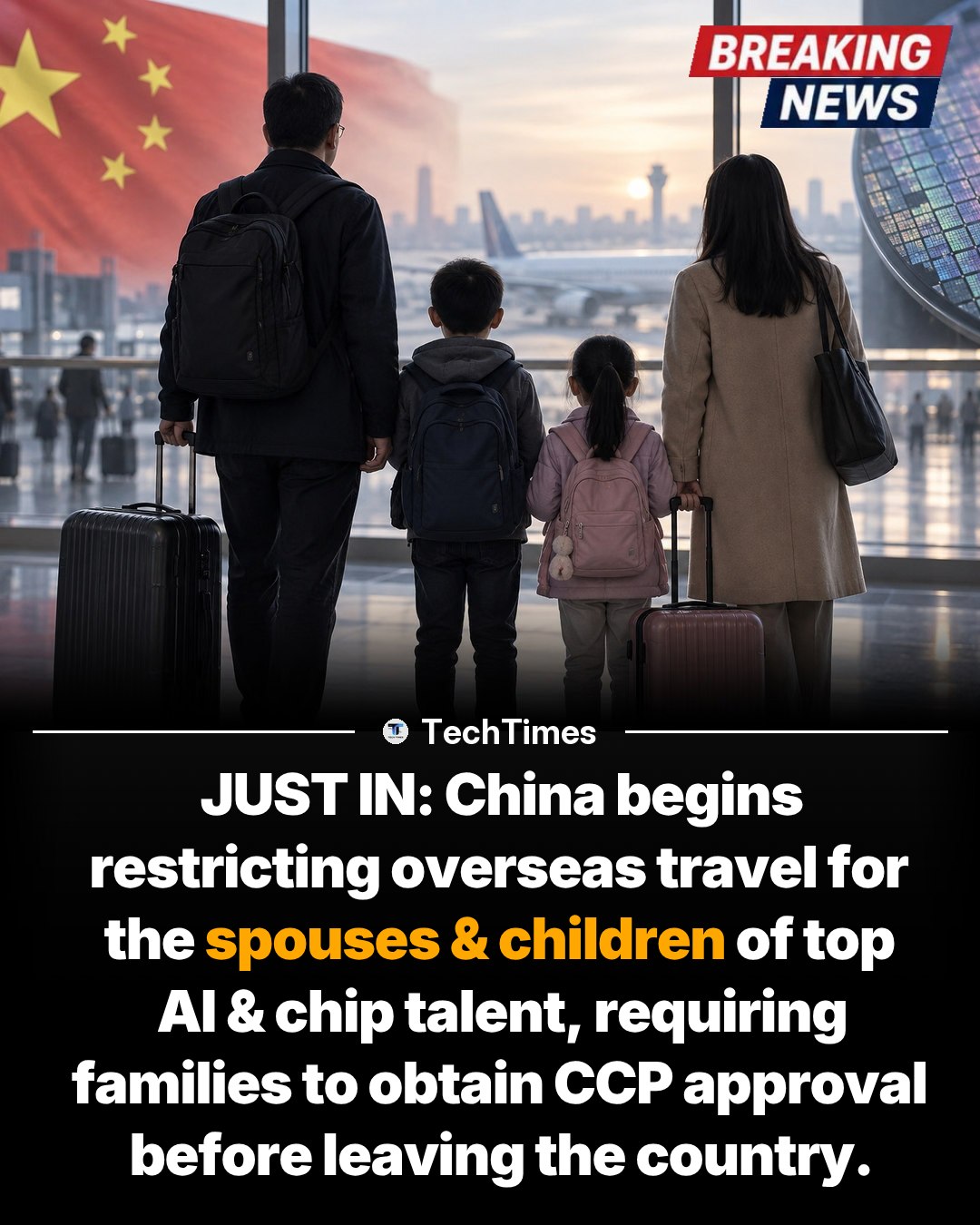
After months of encouraging talent to stay, China has restricted overseas travel for families of top tech professionals. Starting immediately, spouses and children of employees in the AI and chip sectors must obtain approval from the Chinese Communist Party (CCP) before leaving the country. The restrictions, first reported by TechTimes, is part of a concerted effort by China to retain skilled workers in a growing tech industry. The news comes as Chinese officials have been pushing major players like Huawei to invest heavily in research and development. This isn't the first time travel restrictions have been aimed at keeping talent in the country. However, there are important differences that set these measures apart.
China's Talented Tech Blocks
The new restrictions target families of specialists in critical industries, specifically the AI and chip sectors. This policy not only keeps employees from leaving but also creates an additional hurdle for families that want to keep their travel plans open. By requiring CCP approval for their families’ travels, China is ensuring that talent won’t be motivated to move to other countries with greater international mobility. Taking into account the industries targeted, these measures are aimed at ensuring Chinese dominance in more advanced areas of technology. Global competition is fierce and China’s efforts have been largely aimed at surpassing the United States and Europe. But by restricting travel for families, they’re also highlighting the internal challenges posed by shifting economic and political conditions. The primary concern for many families is the potential impact on their careers and loved ones. This new measure will likely lead to families turning down job offers and promotions overseas, along with changing residential plans. It's also a signal to other countries and companies globally — talent now needs government approval from Beijing. This affects the international landscape of expert recruiting.
Technology Talent in the Crosshairs
The targets of these restrictions are tech experts at the top of their field, including AI developers and chip designers. Since China began to heavily invest in these sectors, it has become a center of global innovation. For example, scientists from around the world have moved to life science hubs in Shanghai and Shenzhen, establishing research centers and developing products from AI-driven medical devices to autonomous electric vehicles. To keep these centers thriving, China wants to ensure that valuable workers in these fields remain within its borders. Restricting travel for family members may be an effective way to draw talent and keep it. "Only the CCP can approve trips outside the country in addition to visas and work permits. This holds power over mission-critical professionals who may think twice before staying here."
The CCP's Grip on Family Mobility
For Beijing, retaining top-tier talent in tech, engineering and chip industries is more important than ever. Policies in recent years have focused on keeping research and development from happening outside of China. Whether the goal is intellectual property protection, international competition in AI, or global economic growth, China feels the need to keep the brightest minds at home. The CCP approval required for family travel is essentially another layer of control over the most vital areas of the economy. It’s also a reflection of China’s changing priority in international travel policy and global competition for talent. Rather than use travel to bring in foreigners, its new restrictions assert China's dominance in technology sectors.
Talent Wars: International Tradeoffs
The travel restrictions are a striking example of the talent wars in the tech sector, something that has become increasingly apparent as several countries aggressively try to secure their share of tech talent. India is another country which has restricted foreign travel as a way to bring in more skilled workers. Ireland, Taiwan, and South Africa have also put in place similar measures to retain talent and stimulate economic growth.
Balancing Tech Growth and Talent Quotas
The restrictions are a clear signal: China is now considering its global political position on par with its economic needs. The country is trying to keep China’s top talent from leaving its borders while also working to attract more international talent. Tech companies will need to evaluate the impact of these restrictions on their workforce. They may need to make decisions about where to allocate resources, as well as whether to restructure their teams in response to the new policy. Sponsorships and visa quotas will be re-examined.
How to Move Forward
China is poised to become a global center for AI and chip technology, but the country’s talent pool may be at risk of drying up if its international mobility is restricted. People now must think carefully before considering a move to China. That being said, for those looking to work in China, it's important to be informed, plan ahead, and prepare for challenges such as long-term immigration and visa restrictions. Additionally, there are other cities in the world, like Tokyo, Amsterdam, and Toronto, that offer competitive technology talent markets.
Global Consequences
The impact of China’s new travel restrictions will likely affect the broader technology sector. Companies that rely on talent from China may face hiring challenges and potential “brain drain” issues. However, there are opportunities for other cities to step up their appeal and attractiveness to potential movers. Countries such as India, Spain, and South Korea are already making efforts to position themselves as top talent hubs. Consequently, global cities are rethinking their approach to talent attraction and retention. As technology continues to become more central to the global economy, competition for talent will only become more fierce. The implications of China’s new travel restrictions are far-reaching. Countries and companies around the world will need to adapt to this changing environment, and balance their own growth with the evolving needs of their talent pools.
Questions readers ask
What exactly are the new travel restrictions China has imposed on families of AI and chip talent?
Starting immediately, spouses and children of employees in the AI and chip sectors must obtain approval from the Chinese Communist Party (CCP) before leaving the country. This means that family members need explicit permission for any international travel, adding a significant layer of bureaucracy and control over their movements.
Why is China targeting the AI and chip sectors specifically with these restrictions?
China is targeting these sectors because they are critical to advancing the country’s technological capabilities. The AI and chip industries are at the forefront of global innovation, and China wants to ensure that it retains its top talent in these fields to maintain its competitive edge, particularly against the United States and Europe.
How do these new restrictions differ from previous measures aimed at keeping talent in China?
Unlike previous measures, these new restrictions specifically target the families of top tech professionals, requiring CCP approval for their travel. This creates an additional barrier, making it harder for talented individuals to consider moving abroad, as their families' mobility is now tied to government approval. This is a more personal and potentially more effective deterrent.
What impact might these restrictions have on the careers and personal lives of affected families?
These restrictions could lead to significant changes in the personal and professional lives of affected families. Many may turn down job offers and promotions overseas, and there could be changes in residential plans. The requirement for CCP approval could also create uncertainty and stress, affecting both the individuals and their families.
What kind of approval process can families expect when applying for travel?
The approval process involves obtaining permission from the CCP, in addition to any visas and work permits. The details of this process aren't fully clear, but it's evident that the CCP will have significant control over whether family members can travel internationally. This could involve extensive checks, potential delays, and uncertainty for those seeking to travel.
How might these restrictions affect the global landscape of tech talent recruitment?
These measures send a clear message to the international community that China's top tech talent is now subject to government approval for travel. This could make companies and countries think twice before attempting to recruit these experts, as they would need to navigate the complexities of Chinese bureaucracy. It also highlights the challenges posed by China's internal economic and political conditions.
Related deep dives
Similar reads based on topic and creator.




Recent articles
Fresh deep dives from the latest Reels we unpacked.



Comments
Be the first to comment.