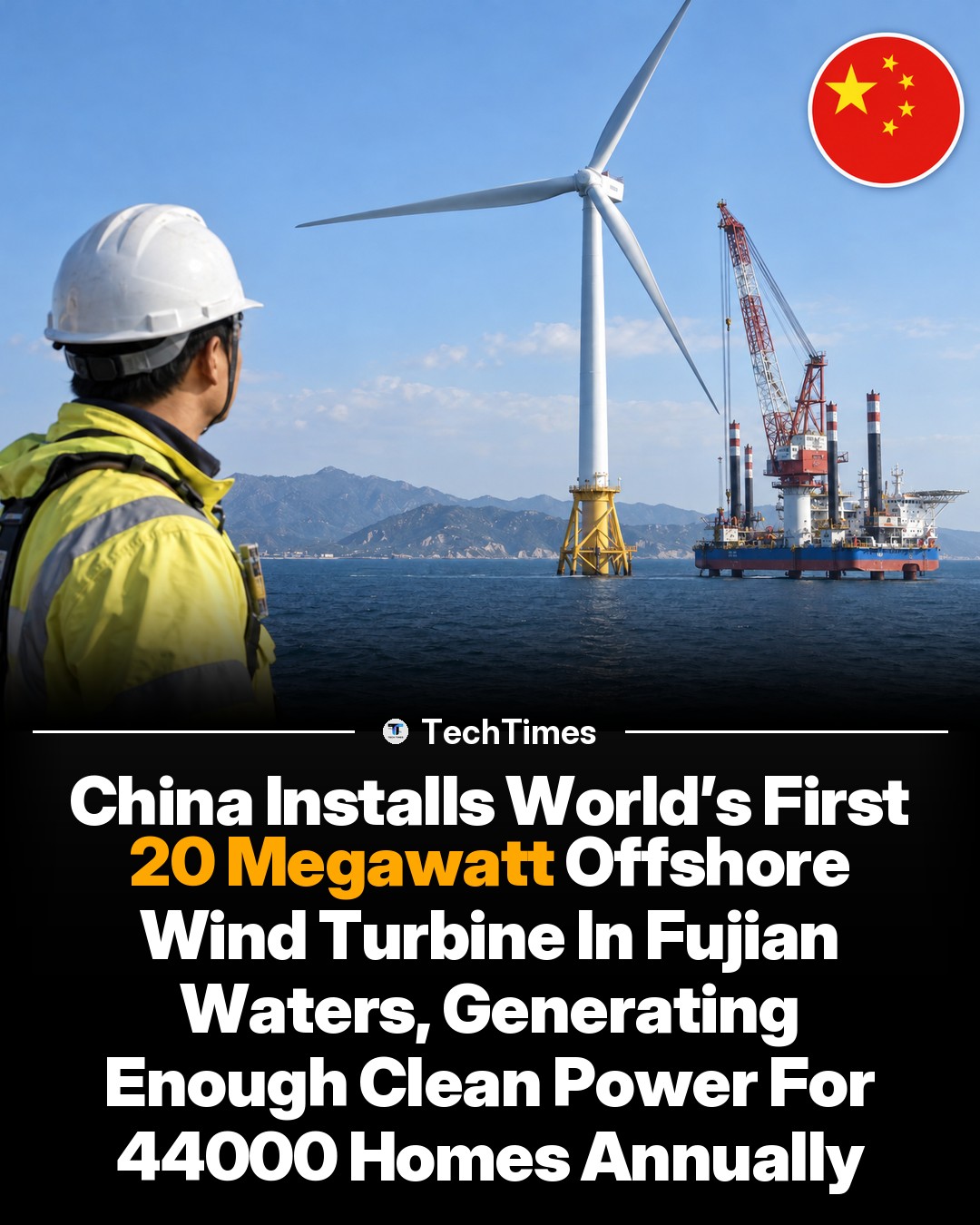
China is now home to the world's first offshore wind turbine capable of generating 20 megawatts of power. Located in Fujian waters, the turbine represents a significant leap in renewable energy technology, with the ability to power 44,000 homes every year.
The 20-MW Behemoth: Wind Power's New Benchmark
Wind turbines are provided with a concrete structure as a foundation in the ocean floor. The structure is attached to a tower, which holds the turbine and rotor blades. These turbines convert wind energy into electrical energy. A wind turbine's size determines its power generation potential. The 20-megawatt model installed in China's Fujian waters is the world's largest, showcasing the rapid advancement in wind energy technology. Engineers in China have created a turbine that can produce 2,000 megawatt-hour (MWh) every single day. When the wind turbine is operating under optimal conditions in Fujian waters, it can provide enough electricity to power 44,000 homes every year. This is a significant increase from the 5MEG turbine in North Holland, which was previously the largest offshore wind turbine. China's feat shows that renewable energy technology is improving at a rapid pace, and coastal countries will lead this field.
Energy and Climate: Forging the Future
This development is part of a broader global trend towards harnessing renewable energy sources to reduce carbon emissions. Governments and corporations worldwide are investing in offshore wind farms as a key strategy to mitigate climate change. China aims to achieve carbon neutrality by 2060, and this turbine installation aligns with that goal. As a coastal nation with extensive maritime territory, China is well-positioned to leverage offshore wind power. The installation of the 20-megawatt turbine in Fujian waters not only sets a new benchmark for wind energy technology but also underscores China's commitment to leading the global transition to renewable energy.
The Engineering marvel
The Anatomy of a Giant
The turbine tower is the central structure that holds up the rotor and the blades. In the Fujian wind turbine, the tower supports nearly 20 megawatts of electricity. Each blade of this turbine is over 100 meters long, significantly larger than previous models. The rotor, which is responsible for capturing wind energy, also features a larger diameter. It can capture faster wind and convert it to energy. With over 200,000 sensors and 1,000 kilometers of cables, the turbine delivers real-time data. This allows for precise monitoring and maintenance, ensuring optimal performance and longevity.
The Logistical Dance
Installing a wind turbine of this magnitude involves a sophisticated logistical operation. The process begins with the construction of the turbine components on land. These parts are then transported to the offshore site using specialized vessels. Once at the site, a crane is used to carefully lift and assemble the turbine parts, including the tower and blades. The workers then carry out the final assembly of the turbine. They must be extremely precise and coordinated to ensure that the turbine is installed correctly. This process is extremely risky. Each component is extremely heavy, and the workers must ensure that the crane lifts them correctly. During this process, the smallest of missteps can cause millions of dollars worth of damage. If the wind gusts are too strong, the workers risk being swept away by the wind. All workers carry life-saving gear with them as a safety precaution.
The Power of the Sea
Offshore installations face unique challenges due to harsh marine environments. In Fujian's instance, corrosive saltwater, extreme weather conditions, and the need to operate in a highly dynamic environment require advanced materials and engineering solutions. The turbine is designed to withstand the powerful waves and strong winds of the open sea. To accommodate these conditions, engineers use hardy materials such as stainless steel and special coatings to protect against corrosion. This ensures the longevity and operational reliability of the turbine.
How to Hike in Offshore Wind
While most people will never set foot on an offshore wind farm, the technology behind them is changing every day. The first step in gaining a deeper understanding of offshore wind turbines is to learn about their components and purpose. Many wind farms offer tours for the public to learn more about the turbine installations. Reservations must be made in advance before visiting.
The view from the beach
If visiting the wind farm directly is challenging, many coastal towns near large-scale offshore wind farms provide a clear view of these towers from the beach. For example, many tourists visit the Thai and the United Kingdom to see wind farms. The panoramic views are breathtaking, and they are a testament to the power of renewable energy.
Wind Power's Next Horizon
China and other coastal nations have demonstrated that unprecedented technological advancements in offshore wind energy. With engineering advances and growing environmental awareness, the future of wind energy appears brighter than ever. The turbine installation in Fujian waters is a testament to this fact. It marked a major milestone in renewable energy technology and paved the way for future innovations.
Questions readers ask
What makes the 20-megawatt turbine in Fujian significant compared to other offshore wind turbines?
The 20-megawatt turbine in Fujian is significant because it's the world's first offshore wind turbine capable of generating 20 megawatts of power. It's a leap in renewable energy technology, able to power 44,000 homes every year, which is a significant increase from previous models like the 5-megawatt turbine in North Holland.
How does the 20-megawatt turbine in Fujian compare to other renewable energy sources in terms of power generation?
The 20-megawatt turbine in Fujian is a standout in the renewable energy sphere because it can generate 2,000 megawatt-hours (MWh) of electricity every day and 44,000 homes' worth of electricity per year. It's a major step forward in terms of power generation compared to other renewable energy sources.
What are the key components of the 20-megawatt turbine and how do they work together?
The 20-megawatt turbine consists of a tower that supports the rotor and blades. The blades, which are over 100 meters long, capture wind energy and convert it into electrical energy. The turbine is equipped with over 200,000 sensors and 1,000 kilometers of cables, which allow for precise monitoring and maintenance, ensuring optimal performance. This setup allows the turbine to generate a significant amount of electricity from wind energy.
What are the logistical challenges involved in installing a 20-megawatt offshore wind turbine?
Installing a 20-megawatt offshore wind turbine involves a complex logistical operation. The process begins with the construction of the turbine components on land, which are then transported to the offshore site using specialized vessels. Once at the site, a crane is used to carefully lift and assemble the turbine parts, including the tower and blades. This process requires extreme precision and coordination to ensure that the turbine is installed correctly. There are also significant risks involved in the installation process.
How does China's 20-megawatt turbine align with the country's climate goals?
China's 20-megawatt turbine aligns with the country's goal to achieve carbon neutrality by 2060. As a coastal nation with extensive maritime territory, China is well-positioned to leverage offshore wind power. The installation of the 20-megawatt turbine in Fujian waters underscores China's commitment to leading the global transition to renewable energy.
Can the technology used in the 20-megawatt turbine be replicated in other parts of the world?
The technology used in the 20-megawatt turbine is a significant advancement in renewable energy and could potentially be replicated in other parts of the world. However, the success of such replication would depend on various factors, including local wind conditions, infrastructure, and regulatory frameworks. Coastal countries with similar maritime territories could benefit from this technology.
Recent articles
Fresh deep dives from the latest Reels we unpacked.



Comments
Be the first to comment.