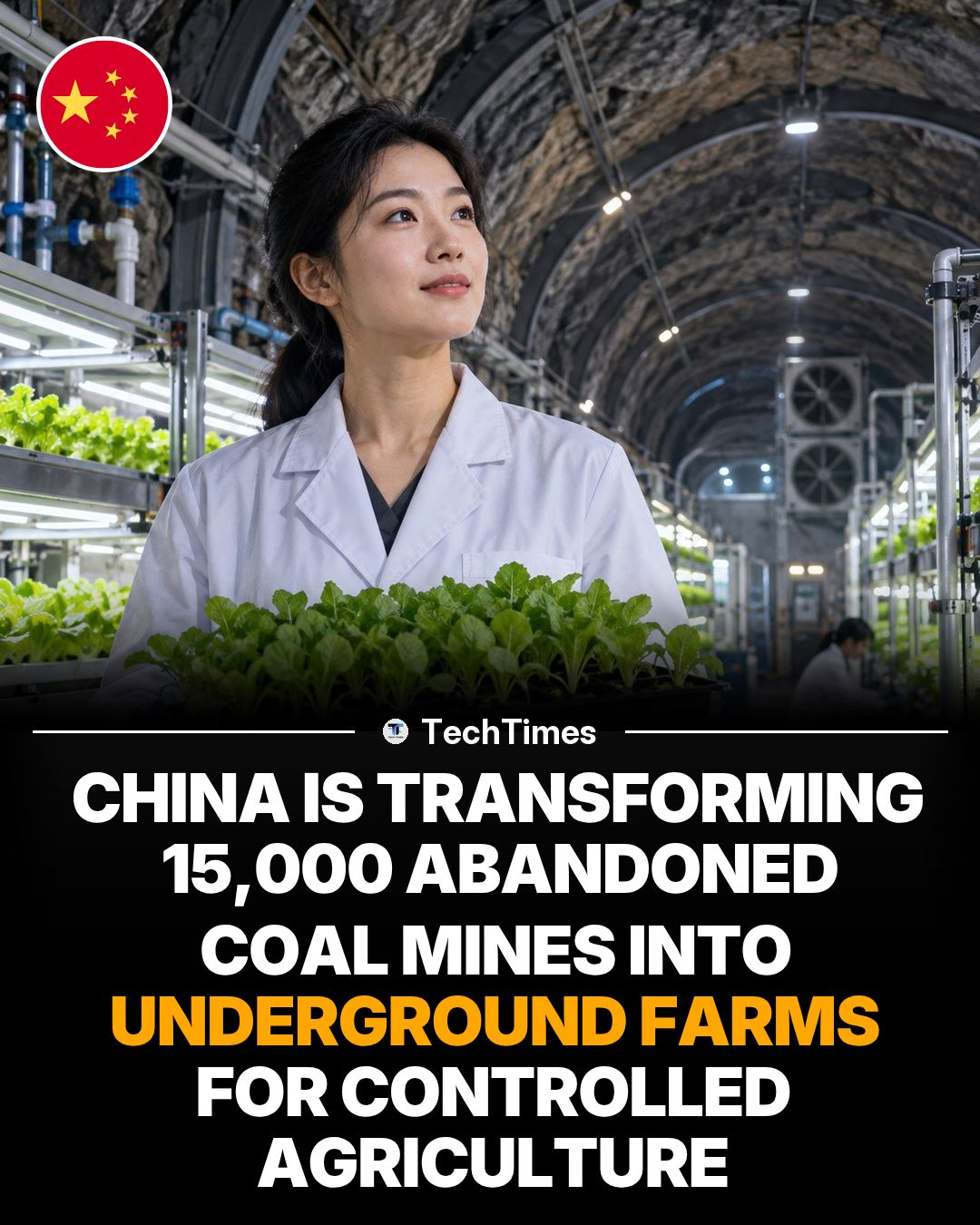
China is leveraging its deactivated coal mines for a novel agricultural venture. The country is repurposing 15,000 abandoned coal mines into subterranean farms, aiming to revolutionize food production with controlled-environment agriculture.
The Subterranean Green Revolution
The concept of underground farming involves cultivating crops beneath the earth's surface within a controlled environment. The idea came as a response to China’s urgent need to address environmental degradation, food security, and land use efficiency. The abandoned coal mines provide a unique opportunity to create vast underground spaces. In these spaces, farmers can utilize artificial lights, controlled temperatures, humidity levels, and irrigation systems to optimize crop growth. The transformation process begins with securing the mines to ensure safety, followed by installing infrastructure for lighting, ventilation, and irrigation. Farmers then plant crops such as leafy greens and vegetables, which thrive in the precisely managed environment. The underground farming method is distinctive for several reasons. Firstly, it allows for year-round cultivation, which is vital for consistent food supply. Underground farms are unaffected by seasonal changes, weather conditions, or natural disasters. They also use less water and land than traditional farming methods because the environment is controlled and there is often no need to adjust for unpredictable outdoor conditions. Secondly, the underground farms contribute to land conservation and sustainability. By repurposing abandoned coal mines—many of which pose environmental and safety risks—the initiative reduces the need for deforestation or clearing new land for agriculture. Finally, the controlled environment ensures minimal use of pesticides and promotes organic farming. Given the isolated environment, there is a reduced risk of pests and diseases, which means less reliance on chemical interventions and less contamination of food.
A Green Ambition in a Country of Contrasts
Underground farming aligns with China's broader efforts to tackle environmental challenges and food security while optimizing limited resources. This initiative comes at a time when the country faces increasing pressures from climate change, water scarcity, and decreasing arable land. Traditional farming practices are not only resource-intensive but also contribute to CO2 emissions. Additionally, this innovative solution addresses food waste, economic growth, and job creation. By developing a sustainable farming model, China can reduce food waste, which is a significant challenge within the country. Underground farms could provide fresh produce closer to urban centers, reducing transport distance and associated emissions. This also translates to economic growth and job creation in what were previously industrial mining areas. This agricultural transformation showcases China's ongoing commitment to sustainable development. The government has long prioritized ecological conservation, and repurposing old mines is the latest step in a larger environmental strategy. This push to green its industries aligns with the country’s goals set out in the “Green China 2030” initiative.
Deep diving: The technological marvel
The Art of Underground Illumination
Artificial lights are fundamental in underground farming; they stimulate plant growth and replace natural sunlight. These lights are strategically placed and designed to mimic the spectrum and intensity of sunlight. They are also energy-efficient, which minimizes the overall environmental impact of the operation. The artificial lights ensure uniform light distribution, growth promotion, and protection from pathogens. LED lights are the most commonly used type, as they are energy-efficient, providing the full spectrum of light needed to support photosynthesis. They also last longer, reducing the frequency of replacements, and are safer as they produce less heat compared to traditional lighting solutions. The advancements in LED technology have made it cost-effective and suitable for large-scale agricultural use in underground farms.
The Perfect Environment
The underground farms offer a controlled environment where variables such as temperature, humidity, and nutrient levels can be precisely managed. This ensures optimal growing conditions and consistent crop yields, regardless of external factors. This is a major advantage over traditional farming, where crops are exposed to unpredictable weather conditions and environmental changes. The stable environment also minimizes the risk of pests and diseases. Traditional farming methods often require the use of pesticides and fungicides to protect crops from pests. Because the underground environment is isolated, there is less need for chemical interventions. Natural pest control techniques such as integrating beneficial insects, biological controls, and promoting biodiversity are also easier to implement.
The Mechanics of Harvest
Starting with planting and nurturing seedlings to ramping up crop production, the underground farm is a structured system. Each phase is optimized to balance productivity and resource use. To crop cultivation, artificial lighting, irrigation, and monitoring systems are the backbone of the process. The technology allows farmers to monitor growth patterns and adjust conditions if necessary. They track crops using sensors and IoT (Internet of Things) devices that gather data on soil moisture, light intensity, and nutrient levels. The data is used to optimize sustainability. Automation plays a significant role in underground farming, further streamlining operations and reducing labor costs.
What's limited innovation like this going to cost?
The costs associated with setting up an underground farm are initially high due to the infrastructure needed—from lighting and irrigation systems to temperature controls—are costly. The high installation costs are followed by recurring energy expenses to power the artificial lights, ventilation, and climate control. However, the long-term economic benefits of underground farming may outweigh these initial costs. These farms can produce crops year-round, ensuring a consistent supply of fresh produce. The reduction in water and land usage, along with minimized pesticide use, adds to the long-term savings and environmental benefits. Additionally, the proximity of these farms to urban centers reduces transportation costs and associated emissions, contributing to a more sustainable agricultural model. The underground farms contribute to China's food production in a manner that aligns with its environmental goals. The move not only utilizes pristine land resources but reduces carbon footprint, enhances water conservation, and minimizes the need for chemicals. This innovative approach to agriculture is rooted in sustainable development, making it a significant step towards food security and environmental sustainability.
A New Kind of Green Thumb
For the eco-conscious or technology enthusiast looking to get involved in controlled agriculture, starting with urban farming could be a great first step. Urban farms offer a small-scale version of the controlled-environment agriculture and can be done in limited space within cities.
- Start Small: Begin with small plants or herbs that require minimal space and resources. This can help test the waters and understand the challenges of controlled-environment agriculture.
- Choose the Right Technology: Invest in good-quality LED grow lights and a reliable irrigation system. These are essential for controlled agriculture and can significantly influence the success of your crops.
- Monitor and Adapt: Invest in a basic monitoring system to track the growth of your plants. This will help you understand their needs better and make necessary adjustments.
- Learn From the Big Guys: Many large-scale operations have shared their knowledge and resources online. For instance, looking into the best techniques that China’s underground farms use can be valuable for your urban farming endeavors.
- Engage in the Community: Join forums or local groups focused on urban farming. Sharing experiences and learning from others can provide valuable insights and support. Ana Urban or suburban gardeners can also now transform their spaces into urban farms, applying the principles of controlled-environment agriculture. Whether it's a small balcony garden or a larger rooftop farm, the ideas from controlled agriculture can be scaled down to fit smaller spaces. The potential for sustainable and innovative agriculture has never been greater. From urban to underground farm pods, this new model of farming offers a fresh start. The next green revolution is underground, waiting to be harnessed.
Questions readers ask
What kind of crops are best suited for underground farming in coal mines?
The article mentions that leafy greens and vegetables are well-suited for underground farming. These crops thrive in the controlled environment, which can be optimized for temperature, humidity, and light. The stable conditions underground allow for consistent growth, making these types of crops ideal for year-round production.
How does underground farming address environmental issues in China?
Underground farming in China tackles several environmental challenges. By repurposing abandoned coal mines, it reduces the need for deforestation and clearing new land for agriculture. Additionally, the controlled environment minimizes the use of pesticides, promoting organic farming and reducing contamination. This method also helps in conserving water and land resources, making it a more sustainable option compared to traditional farming methods.
Can the controlled environment underground really ensure year-round crop production?
Yes, the controlled environment in underground farms allows for year-round crop production. This is because the farms are unaffected by seasonal changes, weather conditions, or natural disasters. By maintaining optimal conditions for growth, farmers can ensure a consistent food supply throughout the year, which is crucial for food security.
How does this initiative impact local economies in mining areas?
The transformation of abandoned coal mines into underground farms creates new economic opportunities. These farms can provide fresh produce closer to urban centers, reducing transport distances and associated emissions. This also translates to job creation and economic growth in areas that were previously dependent on mining, fostering a more sustainable and diverse local economy.
Are there any risks associated with converting coal mines into farms?
The article mentions that the transformation process begins with securing the mines to ensure safety. However, it does not delve into specific risks, potential challenges might include maintaining the infrastructure, managing the controlled environment, and ensuring the long-term sustainability of the farms. Additionally, the initial investment and ongoing costs could be significant, which might pose a barrier to widespread adoption.
How does underground farming in China compare to traditional farming methods?
Underground farming offers several advantages over traditional farming. It uses less water and land, is not affected by weather conditions, and can produce crops year-round. Traditional farming, on the other hand, is resource-intensive and contributes to CO2 emissions. Additionally, underground farming promotes organic practices and reduces the need for pesticides, making it a more sustainable option.
Related deep dives
Similar reads based on topic and creator.




Recent articles
Fresh deep dives from the latest Reels we unpacked.




Comments
Be the first to comment.