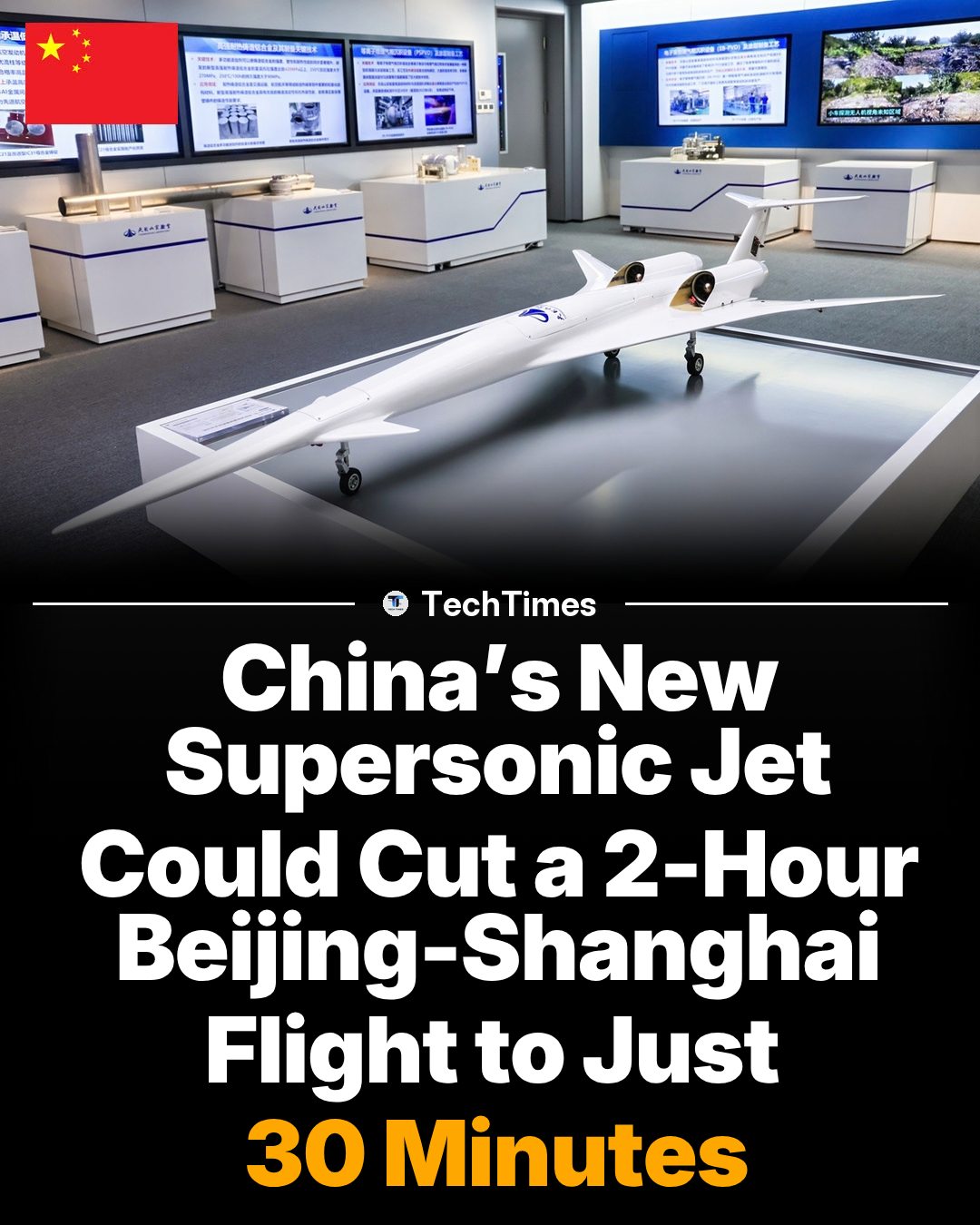
China Promises Supersonic Travel Redefining Domestic Flights
A model of China's new supersonic jet sits proudly at the center of an exhibition hall, flanked by futuristic screens. But the real promise is in the numbers: that 2-hour flight from Beijing to Shanghai could be reduced to a mere 30 minutes. The supersonic jet promises to cut travel times by more than half. That sounds radical. But what is this technology, and how would it work?
A Jet Engineered for Speed
This supersonic jet is designed to fly at speeds faster than the speed of sound. Supersonic travel means breaking the sound barrier. To be precise, the jet is intended to reach speeds of Mach 2+, meaning it would fly at more than twice the speed of sound. The primary goal of developing this supersonic jet is to significantly reduce travel times, particularly for shorter, domestic routes. The Chinese developers have considered the environmental impact as well. Supersonic jets are notorious for their loud sonic booms. While Chinese jet engines are more powerful, the developers are working to reduce noise pollution. Additionally, these engines produce more heat, and Chinese engineers are trying to minimize the environmental footprint. There are technical differences as well. Traditional jets use subsonic turbojets, but this jet employs turbofans, which are optimised for speeds faster than Mach 1. This kind of engine is more efficient at handling the heat generated by supersonic speeds, which could make these flights both faster and more fuel-efficient.
Setting a New Speed Standard
China's construction of a supersonic jet is part of a global technological arms race, with countries like the U.S. and the UK exploring similar projects. New supersonic travel is likely to have profound implications for both commercial and military applications. China is not alone in this ambition. Projects in the US, EU, and Russia indicate a renewed global interest. Chinese designs are unique in combining speed with efficiency, and the growth of high-speed aviation would significantly impact both passenger and cargo transport. The designation of this jet as "new" is made to highlight its distinctiveness in the aviation industry, as it would be achieving supersonic speeds without the noise or drag associated with supersonic flight.
The Internal Mechanics
Supersonic jet engines use afterburning. The possibility of supersonic aircraft has designers changing their aerodynamic strategies. The cost of disrupting the air around the plane at supersonic speeds is reduced by a high thrust-to-weight ratio. The jet is not just fast—it is designed to be efficient. Advanced jet materials help the body of the jet withstand high speeds, while integrated fly-by-wire technology helps the pilot maintain control of the aircraft. Wing-mounted thrusters allow the plane to ascend steeply, minimizing the time spent in lengthy climb modes. All these features work together to make the Chinese jet more reliable to operate.
Sense and Simplify Design
There are two main factors—speed and efficiency—that distinguish this Chinese jet. The speed factor is achieved through improved technology designed to reduce sound and heat. The efficiency factor is achieved by making the jet's wings and engines lighter and more aerodynamic. To appraise the concept of a supersonic jet, one must understand its engineering. The ultimate goal is to significantly reduce drag, which allows the jet to reach supersonic speeds. Since the jet would be of great use to the Chinese military, it would be built with high security and performance standards.
The Way Forward in Supersonic Travel
For those eager to book a flight on this supersonic jet, there are some caveats. The purchase of a ticket might be expensive, with estimates ranging from $2000–$3000. The only place to buy this ticket is in China, where the jet will be tested. The public will have to wait a while to ride the jet, as testing is underway. The jet is expected to make its first commercial flights by 2050. It's currently in the development phase and will be tested with passengers in the next few years. With further trials and technological breakthroughs, the Chinese supersonic jet may be more accessible in the coming decades. It will not be long before you book a 30-minute trip from Shanghai to Beijing. The only question remains is whether the world will make it to the jet or the jet will make it around the world.
Questions readers ask
How does the supersonic jet achieve such high speeds?
The supersonic jet is designed to fly at speeds faster than the speed of sound, specifically Mach 2+, which is more than twice the speed of sound. This is achieved through the use of turbofans optimized for speeds faster than Mach 1, which are more efficient at handling the heat generated by supersonic speeds. The jet also employs afterburning and has a high thrust-to-weight ratio to reduce the cost of disrupting the air around the plane.
What makes China's supersonic jet different from other supersonic aircraft?
China's supersonic jet stands out due to its focus on both speed and efficiency. Unlike traditional supersonic jets, which are notorious for their loud sonic booms and high environmental impact, China's design aims to minimize noise pollution and reduce the environmental footprint. Additionally, the use of advanced materials and integrated fly-by-wire technology makes it more reliable to operate.
How does the jet's design help in reducing travel times?
The jet's design incorporates several features to reduce travel times. Wing-mounted thrusters allow for steep ascents, minimizing the time spent in climb modes. Advanced materials help the jet withstand high speeds, and integrated fly-by-wire technology assists the pilot in maintaining control. These features collectively make the jet faster and more efficient, significantly cutting down travel times.
What are the environmental considerations for this supersonic jet?
Chinese developers are actively working to mitigate the environmental impact of the supersonic jet. The jet engines are designed to be more powerful but also more efficient, reducing noise pollution from sonic booms. Additionally, efforts are being made to minimize the heat produced by the engines, addressing the environmental concerns associated with supersonic travel.
How does the global competition in supersonic travel affect China's development?
China's development of a supersonic jet is part of a broader global technological arms race, with countries like the U.S., the UK, and Russia also exploring similar projects. This competition drives innovation and pushes China to refine its technology, ensuring that its supersonic jet is both fast and efficient. The global interest in supersonic travel highlights the potential for significant advancements in both commercial and military applications.
What are the potential military applications of this supersonic jet?
While the primary focus is on revolutionizing domestic air travel, the supersonic jet also has potential military applications. The ability to travel at speeds faster than the speed of sound could provide strategic advantages in various military scenarios, making it a valuable asset for China's defense capabilities. The jet's speed and efficiency could enhance both passenger and cargo transport in military operations.
Related deep dives
Similar reads based on topic and creator.



Recent articles
Fresh deep dives from the latest Reels we unpacked.




Comments
Be the first to comment.