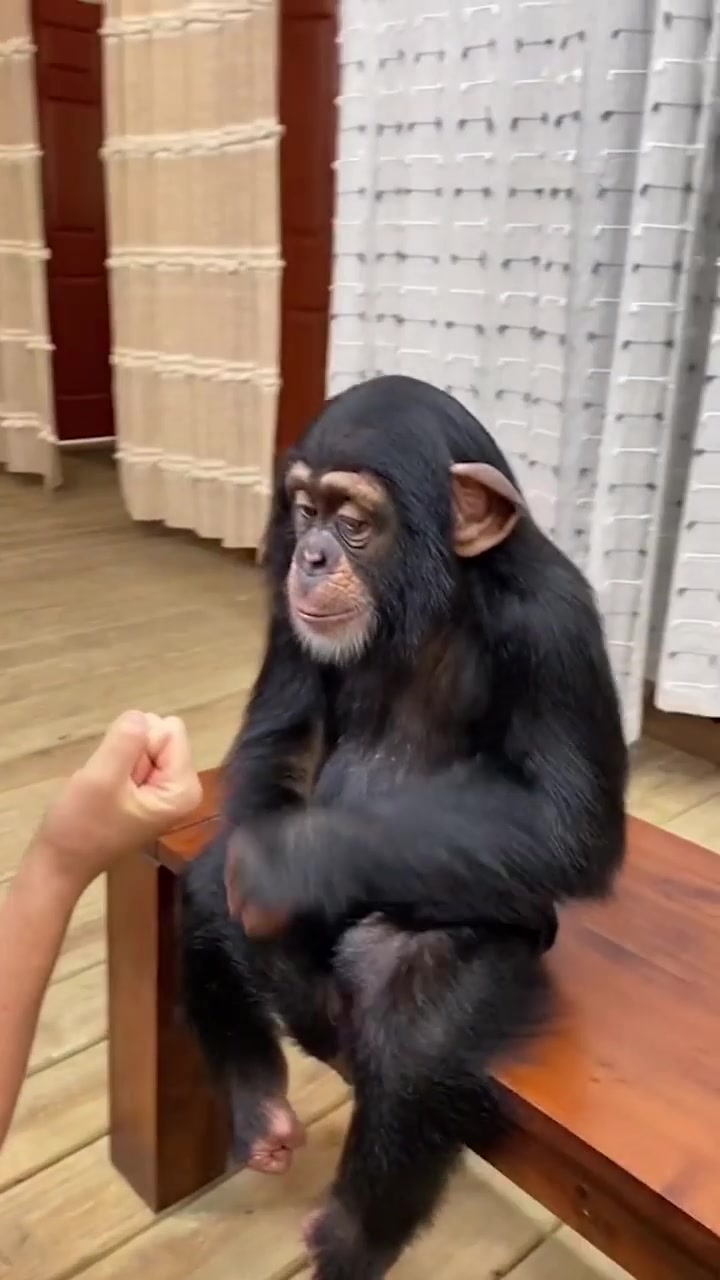
A chimpanzee sits serenely on a wooden stool, the center of attention in a room adorned with decorative masks and woven chairs. It's a peculiar scene. The chimp’s calm demeanor contrasts with the varied reactions of the people around it—one person points, another scolds, and a third offers a comforting hug. The odd mix of interactions and the unusual setting paint a picture of a curious encounter. But what does it teach us about the dynamics between humans and these intelligent primates?
The Ambivalence of Chimpanzee Encounters
Chimpanzee encounters can be a mix of education, entertainment, and ethical questions. Chimps are highly intelligent and social animals, and some people want to interact with them, often at zoos or animal sanctuaries. The interactions captured can vary widely. They can range from playful and comforting exchanges, to scoldings or pointed examination. Humans are encouraged to interact with these primates to learn about their behaviors, but the line between education and entertainment can be thin. Interactions often involve people feeding, touching, or simply observing chimps. These encounters might be structured activities facilitated by educators or caretakers, blending learning with emotional sensitivity. Chimps can be quite social, responding to human touches or gestures. But these interactions raise concerns about boundaries. Some primate experts caution visitors about crossing certain lines, emphasizing the importance of structured, respectful interactions. It’s a reminder that chimps are wild animals and their needs and behaviors should be respected.
The Rise of Chimpanzee Tourism
The human fascination with chimpanzees is not new, but it has evolved over the years. Chimpanzee tourism has grown, especially in Africa where many primates live in reserves. The rise of these experiences is tied to a sense of adventure and learning about animal behaviors. Spanning a range of activities, from safaris to hands-on encounters, these experiences aim to educate visitors while offering a close-up encounter with wildlife. The experience can be designed for educational purposes or commercialization. Engagement with chimps often leaves lasting impressions on visitors, including lessons about conservation and wildlife preservation. However, the commercial angle of touristic encounters has been the subject of debate. There's a risk that the commodification of such experiences could lead to exploitation. The balance between conservation and entertainment is delicate, and many organizations are striving to ensure that these interactions respect the chimpanzees’ welfare.
The Role of Zoos and Sanctuaries
Zoos and sanctuaries play a key role in these encounters, often focusing on education and conservation. Many offer opportunities to observe and interact with chimps in controlled environments. These settings often work to replicate the chimps’ natural habitats, offering insights into their behaviors and social structures. Programs may include lectures, feeding demonstrations, or even guided interactions, providing a deeper understanding of chimp behaviors. Their primary goal is to educate visitors about conservation and the importance of protecting wild chimpanzee populations.
The Educational Value of Encounters
These encounters, when well-designed, can be highly educational. They can be used to teach visitors about wildlife conservation and the behaviors of these remarkable primates. Chimps demonstrate complex social structures and emotions, making them compelling subjects for observation and study. A well-planned interaction can foster empathy and a deeper appreciation for wildlife. These interactions often blend play, observation, and instruction, giving visitors a richer experience. Many programs aim to go beyond mere entertainment, showcasing the importance of conservation and the impact of human activities on primate habitats.
The Ethical Debate
However, these interactions are not without controversy. One of the major concerns is the ethical treatment of the chimps. While some organizations prioritize conservation and education, others may focus on entertainment, which can lead to exploitation. The debate often revolves around the balance between providing visitors with a unique experience and ensuring the welfare and dignity of the animals. Some argue that overly commercialized interactions may fail to prioritize the chimps' welfare. Critics point to instances where animals are over-interacted with, stressed, or exploited for financial gain. Ethical guidelines and regulations are critical in ensuring that these encounters are respectful and beneficial to both the chimps and the visitors.
Getting Involved with Chimpanzee Interactions
For those interested in ethical and educational chimpanzee interactions, research is key. Look for reputable zoos or sanctuaries that prioritize conservation and education over entertainment. Here are tips for a meaningful experience.
- Choose Reputable Locations: Avoid places that focus primarily on entertainment. Look for zoos and sanctuaries known for their conservation efforts and educational programs. They often provide structured, ethical, and educational experiences.
- Respect Boundaries: Always respect the guidance given by caretakers. Keep a safe distance and avoid actions that might stress the chimps, such as sudden movements or loud noises.
- Support Conservation Efforts: Consider visiting places that contribute to chimpanzee conservation. Many sanctuaries work to protect wild chimpanzee populations and support research efforts, so supporting them helps fund these vital initiatives. Visiting such places can be a deeply enriching experience, offering insights into the fascinating world of these primates. But it's crucial to do so responsibly, respecting the chimps and the broader context of conservation. Engaging with chimps in a thoughtful way can help preserve their habitat and ensure their well-being for future generations to appreciate.
Making Responsible Choices While Visiting Chimps
Prioritizing ethical engagement can make a big difference. Tourists and visitors should strive to support organizations that have a strong commitment to conservation and the well-being of the animals. This includes visiting reputable sites, respecting guidelines, and being mindful of the impact of tourism on these primates. Taking a thoughtful approach can ensure that interactions with chimps remain respectful and beneficial.
Questions readers ask
What are the key differences between chimpanzee interactions at zoos and those in wild reserves?
Zoos typically offer more structured, educational encounters where visitors can observe and sometimes interact with chimpanzees in a controlled environment. In contrast, wild reserves, especially in Africa, provide a more natural setting where chimps live in their habitats, offering a different kind of educational experience. Both settings aim to teach visitors about conservation and chimpanzee behavior, but the level of interaction and the environment differ significantly.
Are there any guidelines for visitors to interact with chimps in a respectful manner?
Yes, many zoos and sanctuaries have guidelines to ensure respectful interactions. These often include not feeding the chimps without permission, maintaining a safe distance, and avoiding sudden movements or loud noises. The key is to respect the chimps’ boundaries and follow the instructions provided by caretakers or educators.
How do these interactions benefit the chimpanzees themselves?
The benefits to chimpanzees can vary. In well-managed settings, interactions can provide mental stimulation and social enrichment. However, it’s crucial that these encounters are carefully controlled to avoid stress or harm to the chimps. The primary goal should always be the well-being and natural behaviors of the chimpanzees.
What are the ethical concerns surrounding chimpanzee tourism?
The main ethical concerns revolve around the potential for exploitation and the commodification of these intelligent animals. There’s a risk that the focus on entertainment could overshadow conservation efforts, leading to practices that prioritize visitor satisfaction over the chimps’ welfare. Ensuring that these experiences are educational and respectful of the chimps is a key challenge.
Can visitors really learn about conservation from these encounters, or is it mostly entertainment?
Visitors can definitely learn about conservation through these encounters, especially if the experiences are well-structured and educational. Many zoos and sanctuaries use these interactions to teach about the importance of wildlife preservation and the threats chimpanzees face in the wild. The key is how the experience is designed and presented.
How have chimpanzee encounters evolved over the years?
Chimpanzee encounters have evolved from simple observations to more interactive experiences, often blending education and entertainment. The rise of chimpanzee tourism, especially in Africa, has led to a variety of activities designed to educate visitors while offering close-up encounters with these primates. This evolution reflects a growing interest in both learning about and experiencing wildlife up close.
What role do zoos and sanctuaries play in promoting conservation through chimpanzee interactions?
Zoos and sanctuaries play a crucial role in promoting conservation by offering educational experiences that highlight the importance of preserving chimpanzee habitats and behaviors. Through lectures, feeding demonstrations, and guided interactions, these settings help visitors understand the conservation challenges and the steps being taken to protect these animals.
Related deep dives
Similar reads based on topic and creator.



Recent articles
Fresh deep dives from the latest Reels we unpacked.




Comments
Be the first to comment.