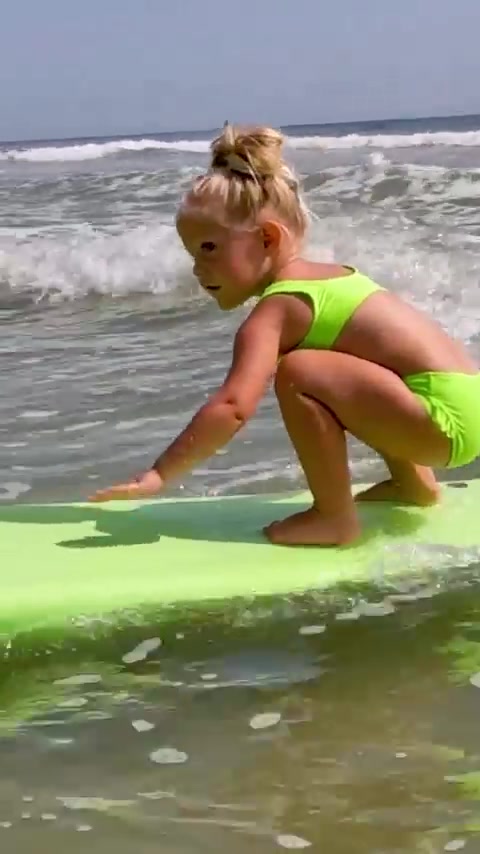
A young child, dressed in a bright green swimsuit, crouches on a green surfboard. The ocean is churning and inviting as the child takes her first tentative steps (or paddles) into surfing, embodying a pure moment of joy. You're seeing the blossoming of a young surfer. That child never considered her tiny age a barrier to encountering the ocean's power — technically, truly, and emotionally.
The joy of waves and boards
Child surfing is exactly what it sounds like: young children, often those under 10, learning to surf. It’s not just a miniature version of adult surfing. This activity often involves specialized equipment, such as smaller, lighter surfboards designed for kids. It is about teaching children to feel the ocean's joy. This is not just about mastering the sport one day. Surfing as a kid is like a rite of passage — a way to enjoy nature, stay active, and instill confidence, resilience, and a connection to the sea. One of the distinctive features of child surfing is its focus on fun. Adult surfing can be highly focused on performance or catching the perfect wave. Kids surf in a playful way that invites the whole beach into their excitement. Their giggles and squeals blend with the crashing surf and the cries of seabirds. While adults may seek technical mastery, kids just want to stand up, ride even the slightest wave, and enjoy the feel of the water. Sometimes, child surfers are trained by parents or caregivers. But child surfing is also a growing trend in surf schools and camps. These venues are specifically designed to allow children to surf in a safe environment. It’s a combination of fun and professional learning. It may be an essential step in the larger surfing world, but for the kid, it’s a push into the blue discovery and empowerment.
The family and sport trend
Child surfing is more than just a buzzy activity. It’s part of a larger trend of families engaging in outdoor sports together. It also speaks to a broader cultural shift towards valuing outdoor activities and water sports. Child surfers have a higher level of social interaction, not just with other kids, but also with sailors, swimmers, and fishermen. They have a deep interaction with the ocean itself. This trend aligns with a growing appreciation for experiences and active learning, particularly among parents and caregivers. Another factor is the increasing popularity of surfing as a sport. As more adults take up surfing, it’s no surprise that their kids would be keen to try it, too. Courses for kids are a symptom of the rising trend. Parents see this as a way to bond with their kids while teaching them important skills. This trend isn’t just confined to the beach. It’s reflected in the popularity of surfing-themed media and merchandise, too.
How child surfing is good for the body, mind, and soul
Each surfing lesson offers a range of benefits that can be transformative for a young child. Surfing helps children develop both their physical strength and sense of balance. Children are not surfing waves or even learning new skills. They are training their bodies to work smoothly and enduringly. Surfing also provides emotional benefits. Surfing is a positive reinforcement for healthy self-esteem. This is a skill. This is emotional regulation. This is not just about catching waves, but also about catching smiles. Surfing can also offer a sense of peace and tranquillity — two things that any doting parent is glad to see in action.
Unlike adult surfing, kids surfing is never just about the ride
Surfing as a child is a shared and sensory experience. Kids surfing isn't just an activity; it's a way to see the world differently. It makes the beach feel more alive, the ocean, more of a friend, and themselves, more capable. For a young child, the physical challenge and the landscape tell a different story. The ocean's rhythm isn’t just surf noise. It’s a language of waves and wind that they learn over time. As they surf, they start to understand the current and the calm.
The gear makes it special
Child surfing relies on specialized gear. This isn’t just about the surfboard. Most boards are soft-top, so a child won’t get hurt if they bump into one. It's designed with safety and stability in mind. Some have built-in child-friendly features such as handles for gripping, smaller sizes for better maneuverability, and safety guards. Child surfers might also use wetsuits. They provide insulation and buoyancy, keeping children warm and safe in the water. Parents can opt for a flotation device. Other gear includes leashes, paddleboards, and fins.
Wax and balance
There’s more to surfing than what you see on the surface, literally. It’s about waxing the board. Parents know it as waxing the surfboard. Without the right amount of wax, children can fall, but it also helps them grip better. Balance is crucial. This is no different. Parents might be surprised by how they balance on a board. It’s a different story in the water. Knowing how to balance on a surfboard gives a child a sense of confidence. It teaches them to be more conscious of their bodies. It might not be an easy thing to learn, but it’s invaluable.
The surfing community: What waves can teach about family
Child surfing often involves learning from parents or professional instructors. Instructors who specialize in teaching children can be an invaluable resource. They can create a fun and supportive learning environment. Beyond that, the surfing community is full of opportunities for families to connect. For surfing parents, it’s a chance to bond with their kid. They can experience the ocean together. For children, this is a chance to make new friends, learn new things, and gain independence. Best of all, there are often events and competitions for young surfers. This is a way to celebrate success and build self-confidence. It’s not just about learning to surf. It’s a way to integrate into a larger surfing community. Learning the sport as a child can be a lifelong hobby. It’s a way of life. There are surfing families. They take surf trips and go to surf camps. It’s more than a hobby for them. It’s a way to create lifelong memories.
Find your ocean
Parent that wants to get started with child surfing, here’s a checklist to get you there.
- Start small: Choose a small surfboard that is easy to maneuver. Consider a soft-top surfboard with safety features.
- Find a beginner spot: Look for beaches with gentle waves and a calm environment to start.
- Use protective gear: Invest in a wetsuit, a life jacket, and a leash.
- Get lessons: Take lessons from a professional instructor who can teach your child and ensure they’re safe.
- Gradual progress: Take it slow and let your child enjoy surfing. They don’t have to catch the biggest wave or spend hours surfing. Let them enjoy it for their own sake. Surfing is a family event. It’s not just a physical activity that promotes strength and balance. It's about connection. It’s about being in the moment.
Questions readers ask
What kind of surfboards are typically used for child surfing?
Child surfing often involves specialized equipment, such as smaller, lighter surfboards designed specifically for kids. These boards are easier for children to handle and maneuver, making the learning process more enjoyable and less frustrating.
How does child surfing differ from adult surfing?
Child surfing is more focused on fun and enjoyment rather than technical mastery. Kids surf in a playful way, often giggling and squealing with excitement, while adults might be more focused on catching the perfect wave or mastering the sport.
Can child surfing help children develop important life skills besides surfing itself?
Yes, child surfing can instill confidence, resilience, and a connection to the sea. It’s like a rite of passage that helps children enjoy nature, stay active, and develop a sense of empowerment and discovery.
How does child surfing fit into the larger trend of families engaging in outdoor sports?
Child surfing is part of a broader trend where families engage in outdoor sports together. It aligns with a cultural shift towards valuing outdoor activities and water sports, encouraging social interaction and active learning.
Are there specialized surf schools or camps for children?
Yes, there are surf schools and camps specifically designed to allow children to surf in a safe environment. These venues combine fun and professional learning, making it an essential step in the larger surfing world while also being a push into blue discovery and empowerment for the kids.
What kind of emotional benefits can child surfing provide?
Surfing provides emotional benefits such as joy, confidence, and a connection to the sea. It’s a way for children to feel the ocean's power and experience a sense of accomplishment and empowerment.
Is child surfing becoming more popular?
Yes, child surfing is becoming more popular as more adults take up surfing and their kids are keen to try it too. This trend is reflected in the popularity of surfing-themed media and merchandise, as well as the increasing number of courses for kids.
Related deep dives
Similar reads based on topic and creator.

Recent articles
Fresh deep dives from the latest Reels we unpacked.



Comments
Be the first to comment.