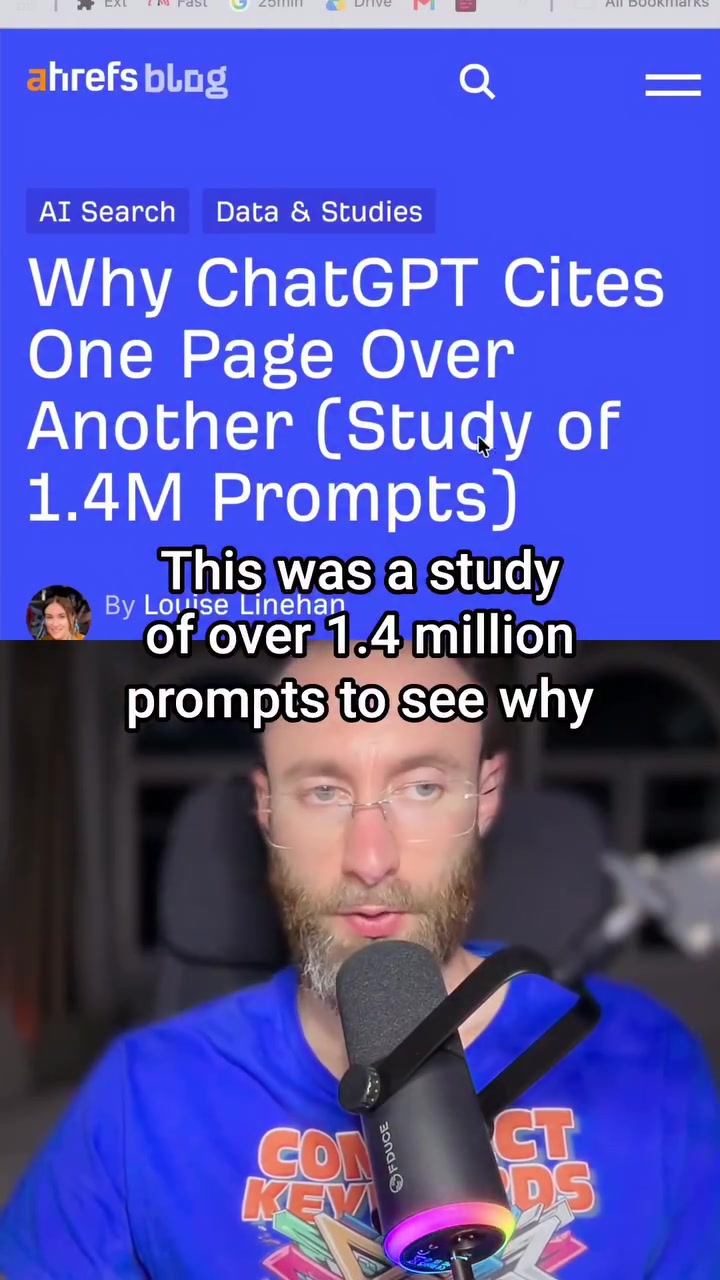
ChatGPT has become a go-to tool for many, but how it chooses which pages to cite from a sea of online content can be a mystery. To shed light on this, Louise Linehan at Ahrefs conducted a study, and some insights are surprising.
Decoding ChatGPT's Citation Process
This study analyzed over 1.4 million prompts ChatGPT received. Its conclusion? The pages that get cited are the ones whose titles and content match the questions ChatGPT is asking behind the scenes, as the page title alone can significantly influence citation. The intricate process starts when a user inputs a prompt, triggering a web search. The search results are then filtered based on how well the page titles and content match the user's query. To see what searches ChatGPT ran, you need to be a bit of a detective. When you receive a response, right-click to inspect the page. By copying the part of the URL that comes after "/c/," you can access the Network tab in your browser, and look back at the specific “queries” that ChatGPT used to find the page. This allows you to dive into ChatGPT's inner workings. Moreover, it is possible to see which results ChatGPT fetched and then, to determine what search terms ChatGPT used, which is what ultimately led to any page(s) getting cited.
The Optimization Pursuit: Maximizing Visibility
In a digital age where content creators vie for attention, this study reinforces the importance of optimization. Standard search engine optimization (SEO) principles, like matching keywords and creating valuable content, apply. However, there is a nuanced twist. The study suggests that the search terms used by ChatGPT influence the citation pages, while optimizing pages for search engines is somewhat different.
Matching the Right Axes
When a user input a prompt into ChatGPT, the AI actually runs a web search, and then, it has to decide and retrieve the right source from a list of options. The study found that ChatGPT tends to choose pages whose titles and content closely align with the search terms used. This means that while traditional SEO focuses on keywords, optimizing for ChatGPT involves ensuring that your page's title, URL, H1, and first sentence are all in sync with the language the AI is using
Crafting a Citable URL
On-screen examples showcased the pitfalls of poor URL structure. The study's creator using 'Google Algorithm Update & Geo Recovery Services', the URL in this example 'services/recovery' was critiqued for being overly vague. This demonstrates that a URL that is too broad and does not clearly signal its content is likely to be overlooked by ChatGPT.
Titles That Resonate: Matching ChatGPT’s Expectations
Digital marketers have long known the importance of a compelling title, but this study highlights another layer. To increase the likelihood of being cited, page titles should be crafted to echo the exact language used in the user's query as chatGPT matches the keywords and content in the title. Without a clear, concise title, a page is less likely to surface in ChatGPT's search results.
Content That Supports Citation
Beyond the obvious elements of URL and title, the study stresses the importance of first sentence and heading (H1). The visual aids in the video demonstrated that these elements should almost seamlessly match, or match in part, the questions more important than other aspects that ChatGPT is asking behind the scenes. This alignment ensures higher visibility, making the content more relevant to ChatGPT's search algorithms.
The Efficiency Frontier: Time-saving Strategies
The ultimate goal of any content creator is to save time while maximizing impact. Given that ChatGPT's search and citation mechanisms are intricate, let's simplify it. For those looking to optimize their content for ChatGPT, the key takeaway is to align your page elements with the language ChatGPT is using.
Benefiting from Online Tools
An additional recommendation from the study: for those keen to optimize their pages but lack the time to do it manually, there are tools and resources available. A plug comes in: compactkeywords.com, a potential game changer for creators in the SEO game. This tool can significantly reduce the time and effort required to optimize your content. As the video suggests, accelerated learning in the realm of chatGPT optimization can lead to concrete results, potentially providing warm leads and enhancing your visibility as a reliable and efficient source.
Why this matters in the SEO game?
While this study uncovers a lot about ChatGPT's inner workings, it also reflects a broader trend in digital marketing. As AI tools become more integrated into our daily lives, understanding their citation mechanisms is crucial. This study underscores the value of optimization, not just for search engines, but for AI tools that are increasingly influencing how information is dispersed. By aligning your content with the language these tools use, you can capture more visibility, making your content more likely to be cited. The advice seems distilled to a simple prescription: creating relevant content that matches the search queries used by ChatGPT will garner you more citations. A final sentiment stands out from the open ended question of ranking factors: "it is not enough to have a good dataset or a strong search." Your URL, title, and beginings of your content need to be all matched to the most intricately aligned keywords that chatGPT is using.
Questions readers ask
How does ChatGPT decide which web pages to cite in its responses?
ChatGPT starts by conducting a web search based on the user's prompt and then filters the results to find pages with titles and content that closely match the search terms, ensuring the page's title, URL, H1, and first sentence align with the AI's internal search language.
Can I see the exact searches that ChatGPT conducts to find cited pages?
Yes, you can. By inspecting the page and looking at the Network tab in your browser, you can find the specific queries that ChatGPT used to find the cited pages. Simply copy the part of the URL that comes after '/c/' and delve into the 'queries' section.
What role do page titles and URLs play in getting cited by ChatGPT?
Page titles and URLs are crucial. ChatGPT favors pages with titles and URLs that closely match the search terms it uses. A vague or broad URL, for example, is likely to be overlooked, while a clear, concise title that echoes the user's query increases the chances of citation.
How does optimizing for ChatGPT differ from traditional SEO?
While traditional SEO focuses on keywords and creating valuable content, optimizing for ChatGPT involves ensuring that your page's title, URL, H1, and first sentence all align with the language the AI uses in its internal searches. This means a more nuanced approach to keyword matching and content structure.
What specific elements of a web page should be optimized to increase the likelihood of being cited by ChatGPT?
To maximize the chances of being cited, focus on crafting a clear, concise title that matches the user's query. Additionally, ensure that your URL, H1, and first sentence are all in sync with the language used by ChatGPT. This alignment helps the AI recognize your page as a relevant source.
What are some common mistakes in URL structure that can affect citation by ChatGPT?
A common mistake is using overly vague or broad URLs that do not clearly signal the content of the page. For example, a URL like 'services/recovery' might be too general and fail to capture the specific search terms used by ChatGPT, reducing the chances of being cited.
Are there any examples of good URL structures that align well with ChatGPT's citation criteria?
While the article does not provide specific examples of good URL structures, it emphasizes the importance of clarity and specificity. A well-structured URL should clearly indicate the content of the page and align with the language used in the user's query, making it more likely to be cited by ChatGPT.
Related deep dives
Similar reads based on topic and creator.


Recent articles
Fresh deep dives from the latest Reels we unpacked.


Comments
Be the first to comment.