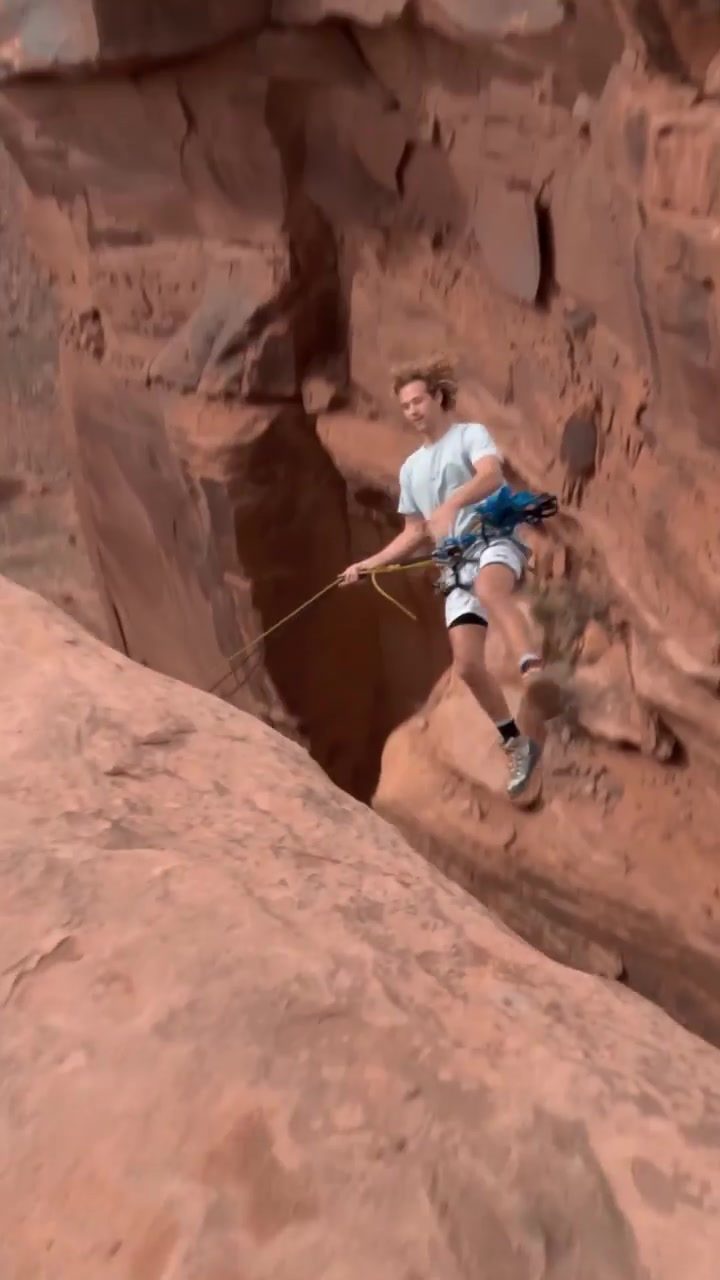
The video shows a person rappelling down a steep, narrow canyon. There's more to this outdoor thrill than sheer bravery. A series of precise safe descent techniques make it possible.
Defining the Canyoneering Descent
Canyoneering descent is a specialized adventure sport that involves navigating through narrow canyons. The human element combines hiking, scrambling, swimming and rock climbing in a natural environment's remote setting. The descent showcased involves secure rappelling. Rappelling is a controlled descent down a vertical drop. It involves a double rope with a harness. One rope acts as a lifeline to keep the climber safely attached to a secure point above. The other rope is connected to the harness to support the climber's weight — enabling them to descend in a controlled manner, using friction and a rappelling device. The distinctive feature of canyoneering is the use of ropes and harnesses for safety. Rappelling down is not a feat of bravery but a calculated descent. Unlike hiking or mountaineering, canyoneering often ventures into narrow ravines and gullies. This demands navigating narrow passages, sometimes requiring swimming or wading through water.
Canyoneering Trends in the US
Canyoneering is a niche sport. It thrives in areas with geological formations like Utah or Arizona. The sport is gaining traction as one of the most thrilling outdoor adventures. The desert-like landscape and the rugged terrain of the Grand Canyon or Utah's slot canyons inspire this form of adventure. Indeed, the pioneer spirit resonates through the canyoneering descent with its emphasis on challenges and the appreciation of natural beauty. Unlike extreme sports, the adventure is more about the journey than the adrenaline rush. Paradise Canyon is a popular spot in Sedona, a city in Arizona. The riverbed of the ravine is a hotspot for outdoor enthusiasts. When the water current subsides, the spot offers some of the best rappelling descents.
Mastering the Basics
Ropes and Harnesses
Canyoneering demands various ropes and harnesses that differ in weight, flexibility, length, and thickness. At its basic level, a canyoneer needs an anchorage rope and a rappel rope. These ropes are secured to metal hooks. The anchors are safe points to hold the ropes in place. Although the climbing ropes are light, they are resistant to the friction caused by the rope rub. Climbing harnesses are essential to the safety gear. The harness is a cushion around the climber's hips and thighs. It distributes weight evenly.
Deploying the Right Technique
The rappel technique is relatively straightforward but requires discipline. The tension rope is tied to the anchor while the rappel rope does all the descending. The climber must maintain a controlled descent. The climber must ensure that they allow enough space between their body and the cliff face. The descent is not immediate—there is a waiting period between each move to confirm that no mistakes have been made.
Tackling Water Features
The canyoneering route may require a water crossing. Unlike traditional hiking through water, canyoneering involves pushing through water streams or swimming.
Risks and Rewards
Mental and Physical Preparedness
Most canyoneers are comfortable with heights. Physical fitness is key in navigating the narrow, rugged terrain. The climbers must have the endurance to keep going for several hours, sometimes even sliding on their backs down steep inclines. The ability to tolerate the discomfort of water and wet clothes is essential. It also helps to have a love for the desert and its challenges.
Risks Involved
Canyoneering does involve risks. The uncertainty of weather conditions and terrain changes can catch climbers unaware. There are chances of getting stuck in the water. The wilderness can sometimes be unforgiving with insects, snakes, and other animals. The rocks may fall, or a climber may lose their footing, leading to injuries. Even skilled climbers must keep an emergency kit handy.
Exploring the World of Canyoneering
Anyone wanting to try canyoneering should look for chiseled, bouldered terrains. The canyoneering routes should always be local and familiar.
- Find a spot to explore: Canyoneering is not for beginners. Choose a spot where the terrain and the weather conditions are not unforgiving. Find a partner: Everyone needs a partner when exploring these rough terrains. This helps if one expects to be injured or needs help.
- Essential Gear: Start with the basics. The harness, rope, and rappelling device. Also, plan for other essentials like a whistle, water, food, and a light waterproof pack.
- Training: The training should start at a beginner's level. Learn rappelling techniques and equipment usage, move to more advanced courses if possible.
Related deep dives
Similar reads based on topic and creator.



Recent articles
Fresh deep dives from the latest Reels we unpacked.




Comments
Be the first to comment.