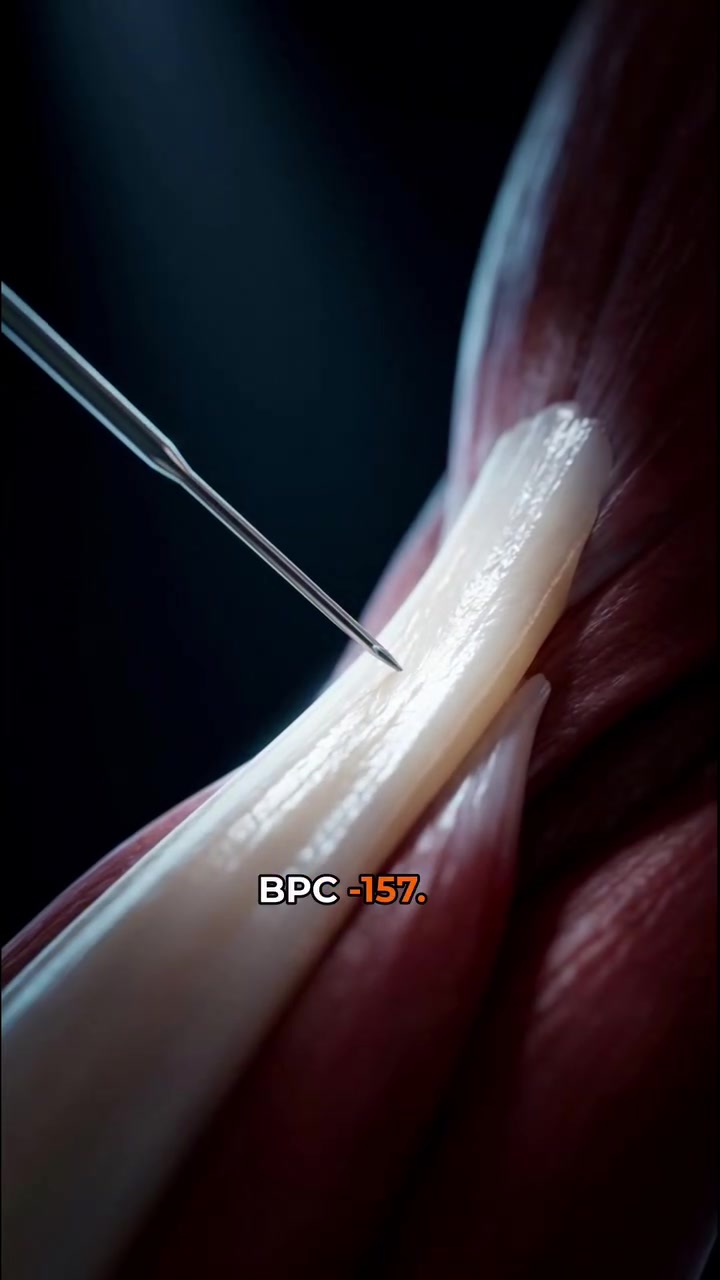
BPC-157 is a peptide that could change the game in muscle recovery science. Animal studies suggest that this small chain of amino acids, based on a compound your stomach already produces, can accelerate healing by promoting blood vessel growth and reducing inflammation.
Inside the peptide: How BPC-157 works
BPC-157 is a peptide. A peptide is a molecule formed by linking amino acids, the building blocks of proteins. These tiny chains of amino acids pack a powerful punch. BPC-157 is reminiscent of a protective compound that the stomach naturally makes, helping repair tissue in the gut and other parts of the body. Its molecular name is “Body Protecting Compound.” The peptide can improve blood flow to injured tissues, helping them heal faster. When tendons and ligaments are torn, damaged fibers fray, and the area inflames. Normally, recovery takes months, but animal studies suggest BPC 157 can switch blood vessel growth on and speed up healing within a week. The peptide helps damaged tissues knit back together more smoothly and efficiently. Researchers have also found that BPC-157 can help repair gut lining. These properties could make it a valuable tool for treating a wide range of injuries and conditions. There are a dozen ways that inflammation causes illness and injury. Calming the inflammation can help many things in the body heal faster. While BPC-157 shows genuine promise in animal studies, it is still considered early in its research and development. Animal studies often do not translate directly to humans, so more research is needed to fully understand its potential and safety in people.
Promising early results show a new path for recovery science
This tiny molecule's impact wins attention for improving recovery science. Experimental science is not a linear progress. There are discoveries that take a long time to show results. This peptide is one of those eureka moments. The results are genuinely one of the most exciting ideas in recovery science. This peptide could fix the way we heal if even a portion of this holds up in humans. While there might be some hype, there is no free lunch in biology. The promise of BPC-157 is still early, not yet tested widely in people, but it offers real hope for improved recovery.
Muscle injury, up close: Animating healing
When a tendon tears, it disrupts the fibers connecting the muscle to the bone. To feel, view, or understand the scale of a tendon tear, imagine your muscles as a marathon runner's legs. Bend the wrist up, over, and down, repeatedly stretching the tendon. The tendon fibers start fraying, swelling from inflammation. Recovery can take months. In the eyes of the viewer of the video, the animation of the tension and tear of the tendon, inflammation, and the immediate medical attention, showcases the new healing technology. Animation often highlights the torn muscle for visual detail. Visuals bring the scope of the injury into perspective, showing the viewer tendon injuries.
Peptide Progress
BPC-157 has been shown to support the healing of torn tendons and ligaments in animal models, and promote blood vessel growth and the formation of new, healthy tissue. "In rats, torn tendons and ligaments have healed faster and knitted back together, the new fibres lining up the way healthy tissue should." Researchers have tested the peptide on rats and other animals and consistently seen positive results. A rat's life span is much shorter than a human's, so researchers observe changes in a fraction of the time humans take to mend. This suggests that BPC-157 could have a similar effect on human tendons and ligaments, but more research is needed to confirm this. Even though researchers have not tested the peptide in humans, the animal studies have been remarkably well tolerated, with very few side effects reported. Most studies have shown no adverse interactions. These results give hope that BPC-157 could be a safe and effective treatment for human injuries as well.
The Catch
It’s a catch-22. Most of the promising studies around the peptide are animal research. Researchers have not properly tested it in people, limiting the conclusions that can be drawn from the studies. There are other unnamed peptides that have never showed the promise that BPC-157 has in animals. The peptide has been repeatedly tested for a decade, the results have been the same through that entire time. The honest catch: Almost all of the data is from animals. To really know how BPC-157 behaves in humans, some testing needs to happen. Development in pharmaceuticals is sticky because the treatment and testing get caught up in legal battles.
Analyzing the Peptides
For now, take it for what it is: early. The future of BPC-157 is bright, but the development is not rushed. The peanut butter and jelly of human science is research. Research takes time, and for a peptide to get to humans, research is a forbidden shortcut. Consider the peptide a way to help in recovery science. Some scientists have claimed that the peptide has healing properties, but as opposed to making wild claims, the results have been tested. As BPC 157 continues to develop, it could be a game changer in healing science. The future is bright. The promise and potential are there, so just take it for what it is. Researchers still have more to learn about the peptide, but so far, the results are promising.
Questions readers ask
What exactly is BPC-157 and how does it work?
BPC-157 is a peptide, which is a short chain of amino acids. It's modeled after a compound naturally produced by the stomach to help repair tissue. The peptide promotes blood vessel growth and reduces inflammation, which can speed up the healing process for muscle injuries, tendons, and ligaments. In animal studies, BPC-157 has shown the ability to repair damaged tissues more efficiently, potentially cutting recovery time from months to weeks.
Why is BPC-157 getting so much attention in the recovery science community?
BPC-157 is generating a lot of excitement because it could revolutionize how we approach muscle recovery. Animal studies have shown promising results, with the peptide accelerating healing and reducing inflammation. If these findings translate to humans, BPC-157 could significantly improve recovery times for a wide range of injuries and conditions.
Can BPC-157 be used to treat all types of muscle injuries?
While BPC-157 shows promise in treating muscle injuries, it's important to note that the research is still in its early stages. It has been shown to support the healing of torn tendons and ligaments in animal models, but more studies are needed to confirm its effectiveness and safety in humans. Additionally, it is not clear yet whether BPC-157 can treat all types of muscle injuries, or if it has specific applications.
How does BPC-157 compare to other treatments for muscle injuries?
BPC-157 stands out because it targets inflammation and promotes blood vessel growth, which can speed up the healing process. Traditional treatments often focus on managing symptoms, like pain and swelling, but don't necessarily speed up the healing process. While other treatments might involve surgery or long recovery times, BPC-157 could potentially offer a faster, more efficient healing process.
Are there any potential risks or side effects associated with BPC-157?
As of now, BPC-157 has shown promising results in animal studies with no significant side effects reported. However, it is crucial to remember that animal studies do not always translate directly to humans. More research is needed to fully understand the potential risks and side effects in people. Until then, it's important to approach BPC-157 with caution and under the guidance of a healthcare professional.
Is BPC-157 available for public use, or is it still in the experimental phase?
BPC-157 is not yet widely available for public use. While it has shown promising results in animal studies, more research is needed to confirm its effectiveness and safety in humans. It is still considered early in its research and development phase, so it may not be readily available to the public anytime soon.
What makes BPC-157 different from other peptides or healing compounds?
BPC-157 is unique because it is modeled after a compound naturally produced by the stomach, which helps repair tissue in the gut and other parts of the body. Its ability to promote blood vessel growth and reduce inflammation sets it apart from other peptides or healing compounds. Additionally, the peptide has shown the ability to repair damaged tissues more efficiently, potentially cutting recovery time from months to weeks.
Related deep dives
Similar reads based on topic and creator.




Recent articles
Fresh deep dives from the latest Reels we unpacked.




Comments
Be the first to comment.