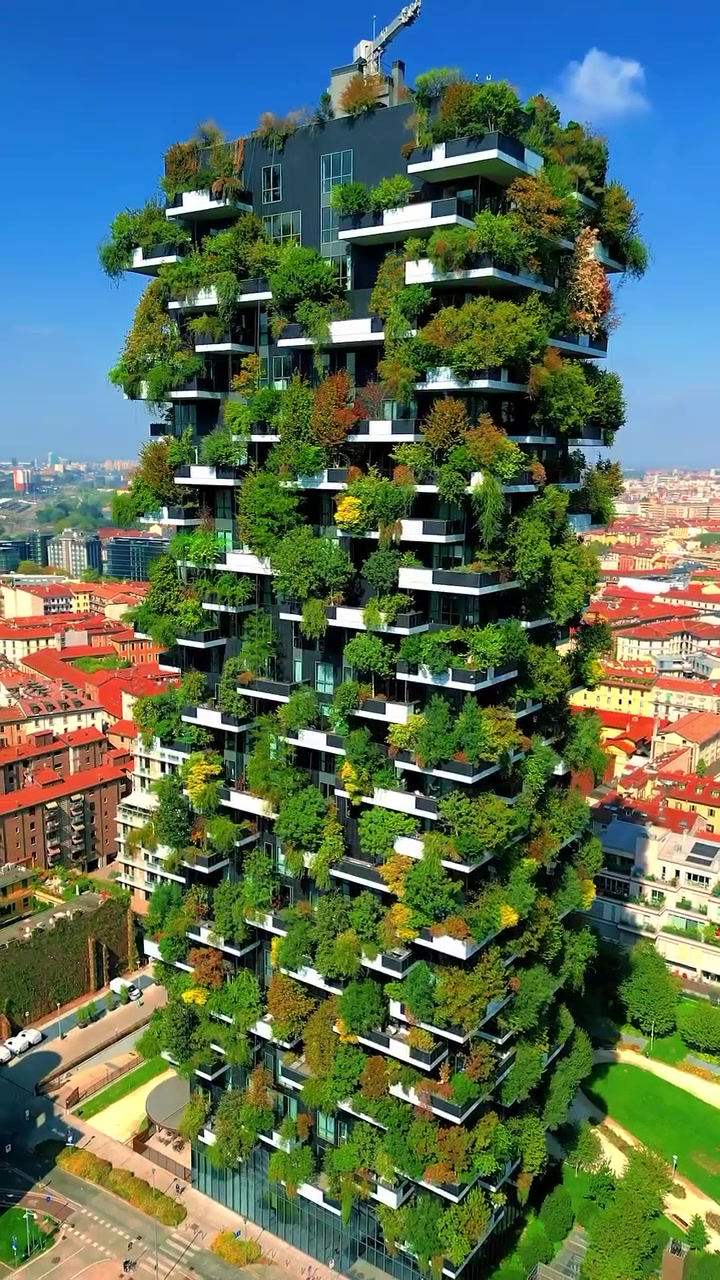
Bosco Verticale, Milan's Vertical Forest Skyscraper Perched in the heart of the Italian city of Milan, Bosco Verticale stands as a living, breathing marvel of sustainable design. Built as twin residential towers, the buildings reach 110 and 76 metres, respectively, providing a green oasis in the concrete urban jungle. The secret to this botanical transformation is simple: over 900 trees and thousands of plants from 99 Mediterranean species, bursting from each balcony to form a vertical forest skyscraper.
The Lush Design of a Vertical Forest
Bosco Verticale brings back a sense of nature’s harmony within an urban jungle. It’s not just a building, but an ecosystem. Cleverly designed, Bosco Verticale can reduce energy consumption and mitigate the greenhouse effect. As one of the earlier vertical forests, it’s distinctive due to its unique aesthetic appeal, but also its functional role in urban sustainability. Bosco Verticale gives a literal breath of life to a city through its thoughtful design as well as the active involvement of biodiversity. While Bosco Verticale spans two buildings, it features a shared common and building space. In a true testament to the source of the name, the architecture lends to over 20 species of birds and insects, making an entire habitat out of the green foliage all over the buildings. The green doesn't stop at foliage, however, as the towers’ tree and plant couture allows the novel place to self-regulate temperature, and keep noise pollution and air quality in check.
The Emergence of the Vertical Forest Skyscraper
Bosco Verticale has earned accolades as a pioneering achievement of sustainable urban design. Newer eco-friendly developments now establish that the towers' environmental prowess exceeds their intended reach. According to the caption, Bosco Verticale improves air quality and reduces noise pollution. For a build which combines urban life with a verdant retreat, there’s no shortage of cityscapes with concrete walls and grey overtones. “Urban development is no longer just about concrete and steel,” says the caption. This architecture is the beginning of another path.
The Trees and the Balconies
The uniqueness of Bosco Verticale lies in its integration of nature within and on the building. Trees and plants aren't just a façade; they function to improve urban life. Thanks to its botanical design, Bosco Verticale is called by its creator the "vertical forest." Plants create microclimates on balconies, making space more pleasant and breathable. Also, The greenery helps mitigate pollution by trapping particulates and producing oxygen.
The Birds and the Insects
The trees and plants don’t just create breathing room for the building’s inhabitants. The same greenery creates an eco-habitat for local birds and insects. By itself, a vertical forest attracts over 20 species of birds. The biodiversity makes Bosco Verticale a crucial habitat in Milan, making it a more sustainable city and home. The trees are not merely adornments, however — they also produce an efficacious cooling effect to the nearby ground space, cooling the city center and also makeup some of its noise abatement.
A Breath of Clean Green Air
Bosco Verticale isn't just aesthetically pleasing; it serves a vital ecological role. The plant and tree cover actively combats heat island effect. The foliage captures particulate matter from the air. The trees and plants also take in carbon, releasing pure oxygen to the city’s atmosphere. The greenery also serves to absorb sound, reducing the noise pollution that is a problem in urban environments. The careful design of the place shows how architecture can favor the environment as well as its inhabitants and visitors.
The Builder’s Daring Vision
The builders and developers responsible for Bosco Verticale had to design a novel landscape and a flexible building style. The structure was particularly daring because of its green foliage, which spreads up balconies and slabs with oriental cedars. However, this made for conflicting requirements; how could the foliage thrive on heady high tower heights as well as the root-intensive environment. The solution was a sophisticated engineering marvel. Drip irrigation, wind-resistant foliage, and nutrient-rich soil maintain the lush greenery, as soil mix and water retention schedule were carefully curated to accommodate the tree's needs.
The Urban Jigsaw
Bosco Verticale is the jigsaw piece of the beautiful urban tapestry of Milan. Despite its unique design, the buildings blend into the cityscape. Photo after photo showcases Bosco Verticale in a beautiful blue sky, though the clear backdrop probably represents a mere snapshot of reality.
Exploring the Lush Skyscrapers
If you want to experience the awe of Bosco Verticale, book a stay and experience the vertical forest up close. The building itself is a living art-piece. In addition to the impressive botanical structure, enjoy the bird songs and sounds of wildlife. If you can’t stay, consider a tour through the city or even a walk in the surrounding green areas. Make sure to pay attention to where you are. Observe where the trees and plants are at—and how they interact with the building. Remember that even though you’re exploring a skyscraper, you’re also exploring a living forest!
The Future of Architecture
Multipurpose botanical marvels like Bosco Verticale already help cities like Milan and Toronto reduce carbon footprint, making the urban jungle a once again vibrant habitat. Moreover, such flora-based build continually form a part of building strategy for modern urban design. These plant-based walls and building envelops help cities stay green, healthy, and livable.
Questions readers ask
How do the trees and plants in Bosco Verticale improve air quality and reduce noise pollution?
The trees and plants in Bosco Verticale trap particulates, produce oxygen, and create a cooling effect that helps mitigate noise pollution. This greenery creates microclimates on balconies, making the space more pleasant and breathable, and it also attracts local birds and insects, enhancing biodiversity in the urban environment.
Can other cities adopt the vertical forest concept for their urban development?
Yes, the concept of vertical forests can be adopted by other cities. Bosco Verticale serves as a pioneering example of how urban development can incorporate nature. Newer eco-friendly developments are already following this path, showing that vertical forests can improve air quality and reduce noise pollution in urban areas.
What kind of plants and trees are used in Bosco Verticale, and why were they chosen?
Bosco Verticale features over 900 trees and 2,000 plants from 99 Mediterranean species. These plants were chosen for their ability to thrive in the urban environment and their effectiveness in improving air quality, reducing noise pollution, and creating a habitat for local wildlife.
How does Bosco Verticale regulate temperature and improve air quality in the surrounding area?
Bosco Verticale regulates temperature and improves air quality through its extensive greenery. The plants create microclimates on balconies, making the space more pleasant and breathable. Additionally, the trees and plants trap particulates, produce oxygen, and have a cooling effect on the nearby ground space, contributing to a more comfortable and sustainable urban environment.
What role do birds and insects play in the ecosystem of Bosco Verticale?
Birds and insects play a crucial role in the ecosystem of Bosco Verticale by contributing to its biodiversity. The greenery attracts over 20 species of birds, making it a vital habitat in Milan. This biodiversity not only enhances the building’s sustainability but also makes it a more pleasant and eco-friendly place to live.
How does the design of Bosco Verticale differ from traditional skyscrapers?
Bosco Verticale differs from traditional skyscrapers by integrating nature within and on the building, creating a vertical forest. While traditional skyscrapers focus on concrete and steel, Bosco Verticale prioritizes greenery, which improves air quality, reduces noise pollution, and creates a habitat for local wildlife. This makes it a unique and sustainable urban development.
What inspired the creation of Bosco Verticale, and what challenges did its designers face?
Bosco Verticale was inspired by the need to incorporate nature into urban environments. The designers aimed to create a building that not only serves as a residential space but also functions as an ecosystem. While the specific challenges faced by the designers aren't detailed, the project's success suggests that overcoming these challenges was possible, paving the way for similar eco-friendly developments.
Related deep dives
Similar reads based on topic and creator.

Recent articles
Fresh deep dives from the latest Reels we unpacked.

Comments
Be the first to comment.