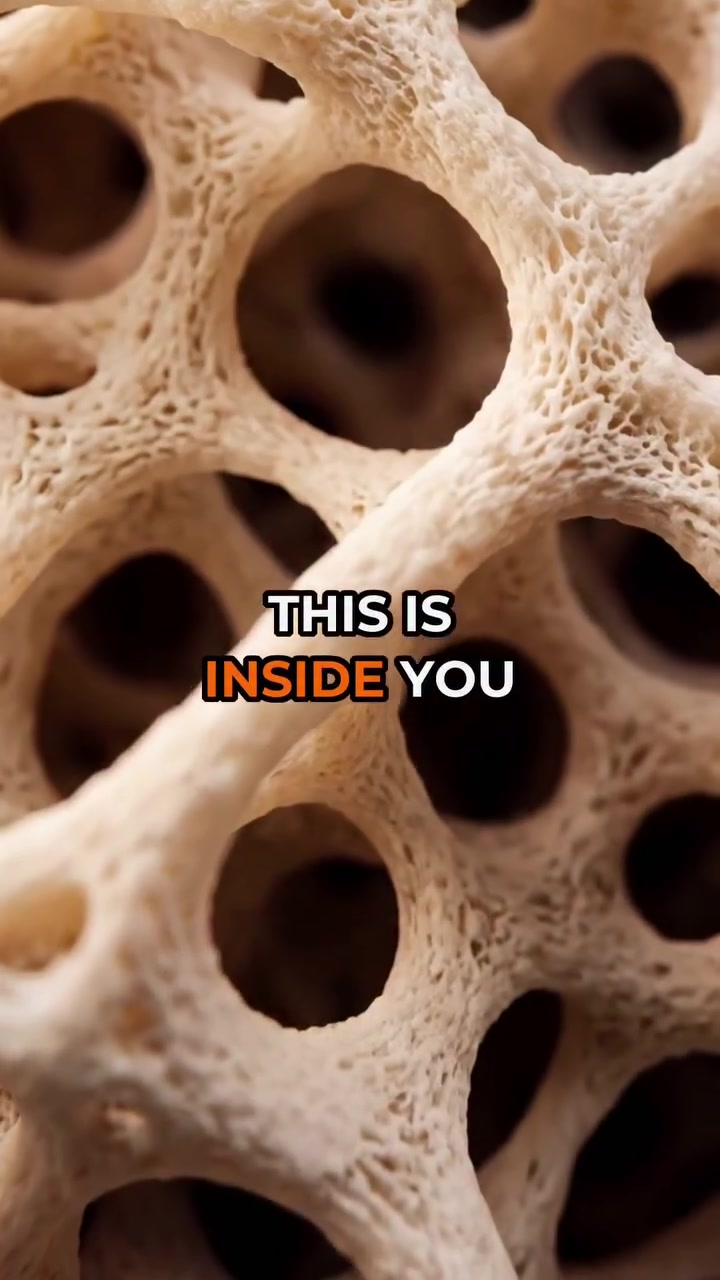
Bone isn’t a static scaffold. It’s an active construction site, as highlighted by recent commentary by a social media health educator. Our bones are getting demolished right now, and you’ll rebuild your entire skeleton in 10 years, gram by gram. Fortify your bones by using them, because osteocytes—sensors buried within the bone cells—fire a signal that instructs: reinforce the area being used.
Rebuilding Like a Living Scaffold
This continuous construction is more like a budget-driven building project than your static skeleton. Human bones get rebuilt at the rate of 10% per year. This means that every decade, you're operating from a totally rebuilt structure. The key players in this construction crew are osteocytes, special bone cells serve primarily as sensors, not structural supports. Osteocytes are particularly tuned to “load,” or mechanical stress, the deeper the penetration of the load, the stronger the signal. They are critical for the constant remodeling process. And they fire micro-signals that reinforce the areas under stress. However, this rebuilding requires a budget. The input for the budget is not calcium. Calcium is like brick at a construction site, without the construction crew. You need builders, the ones who are capable of bone-healthy work. Like any other budget, builders are hired only if there is a need. They can only strengthen the construction. If there's no load, the structure is left unmaintained. This is why many people, especially older adults, are likely to develop osteoporosis—the deteriorating bone condition. Moderate stress, not heavy stress, is ideal for bone health. Stress hires the builders of your skeleton. The stronger the signal, the better your bones can reinforce themselves.
The Anatomy of Bone Work
Without load, the skeleton’s structure begins to deteriorate. Like any good budgeter, your body doesn't waste resources on irrelevant goods. And that’s why calcium alone does little. Simply, calcium doesn’t hire workers. It’s just bricks on a site, unedited and unprocessed. Workers should be hired by load. Heavy things, picked up often. Is the load your skeleton's biggest budget this week? Your entire body will adapt from it. If that is carrying a laptop bag, it’s building a skeleton for carrying a laptop bag. Mismanagement of construction projects leads to losses. Your body will adapt to the circumstances.
Load Signal Mechanism
The osteocytes are complex sensors and they detect the load signal. The signal is sent when the bone is under pressure, even the slightest pressure. They fire a signal that sends the instruction to reinforce the site of the stress. When the skeleton feels a fraction of a millimeter bend, the construction crew works under the signal and rebuilds the site to reinforce it more.
Bone Turnover and Reconstruction
Bone remodeling involves the breakdown and rebuilding process of the skeleton, known as turnover. This process involves the turnover of 10% per year. The skeleton is entirely reconstructed by the body every 10 years. Bone turnover is a continuous process that involves cells like osteoblasts and osteoclasts. Osteoblasts are the builders that rebuild the bone once it is broken down and osteoclasts are the demolition team that continuously break the structure. This rebuilding and breakdown are in constant balance.
Bone Density and Nutrition
Bone density is the amount of bone material per square centimeter of the bone. Bone density is dependent on the load you exert on your body. It can be measured by the amount of calcium in your body. Calcium is the mineral crucial for bone health. It is the bricks of the building project but calcium alone cannot build the worker. Calcium must be combined with Vitamin D for maximum effectiveness. Vitamin D is the catalyst for calcium absorption. The catalyst is crucial for the absorption of calcium, without which, calcium cannot perform to the fullest. The higher the load, the higher the signals for rebuilding.
Bone Stress and Reconstruction Dynamics
Bone remodeling is not a process that can be initiated by calcium. It is a process that requires a certain amount of stress to initiate. The stress induces the signals that trigger the rebuilding process. The signals are fired by the osteocytes. The more stress you exert, the more signals are fired. The signals are responsible for hiring the required resources for the reconstruction. Any de-stressing of the bone for a prolonged period will lead to the deterioration of the bone. The bone needs a constant flow of signals to maintain its repair mechanism. Bones are always a constant construction site, with a constant flow of demands for resources. The more the bone is stressed, the more signals are sent and the more resources are allocated for the construction.
Making Bones Stronger
If you want to build stronger bones, then you need to work on increasing the load of your bones. Pick up heavy things often. The harder the activity, the stronger your bones are. Go for things that challenge your body. The more stress your bones are under, the better they can adapt. Stress on the bones helps to strengthen them, but not too much or too little. The ideal amount is the moderate level. It is crucial to maintain regular physical activity.
- Harp on Hard Tasks: If you want to build a stronger body, concentrate on harder things. This will increase the productivity of your bones and maintain bone health.
- Weight Training: This is a crucial activity for better bone health. Add weights to your workout routine. Activities like weightlifting, squats, push-ups, and pull-ups will help to build stronger bones. It will also help to increase muscle mass.
- Bodyweight Exercises: Activities and exercises like squats, push-ups, and pull-ups are crucial for bone health. Bodyweight exercises involve the use of your own body weight for resistance. This increases the load on the bones and triggers the remodeling process.
- High-impact exercises: High-impact exercises are crucial for bone health. Exercises like running and jumping will help to increase the load on the bones.
Questions readers ask
What exactly are osteocytes and what role do they play in bone remodeling?
Osteocytes are specialized bone cells that act primarily as sensors. They are embedded within the bone and are particularly attuned to mechanical stress or 'load.' When bone is under pressure, osteocytes send signals to reinforce the area, making them crucial for the continuous remodeling process of our skeleton.
How does the body determine where to rebuild bone?
The body determines where to rebuild bone based on the signals sent by osteocytes. These signals are triggered by mechanical stress or 'load.' The deeper the penetration of the load, the stronger the signal, and the more reinforcement is directed to that area.
Why is moderate stress better for bone health than heavy stress?
Moderate stress is ideal for bone health because it provides a consistent signal for the body to reinforce the bone. Heavy stress can be too intense and may not be sustained, whereas moderate stress ensures that the body continually adapts and strengthens the bone structure.
What happens if there is no load or stress on the bones?
If there is no load or stress on the bones, the body does not receive signals to reinforce the bone structure. This can lead to bone deterioration and conditions like osteoporosis, as the body prioritizes resources for other needs and does not allocate them to bone maintenance.
How does the body manage the budget for bone rebuilding?
The body budget for bone rebuilding is managed by osteocytes, which act as sensors. They send signals to the body to reinforce the bone structure in areas under stress. The body then allocates resources to rebuild and strengthen these areas, ensuring that the skeleton is continually adapted to its needs.
What is the difference between calcium and the builders in bone remodeling?
Calcium is like the bricks needed for construction, but it doesn't build anything on its own. The builders are the cells that actually reinforce and rebuild the bone structure. These builders are hired by the body in response to mechanical stress or load, not just the presence of calcium.
How does the body adapt to different types of loads, like carrying a laptop bag?
The body adapts to different types of loads by reinforcing the areas under stress. If you frequently carry a laptop bag, your body will adapt to this load by strengthening the bones and muscles involved in that activity. This adaptation ensures that your skeleton is optimized for the specific demands placed on it.
Related deep dives
Similar reads based on topic and creator.




Recent articles
Fresh deep dives from the latest Reels we unpacked.




Comments
Be the first to comment.