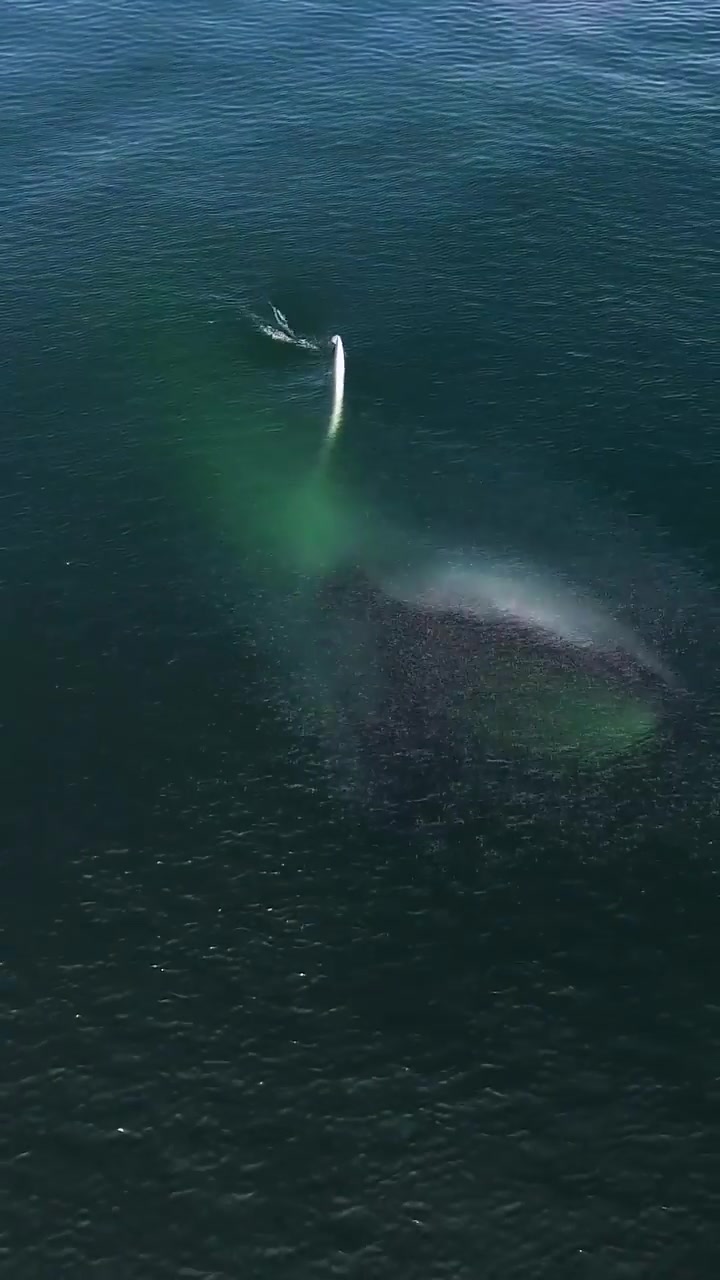
In Monterey, California, @slatermoorephotography captured a fleeting, awe-inspiring sight: an adult blue whale breaching the ocean surface. Captured from above, the massive creature’s body launches clear from the water, swallowed by a plume from its landing.
The Distinctive Dance of a Blue Whale Breach
A breach is an acrobatic feat where a whale leaps out of the ocean, temporarily exposing its entire body in a dramatic display of power. This spectacle showcases the grace and raw majesty of marine life's largest mammals. Breaching is distinct from other whale behaviors—like spurting or tail-slapping—in that it involves the whole animal. The aerial perspective underscores the immense scale of these giants. Not only is this whale’s appearance striking, but the splash created is so large it can be seen and heard from a far distance. Anyone who has seen a blue whale in the wild understands that most views are surface glimpses or splashes moving underwater. But a breach elevates the experience. It is a visual spectacle that lets a person see a massive body that is usually hidden. Over time, breaching has become a resonant symbol of the ocean's vastness. The sight can be a moving experience. It conveys the sheer size and beauty of these animals and the powerful interactions they have with their environment.
The Magnificent Power of Whales in a Shifting Ocean
Breaching pulls the whale into public consciousness—a spectacle that can renew interest in marine conservation. The sudden upward leap of a blue whale is more than just a natural occurrence— it also represents a fully ecological phenomenon. Blue whales are one of the most remarkable examples of a species balancing on the edge of human impacts. The blue whale of Monterey tells a story of a species that some believed to be going extinct a century ago. The global population has seen a resurgence in the modern day, thanks to protection efforts. California is home to several key species including the blue whale. The sight of the breaching whale reminds viewers of the sea's delicate balance and its vulnerable equilibrium.
Whales as Luminous Spokesbeast for conservation
Tracking Whales’ Movements
Blue whales are migratory creatures. Capturing a breach can open a window into their behavior and ecology. Understanding the patterns and locations of blue whales can help researchers monitor their populations and conservation efforts. The oceanic movement of blue whales showcases how much of the seascape is still influenced by a species that travels great distances. Breaching points to the challenges in conservation. They remind us of the vast and unknown underneath the water.
The Filtration System
The process a blue whale goes through to feed is sophisticated. Blue whales consume small shrimp-like fish, known as krill, in massive quantities. That process includes up to 10,000 gallons of water taken into the whale’s mouth, and then pushed through a baleen filter to extract the food. That complexity is worth mentioning. The feeding process is as much an evolutionary marvel as the breach.
Migratory Marvels
Blue whales tend to follow a predictable route. The Monterey area is a prime breeding area for these mammals. They migrate from the equatorial Pacific to the colder waters of California. This lengthy underwater travel makes tracking their progress and breeding crucial to protecting the species. The annual migration of blue whales exemplifies the sustained endurance of movement between water.
The Breaching in the Aerial Landscape
This aerial view of the whale breaching in Monterey is a visual marvel of sorts. It shows the ocean’s vastness. The whale breaching points to the vastness of the ocean coastline. It also exhibits the practical benefits of studying these animals. The sight of the whale is an example of the scientific community’s efforts to understand these animals.
Exploring Blue Whales Up Close
There are many ways to experience whale sightings. Chasing whale migrations can be a breathtaking experience. Monterey offers whale-watching tours for visitors to see these creatures in their natural habitat.
- Whale-Watching Tours: Booking a whale-watching charter during the migration season can offer a front-row view.
- Blue Whales Documentary: Look for documentaries on blue whales to understand their feeding habits, migration maps, and conservation efforts.
- National Geographic Visuals: National Geographic provides detailed descriptions along with visual materials on these animals. Anyone can view the ocean’s majestic creatures in Monterey. The whales have a way of connecting people with nature. Encountering them helps build awareness of the ocean’s fragile ecosystem.
Questions readers ask
What makes a blue whale breach different from other whale behaviors like tail-slapping or spurting?
A blue whale breach is unique because it involves the entire body of the whale leaping out of the water, unlike behaviors such as tail-slapping or spurting, which are more localized. This makes the breach a dramatic and full-body display of the whale's power and grace. The aerial perspective captured in the photograph highlights the immense scale of these giants, making it a truly awe-inspiring sight.
How do blue whales feed, and why is it significant?
Blue whales have a sophisticated feeding process. They consume krill by taking in vast amounts of water into their mouths and then using their baleen filters to extract the food. This process is notable not only for its efficiency but also as an evolutionary marvel, showcasing the complexity of these marine giants. The feeding process is as impressive as their breaches, emphasizing their role in the marine ecosystem.
What is the significance of a blue whale breach for marine conservation?
A blue whale breach serves as a powerful reminder of the ocean's delicate balance and the importance of marine conservation. Seeing a blue whale breach can renew public interest in protecting these magnificent creatures and their habitats. It highlights the challenges in conservation and the need for ongoing efforts to monitor and protect whale populations.
What can scientists learn from tracking blue whale breaches?
Tracking blue whale breaches can provide valuable insights into their behavior and ecology. By understanding the patterns and locations of these breaches, researchers can monitor whale populations and assess the effectiveness of conservation efforts. This information is crucial for protecting these migratory creatures and ensuring the health of their habitats.
Why is the Monterey area significant for blue whale sightings?
The Monterey area is significant for blue whale sightings because it is a prime breeding and feeding ground for these migratory creatures. The region's rich marine ecosystem supports the blue whales' diet of krill, making it a key location for their survival and reproduction. Additionally, the area's clear waters and abundant marine life make it an ideal spot for observing these magnificent animals.
What does the resurgence of blue whale populations tell us about conservation efforts?
The resurgence of blue whale populations is a testament to the effectiveness of global conservation efforts. Once on the brink of extinction, these whales have made a comeback thanks to protective measures. This success story underscores the importance of continued conservation work and highlights the potential for similar recoveries in other endangered species.
Related deep dives
Similar reads based on topic and creator.




Recent articles
Fresh deep dives from the latest Reels we unpacked.




Comments
Be the first to comment.