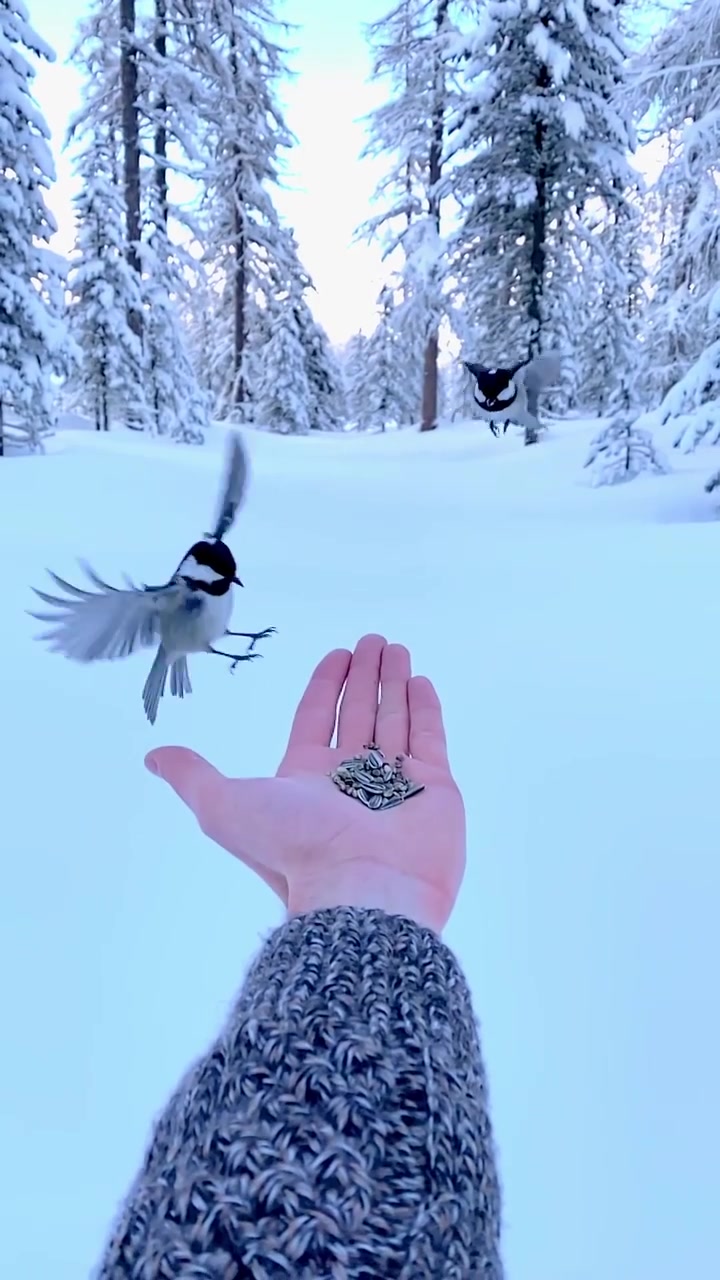
In the quiet of a snow-laden forest, a black and white bird hops onto an outstretched hand, drawn by an offering of birdseed. This moment of peaceful interaction, as natural as it is unusual, is what the video, "Feeding birds in the snow", captures. The act of feeding birds from one’s hand is a harmonious encounter between humans and wildlife, offering insights into how nurturing and understanding can create a bond between different species. This birdhand feeding occurs amidst the tranquil surroundings of a snowy woods, where tall pine trees stand sentinel and the air is crisp and still. How do birds, usually wary of human contact, come to trust and accept food from an outstretched hand? How does the environment, perhaps more than any lure, facilitate this serenity? Understanding hand-feeding offers a window into how birds adapt to human interactions and can provide lessons in nurturing relationships with other species.
Bird-Person Bond: The Moment of Trust
Hand-feeding birds, or other animals, is a delicate and often problematic interaction. Wildlife experts, though, suggest that it can be safe and beneficial under specific conditions. Many birds, especially when they are young, are wary of human contact. Yet through persistence, feeding, and patience, they can learn to trust and accept humans as a source of food, shelter, and safety. The trust needed to encourage such interaction takes time, a quiet demeanor, and sometimes a seasoning of the right food. Birds do not experience hand-feeding all at once. First, they must get used to a human presence. This begins with placing food in a spot where birds can nibble without feeling threatened. As birds grow accustomed to the constant nourishment in the same spot, they will start to venture closer to the observer. Without sudden movements and a quiet presence, birds can eventually feel secure enough to explore the hand offering food. For birds in colder areas, food is often in short supply. In a snow-laden forest, the birdseed offered by a human could be a rare and essential source of nourishment. In an environment where food is scarce, birds may take the chance to get closer, and trust humans more readily. As the bird treads on the hand to eat birdseed, the human connection creates a deepening bond, and the birds become more familiar with the hands' presence.
Winter's Blanket
The act of feeding birds in the snow occurs amidst the stillness of a winter forest. The video's snowy backdrop holds a hushed beauty that contrasts the hardy birds who face the cold. Winter features heavy snow, cold temperatures, and low food availability for birds. While some birds migrate south to escape the harshness, others tough it out and adapt to the season’s challenges. The snowy habitat, with its harsh conditions, invites a unique approach to finding food. In such conditions and isolation, the birds' adaptability and readiness to accept food from a human hand reveal nature's intricate web of survival tactics. People who feed birds in winter provide a lifeline. The birds might otherwise go hungry if they don’t have a human feeder to give them food. Foraging becomes more challenging, and many birds rely on food sources that are abundant in warmer months. The birds shown here are hardy. The purity of the interaction shows how nature adapts to the challenges of each season. The tranquil snowy setting serves as a mutual haven. For the human, it is a chance to connect with nature intimately. Winter forests offer stark yet serene beauty. Cold weather can be harsh on birds, but the surrounding landscape becomes a sanctuary for both birds and humans, equally sheltered from the world.
The quiet art of birdhand feeding
This interaction isn’t just about the trust between the bird and the human. It's also about the quiet experience and mindset of the person offering the birdseed. The key to successful hand-feeding lies in patience and stillness. This is the art of birdhand feeding. Movement and sudden gestures can be startling for the birds. Even if you have built trust, simple nudges can prompt a bird to fly away. Keeping Still and Calm: Staying still and calm can have its challenges for humans. The video emphasizes the importance of stillness. The human does not move. The birds in this scenario have learned by trial and error that stillness means they can safely eat the birdseed. This lack of human mobility is key to making the birds comfortable. Having the Right lures: Good birdseed choices attract birds. Choose seeds that the birds prefer and that are appropriate for the species. Black-and-white birds, most often known for their seeds, include things like black oil sunflower seeds, safflower seeds, and millet. Offering a variety can help attract different species, making the experience enjoyable and diverse. Understanding the Bird's Needs: Different birds have different needs. Eating habits, food sources, and habitat preferences vary. The birds in the video are friendly and familiar with humans. This kind of trust is often built over time, and it’s not always the case. Recognizing the bird's needs and limitations is essential for a successful interaction.
Wintering Birds
The birds in this interaction are adept at surviving the harsh winter. Most birds move south during colder months, but this black and white bird takes a different route. It stands out in winter. Many birds like the chickadee, nuthatch, and woodpecker are survivors. The birds in the video are resilient and hardy. They are used to the cold and thriving in it, unlike their tropical counterparts. The birds have survival tactics that animals acclimate to the climate. Nature turns out survivors during the winter. These birds have adapted their survival strategies. The birds that stay though, like the black and white birds in the video, have strong metabolisms and a complete change of behavior. A bird will eat more to pile on extra fat. These birds can withstand cold temperatures. The birds also have a distinct behavior in winter. Birds can be bold and aggressive during the colder months. This behavior is often driven by the need to secure limited food sources. Birds have to fight hard for survival.
When fingers become bird perches
Birds trust the outstretched hand like a perch. The interaction can be deeply satisfying, but it also requires a level of preparedness. Offering a birdseed-laced finger is not a gesture to take lightly. Bird hand-feeding is not just a beneficial experience for the bird but also offers a world of insights to the person who’s offering the seeds. Training and practice: If you are starting this practice, have patience. Bird hand-feeding requires patience. Birds need to feel secure in their environment. You need to let them approach you without being startled. Building trust: The feeding should be a steady and quiet process to gain the bird’s trust. The birds in this interaction have learned to find food on an outstretched finger. The health check: Birds’ health checks are very important. Feeding birds outdoors can be a good opportunity to notice any birds that are lackluster or sick. If they aren't eating and not moving as well as others or appear disoriented, they might be sick.
However, this is not a bird clinic
This is a gentle and rewarding exercise, but it requires the necessary precautions to be in effect. Do not handle birds if you suspect they are ill or injured. If you notice a bird acting differently, it’s a sign of illness. In such cases, you need to get it to help immediately. Birds with illness or injury need help fast. Sick birds need a veterinarian to make a diagnosis and advise on treatment.
The Habit’s Nuance:
The bird’s response to the person’s presence shows an intricate relationship with nature. The birds, naturally cautious, have learned to trust the human presence and the food it offers. This environment is a sanctuary. The calm forest and the human connection to the birds is a testament to how nature’s mechanisms work.
Questions readers ask
What kind of bird is featured in the video 'Feeding birds in the snow'?
The video features a black and white bird, but the specific species is not identified in the article. The focus is on the interaction between the bird and the human rather than the bird's species.
How do birds learn to trust humans enough to eat from their hands?
Birds learn to trust humans through a gradual process. It starts with placing food in a safe spot where birds can eat without feeling threatened. Over time, as birds become accustomed to the human presence and the consistent food source, they may venture closer and eventually eat from the outstretched hand. Patience and a quiet demeanor from the human are crucial in building this trust.
Why do birds in snowy forests sometimes rely on humans for food?
In snowy forests, especially during winter, food can be scarce due to heavy snow and low availability of natural food sources. Birds that do not migrate may rely on human-provided food as a vital source of nourishment. This scarcity drives birds to take chances and trust humans more readily, especially when they see a reliable food supply.
What role does the environment play in facilitating bird-hand interactions?
The environment, particularly the tranquil surroundings of a snowy forest, plays a significant role in facilitating bird-hand interactions. The stillness and safety of the snowy woods help birds feel secure and reduce their natural wariness. The scarcity of food in such environments also encourages birds to seek out human-provided nourishment, making them more likely to approach and trust humans.
What precautions should be taken when feeding birds from one’s hand?
When feeding birds from one's hand, it's important to be patient and maintain a quiet, non-threatening demeanor. Sudden movements should be avoided to prevent scaring the birds. Additionally, it's crucial to ensure that the interaction is safe for both the bird and the human, which may involve understanding local wildlife regulations and the specific needs of the birds in the area.
Can feeding birds in winter actually help them survive the harsh conditions?
Feeding birds in winter can indeed help them survive the harsh conditions. Birds may struggle to find food in snowy environments, and human-provided food can be a lifeline. By offering a reliable food source, people can support birds through the difficult winter months, ensuring they have the nourishment they need to endure the cold and scarcity.
Related deep dives
Similar reads based on topic and creator.




Recent articles
Fresh deep dives from the latest Reels we unpacked.



Comments
Be the first to comment.