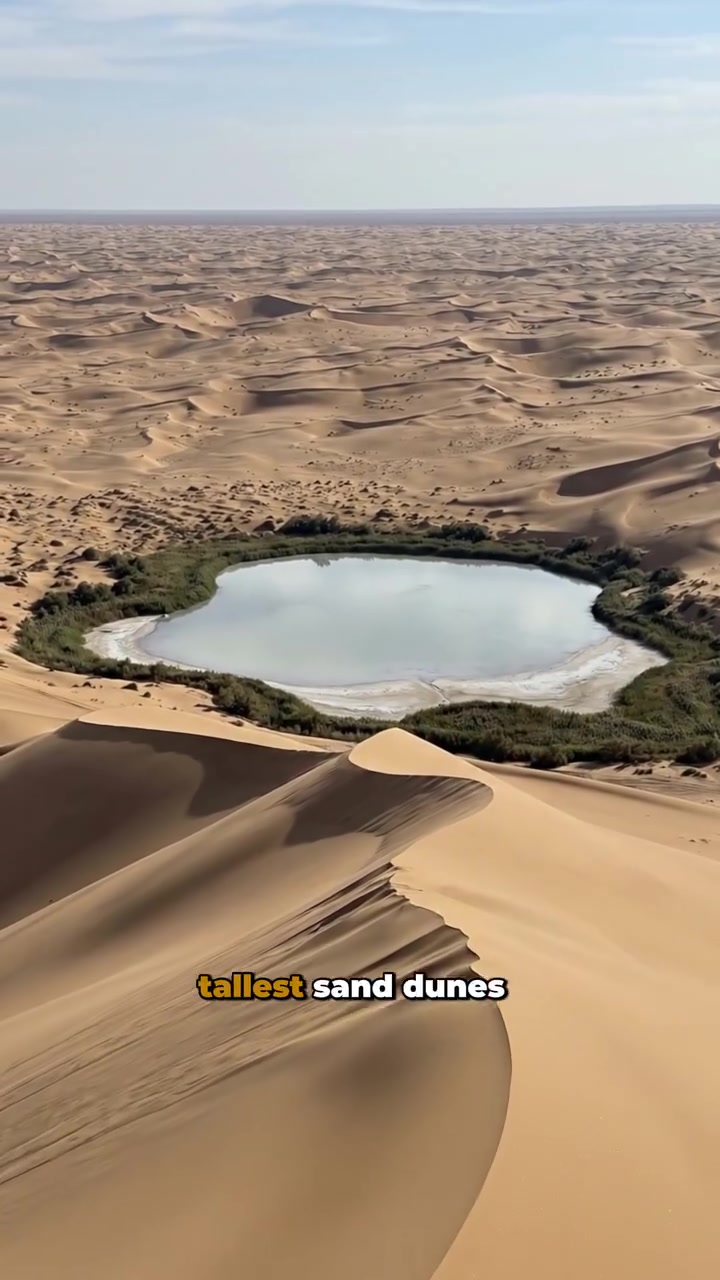
The Badain Jaran Lakes: An Enigmatic Oasis
In northern China's Badain Jaran Desert lies a geologic mystery. There, more than 140 lakes resist evaporation. This place is a geological miracle: The tallest stationary sand dunes on Earth rise more than 1,500 feet, nearly the height of the Empire State Building. They are in a UNESCO World Heritage Site. Yet the true marvel lies at the bottom of these mammoth dunes: more than 140 lakes. They remain perpetually filled. Yet, this desert receives almost no rain.
The wetlands of the desert
The lakes of the Badain Jaran Desert are an anomaly. The desert sprawls across about 20,000 square miles. The temperature fluctuates from a scorching 122°F to below freezing. And every year, it receives less than 50mm of rainfall. The huge lakes sitting in basins of sand should evaporate; but they don't. The sand here is loose and it could move, but it doesn't. Researchers have linked both phenomena to water.
The sand where sand goes to stand still
In northern China lies a geological mystery: Sand dunes that refuse to blow away. The world's largest stationary sand dunes tower over the Badain Jaran Desert at over 1,500 feet. Entire ecosystems thrive in the interdune valleys. Ancient trees and grass carpets. And these aren't just any trees, they require water. The relic dunes and the water ecosystems hint at a single source. Here, the sand and water exist in a probable flux.
The water that's been here for centuries
Science points to the lakes’ water supply, arriving from sources far and wide, traveling through the underground. Chemical fingerprints in the groundwater do not match the rain that falls in the desert. The lakes water was not laid down in centuries, but millennia. Scientists theorize that water that evaporates from these lakes travels underground. Then, it condenses into groundwater thousands of kilometers away. The processes of evaporation and condensation repeat over centuries. The water from distant mountains might be returning to Badain Jaran Desert.
Where does the water come from?
Researchers have two leading theories. Some believe it comes from the rare rain. Others believe it’s ancient water. Both are plausible. The rain that does fall into the desert seeps into the sand and into the underground water system. Researchers have also gathered data about the water in the lakes from wet sands that don't move. Some wet sands contain fossilized remains from thousands of years ago. Yet the water that comes from the rain does not match the chemical compositions of the water in Badain Jaran lakes. Water from thousands of years ago is present in the gaps and pores of the sand. This means the sand slows the movement of sand and keeps moisture locked in place.
The blue gem of Inner Mongolia
The Badain Jaran Desert is a geological marvel and a UNESCO World Heritage Site. Where ancient sand dunes meet ancient water. The lakes of the Badain Jaran Desert are a geological anomaly. The surrounding population relies on the lakes for drinking and farming. Local towns turn to the base of the dunes for agriculture. The trek to Badain Jaran Desert is long and unforgiving. Temperatures can vary in an hour from 30°C (86°F) to sub-zero. Day and night temperatures can vary from 40°C (104°F) to sub-zero. Ancient plants, animals, and bacteria thrive across the Badain Jaran Desert. The Badain Jaran Desert has seen centuries of people and judgments — a stage for human geologic thinking. Travelers have themselves developed their own stories. But now, science is close to understanding the geology and the water. Even after years of research, scientists still don't quite know where the water comes from. Some of the lakes go underground, and the water flows back up. But these are the mysteries of Badain Jarans. If wet sand does not blow away easily, it keeps the mystery shrouded.
Thanks to the sand and water
If you're up for an incredible journey of discovery and natural beauty — get there. To travel to the Badain Jaran Desert, first fly to Erlianhaote, China. From there, travel a long way by car. The lakes of the Badain Jaran Desert are a geological, and a scientific, mystery. The UN designated the lakes of the Badain Jaran Desert a UNESCO World Heritage Site in 2024. This means the lakes are a mystery to the world and to science. So this means if you visit, you can help provide the history of the mystery of Badain Jarans. If you plan to visit, be prepared for harsh conditions. Take plenty of water, food, and shelter. This is a must-do experience.
Questions readers ask
How do the lakes in the Badain Jaran Desert stay full of water despite the harsh environment?
The lakes in the Badain Jaran Desert stay full due to a combination of factors. The water likely comes from underground sources, traveling from distant mountains through a process of evaporation and condensation over centuries. Additionally, the sand in the desert helps retain moisture, preventing the lakes from evaporating quickly.
What makes the sand dunes in the Badain Jaran Desert unique?
The sand dunes in the Badain Jaran Desert are unique because they are the tallest stationary sand dunes on Earth, reaching over 1,500 feet. Unlike typical sand dunes, these do not blow away due to the presence of water and vegetation in the interdune valleys, which help stabilize the sand.
How do the lakes in the Badain Jaran Desert support local communities?
The lakes in the Badain Jaran Desert are crucial for local communities. They provide a source of drinking water and are used for farming. The surrounding population relies on these lakes for their daily needs, making them an essential resource in the region.
What are the two leading theories about the source of water in the Badain Jaran Desert lakes?
The two leading theories about the source of water in the Badain Jaran Desert lakes are that it comes from rare rainfall or that it is ancient water. Some researchers believe the water seeps into the sand and underground water system from the rain that does fall. Others suggest that the water is ancient, trapped in the sand for thousands of years, and is slowly released into the lakes.
Can visitors explore the Badain Jaran Desert lakes?
Yes, visitors can explore the Badain Jaran Desert lakes, but it's important to note that the trek is long and unforgiving. Temperatures can vary significantly, and the terrain can be challenging. It's recommended to prepare thoroughly and be aware of the harsh conditions before embarking on a visit.
Related deep dives
Similar reads based on topic and creator.


Recent articles
Fresh deep dives from the latest Reels we unpacked.




Comments
Be the first to comment.