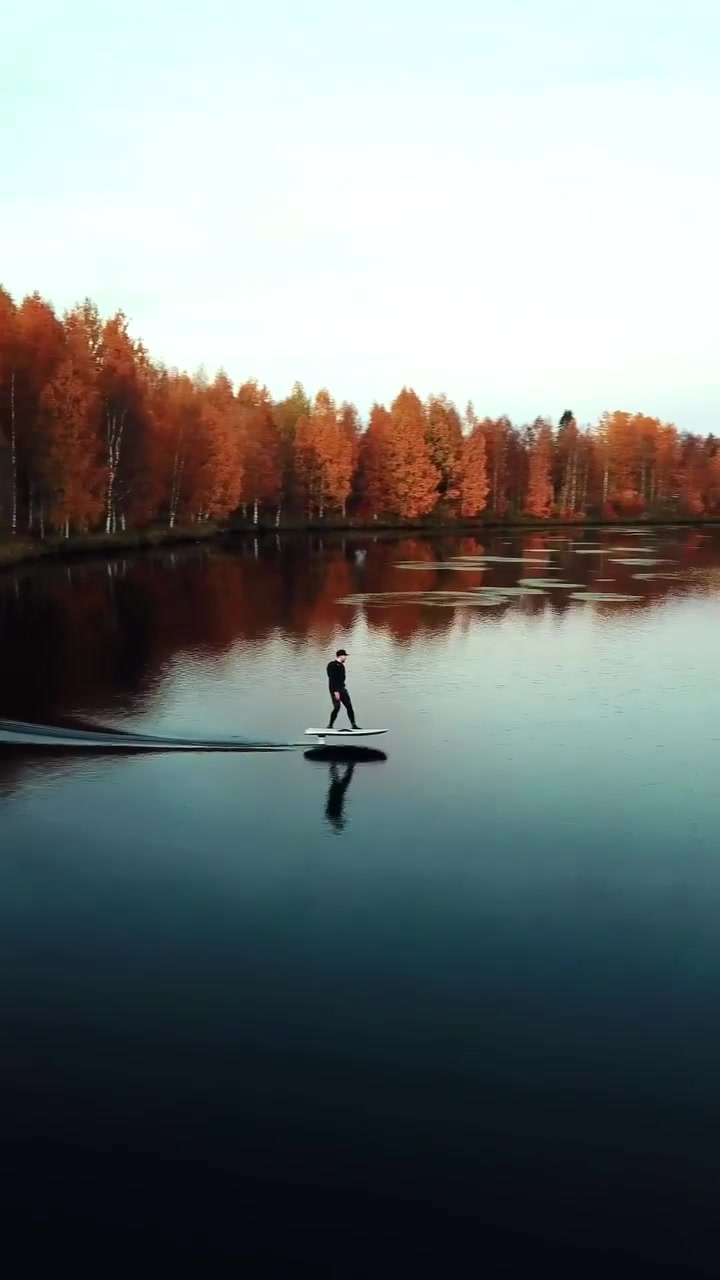
This is stand-up paddleboarding in autumn: a tranquil pursuit silhouetted against a backdrop of reds, oranges and greens. This image is now accessible to many; the paddleboard, a raft of modernity. Stand-up paddleboarding, or SUP, is a popular water sport that combines balance, core strength, and a sense of adventure. The sport is performed on an elongated board with a paddle which is used to move through the water. Paddleboards are designed to be stable while floating on water, allowing the paddler to stand and maneuver with ease. Traditional surf-style boards give balance and a place to rest, while inflatable paddleboards offer portability. Depending upon the board, stability improves. A unique feature of stand-up paddleboarding is its adaptability. The sport can be done in various bodies of water, from still lakes to ocean waves; its simplicity and versatility contribute to its widespread popularity. The paddle provides the paddler with control over their path and speed, making it an excellent choice for both leisure and fitness enthusiasts.
A Bluff of Silver Birch
The allure of autumn SUP lies in the season's visual splendor. The season transforms waterways — once placid or playful — into a backdrop of stunning autumn foliage. The stark contrast of vibrant tree colors with the cool blue of still waters make for a picturesque setting, with the paddler’s silhouette a tiny addition to the landscape. The quiet tranquility of a lake during autumn is a unique boon to SUP, as it enables a deeper connection to nature. The calm of this time of year allows for uninterrupted contemplation—of the beauty of autumn’s sailing leaves and the wildlife they shelter.
Morphological engineering
The essential gear is a board, a paddle, and a personal flotation device. The paddleboard is the central feature; its shape, size, and material vary depending on the paddler’s needs and preferences. Traditional paddleboards are typically made from materials like fiberglass or epoxy resin, offering a rigid and durable surface. In contrast, inflatable boards, made from PVC or drop-stitch material, are more portable and easier to store. Their thickness and material determine the board’s stability and buoyancy. Paddles also come in different shapes and sizes, with adjustable lengths tailored to the paddler’s height and specific needs.
The wristroll
The paddling technique is crucial for efficient and enjoyable SUP. The basic stroke involves a three-step process: reach, catch, and power. The reach is the initial phase where the paddle is extended forward, the paddle blade enters the water. The catch involves pulling the paddle through the water to generate power. Finally, the power phase requires the paddler to use their core and legs to drive the paddle through the water, propelling the board forward. Knowing how to maintain balance and control is key, especially when navigating currents or waves. The paddler shifts their weight and uses their core muscles to stabilize the board, preventing falls and ensuring a smooth ride.
No Need to be a Flamboyant Hooker
Autumn water temperatures present a unique challenge and should be addressed by the paddler to prioritize safety. A wetsuit or waterproof clothing is essential, as the cool water can induce hypothermia. The temperature of the water also affects buoyancy and board control. Choosing the right gear and dressing appropriately for the conditions ensures a safer and more enjoyable experience. In addition to physical preparation, mental focus is necessary for safe and effective paddling. Mental concentration helps maintain balance, stay alert, and respond to changing conditions. It is imperative to stay within line-of-sight distance from shore and maintain awareness of any potential hazards. Planning for safety includes checking the weather forecast and assessing water conditions before setting out.
How to Spend an Evening, Beef
"Find a calm lake or river." To embark on an autumn stand-up paddleboarding adventure, look for calm bodies of water, such as tranquil lakes or slow-moving rivers. These environments provide a serene backdrop and safer conditions for beginners. Understanding the equipment is crucial; seek paddleboards with good stability and a paddle that suits your height. Proper attire for the temperature is equally important; dress in layers, and consider a wetsuit in colder weather. Before setting out, check the weather and water conditions, and always paddle within your skill level.
- Know the water: Familiarize yourself with the waterway’s current, depth, and any potential hazards. Avoid areas with strong currents or uneven depths, especially if you are new to paddleboarding.
- Start small: Begin with shorter paddling sessions to build your endurance and familiarity with the board. Gradually increase the duration and intensity of your paddling sessions as your skills improve.
- Practice safety: Always wear a personal flotation device (PFD) and let someone know your plans and expected return time. Carry a whistle or other signaling device in case you need assistance.
Autumn Leaves Stir Two Dreams
A stand-up paddleboard is more than a purchase. It is a pass to enchanting autumn vistas. It is an invitation to quiet reflection on the shore. It is an opportunity to witness the season’s slow dance of nature. Standing at the prow in the heart of the season, staring down at the leaves and fish alike, is to breathe in the scent of the world.
Questions readers ask
What exactly is stand-up paddleboarding (SUP) and how does it work?
Stand-up paddleboarding, or SUP, is a water sport where you stand on a large board and use a paddle to move through the water. It combines balance, core strength, and a sense of adventure. You use a long paddle to propel yourself forward, and the board is designed to be stable enough to stand on while you maneuver.
Why is autumn the best time for beginners to try stand-up paddleboarding?
Autumn is ideal for beginners because the water is generally calmer, making it easier to maintain balance. Additionally, the stunning fall foliage provides a beautiful backdrop, enhancing the overall experience.
What are the different types of paddleboards available and which one should I choose?
There are traditional hard boards made from materials like fiberglass or epoxy resin, which offer durability and rigidity. Inflatable boards, made from PVC or drop-stitch material, are more portable and easier to store. For beginners, an inflatable board might be more suitable due to its stability and ease of transport.
How do I perform the basic paddling technique in stand-up paddleboarding?
The basic paddling technique involves three steps: reach, where you extend the paddle forward and enter the water; catch, where you pull the paddle through the water to generate power; and power, where you use your core and legs to drive the paddle through the water, propelling the board forward. Maintaining balance and control is key, especially in currents or waves.
What safety precautions should I take when stand-up paddleboarding in autumn?
Autumn water temperatures can be cooler, so it's important to wear appropriate clothing to stay warm. A personal flotation device (PFD) is essential for safety. Additionally, checking weather conditions and water safety guidelines before heading out is crucial.
Can I stand-up paddleboard on different types of water bodies?
Yes, stand-up paddleboarding is versatile and can be done on various bodies of water, from still lakes to ocean waves. The adaptability of the sport makes it suitable for both leisure and fitness enthusiasts, regardless of the water conditions.
Is there a specific technique to navigate currents or waves while stand-up paddleboarding?
Navigating currents or waves requires shifting your weight and using your core muscles to stabilize the board. Knowing how to maintain balance and control is key to preventing falls and ensuring a smooth ride. Practicing in calmer waters before attempting more challenging conditions can help build your skills and confidence.
Related deep dives
Similar reads based on topic and creator.




Recent articles
Fresh deep dives from the latest Reels we unpacked.



Comments
Be the first to comment.