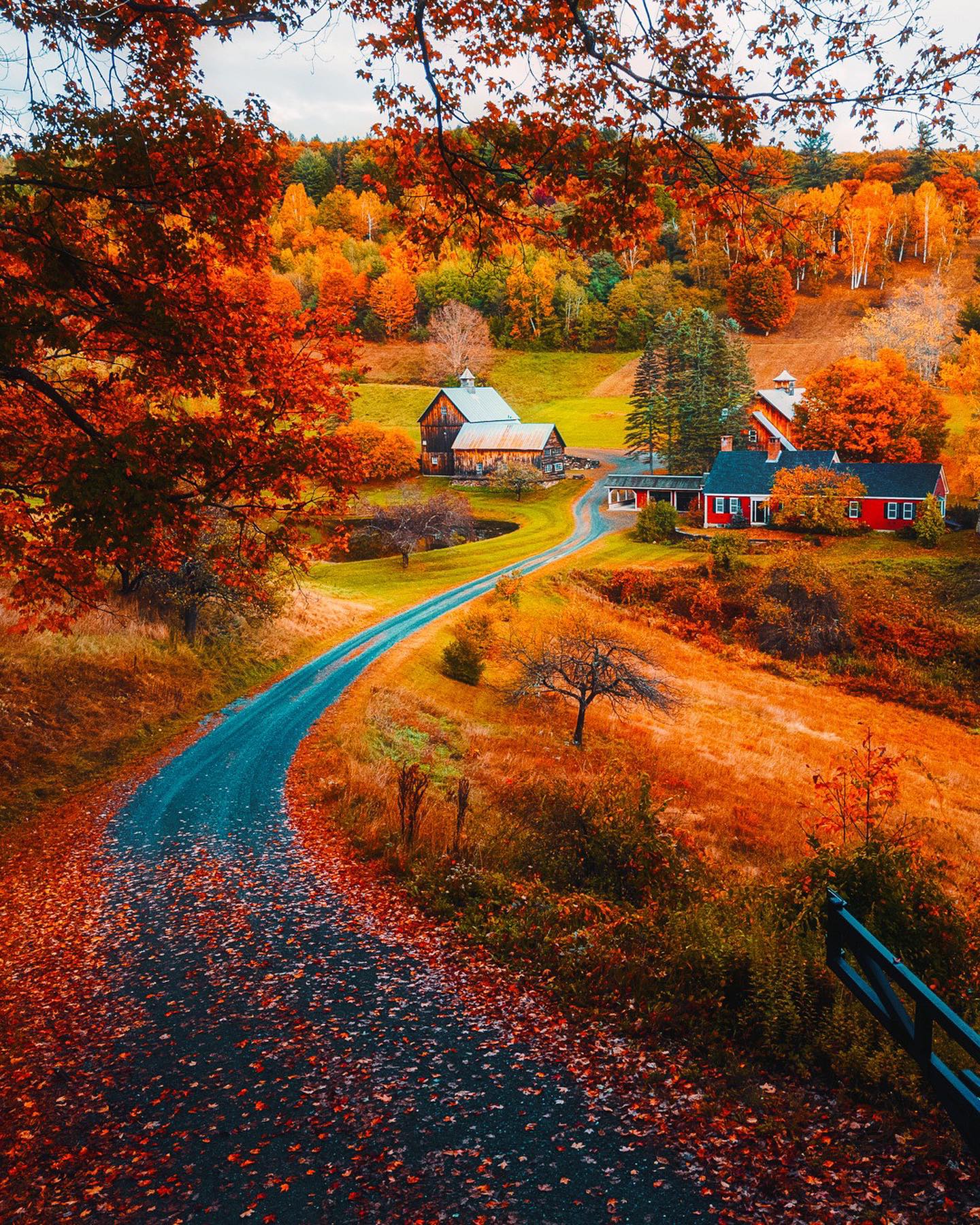
A winding country road twists through a landscape ablaze with fall colors, dotted with cozy homes and storied barns. Dull does not describe this Autumn.
Autumn's fiery punctuation — the art of red and gold
A seasonal exhibition: Autumn foliage landscapes are photography's fiery punctuation. They capture nature's annual performance in dramatic, vivid color. The display comes from a complex process: short days and cool nights trigger leaves to stop producing chlorophyll and instead make pigment, often revealed as a warm tapestry of reds, oranges, and yellows. Each frame offers subtle shifts in hue, light, and form, creating a rich, textured palette that varies from tree to tree, hill to hill. This colorful transition varies by species, time of year, and climate. New England's famed foliage is legend for good reason — especially apt for a landscape where maples and oaks make up 60% of its forests. Many photographers compose with warm colors dominating, they evoke nostalgia, but cool blues can cool the palette too. Any good frame finds balance between foreground and background, and often integrates a human element to add scale. Only from a distance do trees in a forest become a colorful silhouette against the sky, whilst the Old Town Canoe traverses a lake’s mirrored surface.
When nature’s hues become a commodity
Leaves changing color isn't just a natural phenomenon — it’s also an economic driver. The fall foliage industry generates billions of dollars each year. Visitors flock to destinations like Vermont and New Hampshire to see the vibrant colors. Companies capitalize on this natural beauty, offering tours, festivals, and specialty merchandise, but the pressure to monetize such a pure sight might actually devastate it. Things like deforestation and tourism overcrowding risk damaging the very landscapes they wish to highlight. Logging, development, and invasive species all disrupt the delicate ecosystems that produce fall colors. Climate change adds another layer of risk, shifting weather patterns and temperatures that can disrupt the timetable of the foliage and landscape — sending fall colors blooming earlier or later.
The forest tops and verticals
Aerial views of autumn forests highlight the verdant grandeur of the canopy, while the ground- level view celebrates the texture and variety of leaves. Both perspectives anchor the human experience in a landscape — but frames from above bring symmetry, vibrancy, and expansiveness. Aerial shots often showcase vast stretches of forest, offering a bird's-eye-view of natural tapestry with striking reds, oranges, and yellows. This contrasts with the close-up views of detail, which emphasize the intricate patterns and variations of individual leaves and stems.
Calm and color in the countryside
Charming cabins nestled beside quiet lakes surrounded by a canopy of autumn foliage, encapsulate tranquility, as they evoke a sense of calm and reflection, highlighting the essence of autumn solitude. But they connect to more than just the stillness — to the ocean of color. Vertical lines of trees lead the eye to the horizontal lines of the water, creating a serene balance and sense of perspective. The juxtaposition of man-made structures with the vast, natural landscape underscores both.
The road less traveled
The winding road through vibrant foliage adds depth and perspective. These roads, often dusty or lined with fallen leaves, offer views of the surrounding landscape. They provide a journey through the fall forest, showcasing the color that flanks the path. There is an end purpose to the road, but the fall colors are the distraction. That's why landscapes aren't just static images — they're about the journey and discovery, inviting viewers to explore the natural beauty and the path less traveled.
Enjoy the colors in camera or in person
When you are ready, dip a toe into the crisp air. If you are looking for color:
- Time it carefully: Start in late September or early October and avoid times when the weather is unpredictable and can disrupt shot.
- Camera checks: Validate your camera for the craziest settings and your lenses are clear to avoid blurs and shooting in low light.
- Plan ahead: Research leaves on local websites and apps to know when the colors are at their peak and pick the right lighting to maximise visual impact. Reconnect with this timeless beauty: autumn foliage captures more than just a season; it captures a sense of wonder. Whether through the lens of a camera or the window of a car, autumn offers a vibrant, comforting reminder of nature's cyclical beauty.
Questions readers ask
What causes the vibrant colors in autumn foliage?
The vibrant colors in autumn foliage are due to a complex process triggered by shorter days and cooler nights. During this time, leaves stop producing chlorophyll and instead produce pigments that result in the warm hues of reds, oranges, and yellows. This process varies by tree species, time of year, and climate, creating a rich, textured palette.
Why are New England's fall colors so famous?
New England's fall colors are particularly famous because the region is dominated by maple and oak trees, which make up about 60% of its forests. These species are known for their vibrant autumn displays, making New England a prime destination for foliage enthusiasts.
How do photographers capture the best autumn landscapes?
Photographers often compose their shots with warm colors dominating to evoke nostalgia, but they also balance these with cool blues. A good frame finds harmony between the foreground and background, often integrating a human element to add scale. Aerial views highlight the expansiveness and symmetry of the foliage, while ground-level shots capture the intricate details of the leaves.
What are the economic impacts of autumn foliage?
Autumn foliage is a significant economic driver. It generates billions of dollars each year as visitors flock to destinations like Vermont and New Hampshire to see the vibrant colors. Companies offer tours, festivals, and specialty merchandise, but this monetization can also pose risks, such as deforestation and tourism overcrowding, which can damage the landscapes.
How does climate change affect autumn foliage?
Climate change can disrupt the delicate ecosystems that produce fall colors. Shifting weather patterns and temperatures can alter the timetable of foliage, causing colors to bloom earlier or later than usual. This can impact both the natural beauty and the economic benefits associated with autumn landscapes.
What are some practical tips for photographing autumn foliage?
To capture the best autumn foliage, consider both aerial and ground-level shots. Aerial views offer a bird's-eye view of the natural tapestry, while ground-level shots highlight the intricate patterns and variations of individual leaves. Incorporating a human element, like a cabin or a canoe, can add scale and context to your photos.
What are some threats to the autumn foliage experience?
Deforestation, tourism overcrowding, logging, development, and invasive species all pose threats to the autumn foliage experience. These activities disrupt the delicate ecosystems that produce the vibrant colors. Climate change also adds another layer of risk by altering the weather patterns and temperatures that influence the foliage's timing.
Related deep dives
Similar reads based on topic and creator.




Recent articles
Fresh deep dives from the latest Reels we unpacked.



Comments
Be the first to comment.