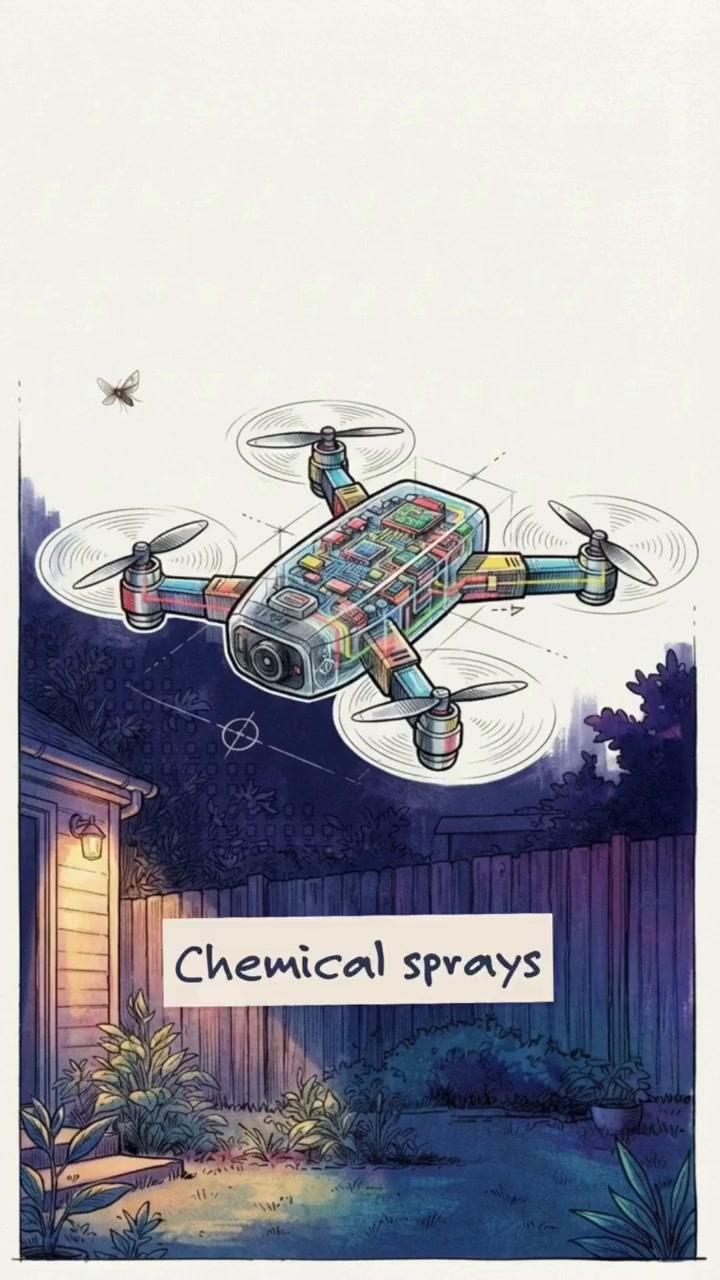
Mosquitoes kill more people than all the wars in the world combined. A tiny drone called the Li Sonar 2 Base Station aims to change that. The drone can locate and intercept mosquitos at night, ramming them midair. Its aim? Eradicate malaria.
The Swarm Stalker
The Li Sonar 2 Base Station is a 40-gram micro drone engineered to find and intercept mosquitoes in darkness. It's equipped with an ultrasonic sound system and a collection of 380 smartphone microphones. The Li Sonar 2 Base Station fires an ultrasonic pulse into a yard. The Li Sonar 2 identifies the exact species and gender of the mosquito by analyzing the pitch changes created by the insect's beating wings. Using acoustic fingerprinting, the system sorts through echoes, effectively ignoring irrelevant signals from leaves and other insects. The drone receives the AI's instructions, calculates a flight path, and then intercepts the mosquito midair with its propellers. No pestiocide is required for this system to be effective.
Shape of things to come
In Y Combinator’s R&D Labs, mosquito abatement is already a priority. Diseases like malaria are becoming harder to control. A new mosquito trap is designed to be 100x more cost-effective in this mission. At scale, precisely 10 of these drones can continuously patrol an entire square kilometer, clearing the area for a fraction of the cost of traditional pest control. But costs aren’t the only concern: The environmental impact of chemical sprays is a significant issue. For instance, the World Health Organization and United Nations have been involved in the fight against malaria. By leveraging autonomous drones, researchers hope to create a mosquito-free environment. With $4 million in seed capital, Tornyol’s mission is clear: to eliminate malaria and create mosquito-free evenings.
The Art of the Hunt
When the Li Sonar 2 Base Station fires ultrasonic pulses, the microphones pick up an array of signals. Though mosquitoes are the primary target, the system is bombarded with signals from other objects. The real magic happens in the translation of these echoes — the acoustic fingerprinting. These acoustic fingerprint measurements are precise: the system identifies the mosquito's species and gender. The drone then calculates a path to intercept. It ramps up within 0.5 meters of the target, effectively attacking the flying enemy. Unlike manual methods, this autonomous drone comes equipped to fight — even on a moonless night. Most current drone systems rely on visual identification, which falls short in low-light conditions. However, the Li Sonar 2 Base Station differs by using acoustic signals. The microphones catch returning echoes, making it a champion in dark environments.
The unintended friend
Not all insects are enemies. During the search, a harmless moth will also be encountered. The AI, powered by Tornyol Labs’ research, is set to ignore anything non-threatening. Once the echo signals are translated into acoustic fingerprints, AI identifies the exact gender and species of the mosquito. That information is crucial: inadequate pest control fails because it can’t tell friend from foe. But Tornyol’s innovation can, and that’s what makes it revolutionary
The hunt
With a 1 km² area to patrol, the micro drone flies autonomously. At night, a single mosquito can be rammed from the air, leaving the outdoor area safe, without a single drop of pesticide.
What to expect
If you're looking to try a malleable drone system, consider these strategies for a successful hunt. Questions are expected, so be prepared:
- Tech-savvy: Be ready to learn. The system's smart, but it relies on AI and acoustic fingerprinting for success. Watch training videos to fully understand the system.
- That’s the buzz: Expect to handle some noise. The microphones are sensitive and the ultrasonic pulses are deliberately loud.
- Friendly for the forest: An acoustic fingerprint performs exact measurements. It also ignores irrelevant signals. This is perfect for areas that are full of insects and other targets.
- Be patient: These tiny drones are making big jumps in pest control.
Questions readers ask
What makes the Li Sonar 2 Base Station different from traditional mosquito control methods?
The Li Sonar 2 Base Station stands out because it uses ultrasonic pulses and acoustic fingerprinting to identify and intercept mosquitoes, rather than relying on pesticides or visual identification. This method is more precise and effective, especially in low-light conditions, making it a significant improvement over traditional methods.
How does the Li Sonar 2 Base Station differentiate between different species and genders of mosquitoes?
The drone uses an ultrasonic sound system and 380 smartphone microphones to analyze the pitch changes created by a mosquito's beating wings. This data is then translated into acoustic fingerprints, allowing the AI to precisely identify the species and gender of the mosquito, ensuring that only the targeted pests are intercepted.
Can the Li Sonar 2 Base Station operate in complete darkness?
Yes, the Li Sonar 2 Base Station is designed to operate effectively in dark environments, including on a moonless night. It uses acoustic signals to detect and intercept mosquitoes, making it a reliable solution for nighttime mosquito control, unlike traditional drones that rely on visual identification.
How many drones are needed to cover a large area, and how cost-effective is this solution?
At scale, precisely 10 of these drones can patrol an entire square kilometer, making it a highly cost-effective solution. This system is designed to be 100 times more cost-effective than traditional pest control methods, offering a significant advantage in terms of both cost and environmental impact.
What happens to non-threatening insects encountered by the Li Sonar 2 Base Station?
The AI in the Li Sonar 2 Base Station is programmed to ignore harmless insects, such as moths. The system's precision in identifying the exact species and gender of mosquitoes ensures that only targeted pests are intercepted, minimizing the impact on non-threatening insects.
How does the drone calculate its flight path to intercept a mosquito?
The drone receives instructions from the AI, which processes the acoustic fingerprinting data to calculate the precise flight path. Once the path is determined, the drone intercepts the mosquito midair with its propellers, ensuring a direct and effective strike.
Related deep dives
Similar reads based on topic and creator.




Recent articles
Fresh deep dives from the latest Reels we unpacked.




Comments
Be the first to comment.