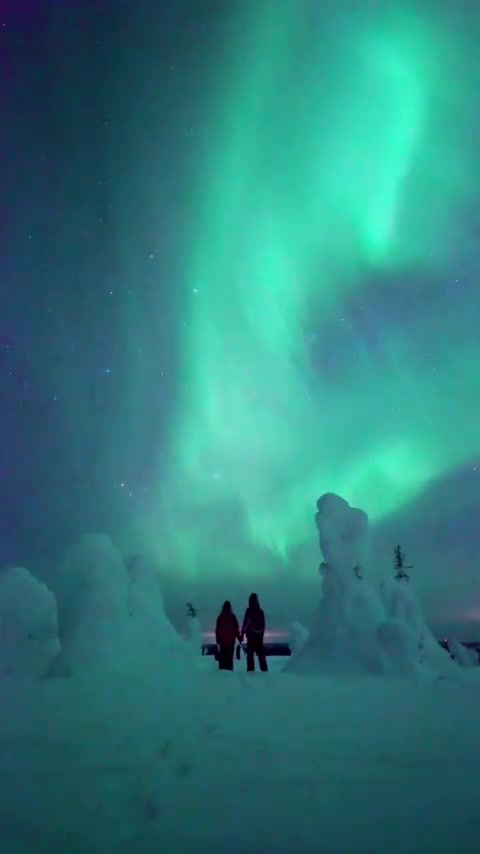
Seldom do humans witness the Aurora Borealis, the Northern Lights, up close. In the vast, snowy wilderness, the lights stretch across the darkened sky. This makes them seem alive, shifting from pale greens to vibrant emeralds. That luminescence can seem alive, especially when watched from the deep cold. Behind all this is a complex natural process that unfolds miles away, out in space.
The Dance of Dawn: What the Aurora Borealis is
The Aurora Borealis is a natural light display that occurs in the high altitude regions of the Earth. It shows green, blue, pink, and purple lights that dance across the sky. Some Auroras take on other colors, but green is the most common. The lights appear in many forms, from dull rays to arcs and curtains that shimmer and flicker. Occasionally, the lights become large enough to appear like waves, or large billows of color. The color variations result from the type of gas molecule that particles collide with. The most common color, green, is a result of oxygen molecules located about 60 miles above the Earth. The rare, all-red auroras are produced by high-altitude oxygen, at heights of up to 200 miles. Nitrogen produces blue or purplish-red aurora. The lights begin at the magnetic poles and then spread towards the equator. They are strongest in Alaska, Iceland, Greenland, and Northern Canada. The name itself means “northern dawn” in Latin. Aurora refers to Romans’ goddess of dawn, and Borealis is a Greek word for “north wind”. In the Southern Hemisphere, the auroras are called Aurora Australis, or the Southern Lights. Action happens on a vast scale. The entire light show is the result of a complex interplay between the Earth's magnetic field, charged particles from the sun, and the Earth's atmosphere. The process begins with the sun releasing charged particles, primarily electrons and protons, that travel through space in solar winds. When these particles collide with Earth's magnetic field, they are funneled towards the poles, where they interact with various gas molecules in the Earth’s atmosphere. These collisions produce photons, or light particles, which create the shimmering curtains and arcs we see as the Aurora. The different colors of the lights are determined by the types of gas molecules involved and the altitude at which the collisions occur. Sit down and learn about the Auroras today. People do not need to travel to the Northern Hemisphere to see the lights. The display is not unique to winter. Visitors can see the Aurora Borealis from September through March, but some of the best displays happen in March as there is more moonlight. The best viewing times are from late September to mid March. The lights can be seen as early as 8:00 or throughout the night, depending on the season and location. Aurora hunters recommend being out before 2:00 a.m. in the winter months. Solar activity dictates how the lights appear, which is why they can be seen in more places during times of the highest activity. Solar activity is a cyclical event, which means that the sun's activity increases and decreases over a period of 11 years. The largest solar activity will occur in 2025, and many viewing points will be released.
A Nighttime Spectacle Above the Poles
The Aurora Borealis provides a rare nighttime spectacle over the poles. It is the result of billions of photons reacting with the atmosphere over the poles. The sun releases charged particles in solar winds. When they collide with Earth's magnetic field, they travel towards the poles where they strike Earth's atmosphere. That is a rare sight for many to see. To make matters worse, there are three potential risks to viewing the lights. First, the location is an issue, as they are more likely to be seen in the Arctic. The northern lights are a result of the magnetic polarity; therefore, they may never be visible in many parts of the world, such as the equator, or in times of weak solar particles. Other viewing issues arise in the event of cloudy weather or a full moon, where the light occludes the experience. In addition to being a fascinating natural phenomenon, the Aurora Borealis is intricately tied to the myths, folklore, and rituals of various cultures that have inhabited the regions. The lights have often been the subject of legends and stories among indigenous groups in the Arctic. These narratives often reflect the unique connection these communities have with the natural world. The lights are a rare opportunity in nature that captivates viewers.
The Science of the Northern Lights
Why the lights dance (The Magnetic Dance)
The lights dance thanks to the complex relationship between the sun and the Earth. This dance is based in the concept of Earth’s magnetic field. As the solar wind carries charged particles from the sun towards the Earth, the magnetic field deflects most of the particles. However, some of these particles become trapped in the magnetic field lines and travel along them towards the Earth’s poles. Upon reaching the poles, the charged particles collide with various gas molecules in the Earth’s upper atmosphere, such as oxygen and nitrogen. When these collisions occur, the molecules become excited and release energy in the form of photons. This energy is then emitted as the vibrant lights seen in the auroras. The complex interplay between the Earth’s magnetic field and the solar wind is the reason for the auroras unique dance. The variations in the solar wind's intensity and direction, as well as fluctuations in the Earth's magnetic field, cause the lights to shift and sway in mesmerizing patterns. The dance can last for hours. Longer exposure to the Sun's rays and increased activity makes longer viewing periods possible.
Colorizing Aurora (The Chemistry Behind the Show)
While the Aurora Borealis is often perceived as a monochromatic display of blue or green, the lights are known to deliver a spectrum of colors including red, blue, yellow, and purple. The specific colors that appear in an aurora depend on the type of gas molecules involved and the altitude at which the collisions occur. For example, oxygen molecules are responsible for the common green and red hues. These are the most abundant gas in the Earth's atmosphere. Red lights are produced when the collisions occur at higher altitudes, while green lights result from collisions at lower altitudes. The rarer pink, blue, and purple hues are a result of nitrogen molecules. The colors are also dependent on the intensity of the collision. The more intense the collision, the greater the energy released and the brighter the color.
A Cultural Phenomenon
The legend of Aurora
The Aurora Borealis has captivated human imagination for millennia. The lights have inspired countless mythologies and legends across different cultures. For example, in Norse mythology, the lights were believed to be the reflections of the Valkyries' armor as they rode across the sky. The Valkyries were female figures who chose who would die in battle and who would live. They were fierce and swift, similar to the nature of the Northern Lights. In Finnish folklore, the lights were seen as the dancing spirits of the dead. These stories exemplify the deep and enduring cultural significance of the Aurora Borealis. More modern interpretations include the idea that the lights are the rays of the sun. That the sun's energy projects them into the atmosphere in order to light the sky at high altitudes.
The History Behind the Displays
The earliest recorded observations of the Aurora Borealis date back to ancient times, with mentions appearing in Chinese, Greek, and Roman texts. The first scientific explanation for the Aurora Borealis was proposed by the British scientist Michael Faraday in the 19th century. He suggested that the lights were the result of electrical activity in the Earth’s atmosphere. The modern understanding of the auroras is largely attributed to advances in space exploration and the development of observational technologies. Satellite missions, such as the NASA’s THEMIS (Time History of Events and Macroscale Interactions during Substorms) and the European Space Agency's Cluster mission. These missions have provided valuable data on the complex interactions between the Sun and Earth. While the scientific understanding of the auroras is rooted in space physics, the auroras' cultural significance remains a fundamental aspect of many indigenous traditions. Many northern cultures see the lights as the spirits of ancestors or mythical beings.
A Once-in-a-Lifetime Adventure
The Aurora Borealis offers an unforgettable experience. For people looking to see the lights for the first time, planning is critical. Locations with dark skies and minimal cloud cover are ideal. Additionally, viewing should occur during the solar activity cycle. With the solar activity on the decline, recent years have not been ideal for viewing. It is also important to remember that the lights are most visible in the winter, as the long, dark nights provide the best viewing conditions. While it is possible to see the lights from urban areas, light pollution can obscure the display. The best viewing spots are typically located in remote, rural areas, such as national parks and nature reserves, which offer clear, unobstructed views of the night sky. For practical guidance, booking tours with local guides is a great idea. Consider the price of the experience. While it is possible to see the lights without spending a lot, those who want accommodation and even transportation to the optimal viewing locations need to be prepared to pay for it.
- Clothing: Dress warmly in layers as temperatures can be very low.
- Location: Choose a viewing point without light pollution, such as in an open field or national park.
- Time: Plan your viewing during the darkest hours of the night, ideally between 10 p.m. and 2 a.m.
- Solar Activity: Keep an eye on solar activity forecasts, as periods of increased solar activity can enhance the aurora’s visibility. One approach is to take a hiking or camping tour in picturesque locations. There are many exciting options. Just visit the website. Go on a guided night tour that includes a visit to the Aurora Borealis. This is far easier than planning one of these trips yourself. Some experiences are expensive. Traditional camping in an RV is also an option. Expect to spend $100 to $500 per night, and book well in advance as campsites fill up quickly. If this is not possible, you can drive to a national park and camp overnight in a nearby parking lot. The weather is unpredictable, and there is no guarantee that you will see the lights on any given night, so it is wise to plan for multiple nights of viewing when visiting. For safety, bring camping gear and extra food and water. The Aurora Borealis is a once-in-a-lifetime adventure that provides a thrilling experience. Those who witness it and the experience become a part of the Aurora experience. The ideal season to visit is from September to March as the nights are longer and the skies are darker. Viewing should occur late at night, when the sky is darkest. Whether you are a seasoned traveler looking for a new adventure or a photography enthusiast seeking the perfect shot, the Aurora Borealis is a place worth visiting. Make sure to check the best months to visit for the best viewing.
Questions readers ask
What causes the different colors in the Aurora Borealis?
The colors of the Aurora Borealis are determined by the type of gas molecule that the charged particles from the sun collide with and the altitude at which these collisions occur. Oxygen molecules produce green and red lights, while nitrogen results in blue or purplish-red hues. Green is the most common color, typically seen at around 60 miles above the Earth.
Can you see the Northern Lights from anywhere in the world?
The Northern Lights are best viewed from high latitude regions near the Arctic Circle, such as Alaska, Iceland, Greenland, and Northern Canada. However, during periods of high solar activity, the lights can sometimes be seen from more southern locations. The next peak in solar activity is expected in 2025, which could potentially expand viewing opportunities.
Why are the Northern Lights more active during certain times of the year?
The Northern Lights are more active and visible from late September to mid-March. This is due to longer nights and increased solar activity during these months. Additionally, the equinox periods in March and September often bring more frequent and vibrant displays. The best viewing times are typically from late evening until early morning, but this can vary depending on the season and location.
What is the significance of the name 'Aurora Borealis'?
The term 'Aurora Borealis' has a rich historical background. 'Aurora' is derived from the Roman goddess of dawn, while 'Borealis' comes from the Greek word for 'north wind.' Together, they translate to 'northern dawn,' reflecting the phenomenon's appearance as a glowing light in the night sky. In the Southern Hemisphere, the equivalent phenomenon is called Aurora Australis, or the Southern Lights.
How do solar winds contribute to the formation of the Northern Lights?
Solar winds carry charged particles from the sun, primarily electrons and protons, through space. When these particles interact with Earth's magnetic field, they are directed towards the poles. There, they collide with various gas molecules in the Earth's atmosphere, producing photons that create the spectacular light displays we see as the Aurora Borealis. The intensity and frequency of these displays are influenced by the level of solar activity.
Are there specific conditions that make the Northern Lights more visible?
The visibility of the Northern Lights is influenced by several factors, including solar activity, weather conditions, and the phase of the moon. Clear skies and minimal light pollution enhance the viewing experience. Additionally, the lights are more visible during the equinox periods in March and September, and during the peak of the 11-year solar cycle, which is expected to occur in 2025.
Related deep dives
Similar reads based on topic and creator.


Recent articles
Fresh deep dives from the latest Reels we unpacked.


Comments
Be the first to comment.