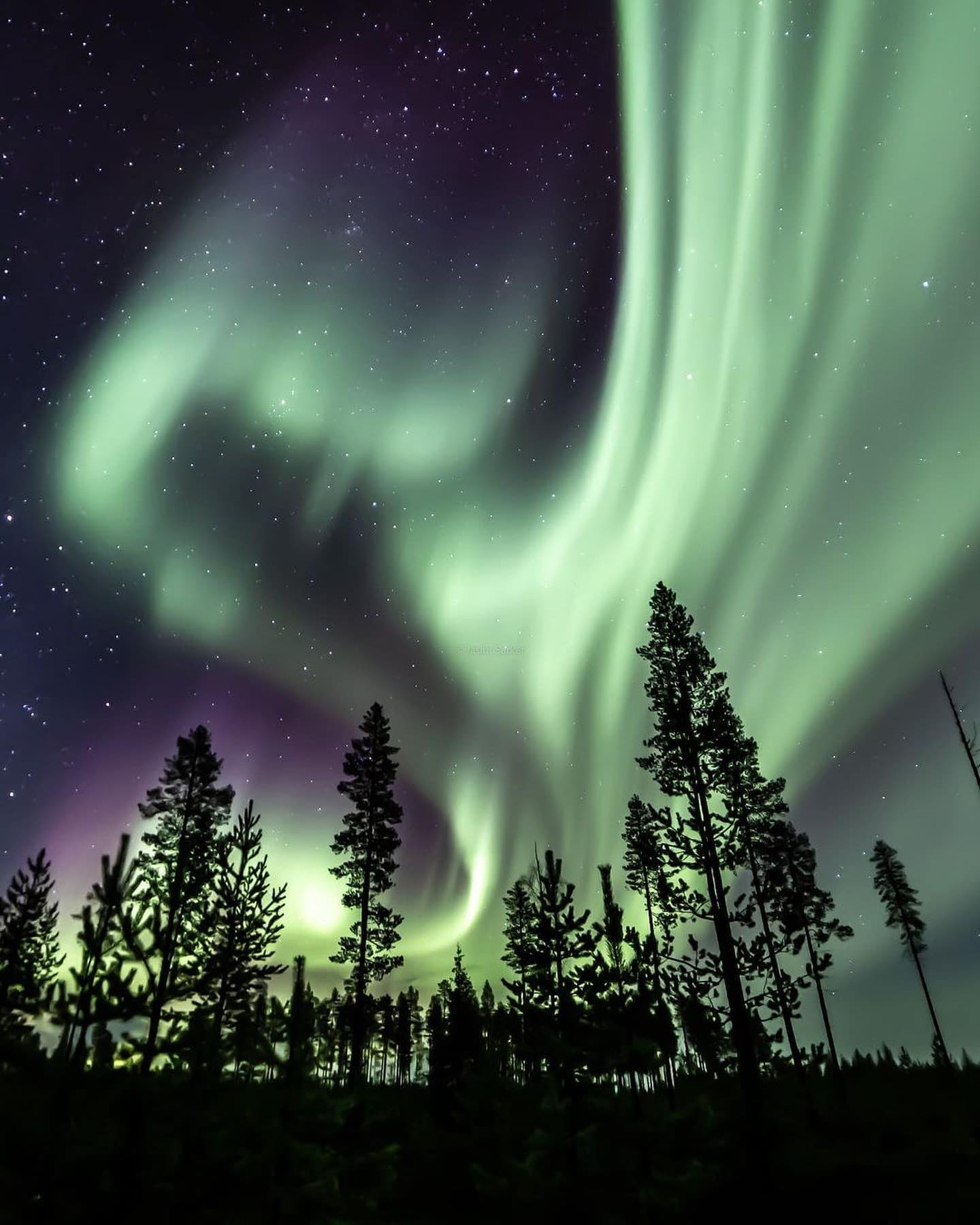
Stargazers know that you'll have seen the Aurora Borealis. Not just a glimpse, but a commanding view. Before the camera, the Northern Lights sway as if entertaining viewers in a grand forest amphitheater. Wall of dancing lights. Dazzling curtains dancing Dazzling curtains dancing a bit a New moon night
The Aurora Borealis and What Makes it Magic
The Aurora Borealis, or Northern Lights, is a natural light display famed for its lush colors and graceful movements. The lights are created by the interaction between charged particles from the sun and Earth's magnetic field. As these particles collide with atoms in our atmosphere, they release energy in the form of photons, resulting in the mesmerizing colors. The lights typically range from pale green and pink to shades of red, yellow, blue, and violet, depending on the type of gas molecules involved: oxygen and nitrogen. The dance of the lights is equally captivating. Often appearing as flowing curtains or rays, the aurora can also form arcs, waves, and even glowing spots. This dynamic display is influenced by solar activity and Earth's magnetic field, with each performance unique. The lights are most visible in high-altitude regions near the Arctic and Antarctic, but intense solar activity can push them further south. What sets the Aurora Borealis apart is not just its visual spectacle, but also its ephemeral nature. The lights can shift and change in mere seconds, making each sighting truly one-of-a-kind. This fleeting quality has inspired countless legends and myths across cultures, further enhancing the allure of this natural phenomenon. The Northern Lights have made their way into music, art, literature and beyond. The magnetic pull of the Northern Lights transcends language and culture.
Northern Lights and Cryptic Catch-All
The Aurora Borealis holds a special place in the cultural imagination, serving as a symbol of the sublime and the mysterious. Its appearance has been woven into the folklore and mythology of indigenous Arctic communities for generations. For example, the Sámi people of Northern Europe believe the lights are the spirits of the dead playing a game of football with the skull of an elk, and the Inuit people have legends retelling stories of mischievous spirits, and celestial beings dancing in the sky. The aurora has long been a source of both inspiration and fear, with its unpredictable nature fueling a sense of awe and wonder. The lights are a recurring motif in modern literature, films, and music, often used to evoke a sense of magic and enchantment. In contemporary culture, the Northern Lights remain a powerful and enduring symbol of the natural world's mysteries. Aurora chasers travel great distances and spend vast sums to witness the lights in person.
The Science Behind the Show
Particles and Magnetic Fields
The Aurora Borealis is a manifestation of complex interactions between the sun and Earth. The process begins with the sun, which continuously emits a stream of charged particles known as the solar wind. When this wind reaches Earth, it interacts with our planet's magnetic field, a process influenced by the sun's magnetic field. Earth's magnetic field acts as a shield, deflecting most of these particles. However, some particles are drawn towards the magnetic poles, where they collide with gas molecules in the atmosphere, such as oxygen and nitrogen. These collisions transfer energy to the molecules, exciting them to higher energy states. As the molecules return to their normal state, they release this excess energy in the form of photons, which we perceive as the beautiful lights of the aurora. The colors depend on the specific gas molecules involved and the altitude at which the collisions occur. For example, oxygen produces green and red lights, while nitrogen results in blue and purplish hues.
Dance of the Lights
The dynamic movement of the aurora is driven by the ever-changing solar wind and Earth's magnetic field. The lights can appear as static arcs or waves, or they can ripple and pulsate, creating a mesmerizing dance. This movement is influenced by the speed and direction of the solar wind, as well as the configuration of Earth's magnetic field. During periods of high solar activity, such as solar flares and coronal mass ejections, the aurora can become particularly active and vibrant, with lights shifting and changing rapidly. This interplay between the sun and Earth creates a stunning light show that captivates viewers. The lights can dance in synchrony, flicker, and arc across the sky creating a visual symphony of nature.
Colors and Gas Molecules
Miraculous colors that dance through the sky The vibrant colors of the Aurora Borealis are a result of the specific gas molecules involved in the collisions with solar particles. Oxygen is the most common gas molecule contributing to the aurora, producing the familiar green and red lights. Green lights are typically seen at lower altitudes, around 60 miles above Earth, while red lights occur at higher altitudes, up to 200 miles. This difference in altitude is due to the varying energy levels required to excite oxygen molecules. Nitrogen molecules also play a role in the aurora, producing blue and purplish hues. These colors are less common but can be seen during intense solar activity. The specific colors and their intensities depend on the strength of the solar wind and the configuration of Earth's magnetic field. It is the mixture of these lights which captivates viewers. The vibrant colors are a product of the exact mixture of gas molecules and solar activity.
Observing the Lights
Northern Lights tours
- Location: Choose a high-latitude destination known for frequent aurora sightings, such as Iceland, Norway, Canada, or Alaska. These regions offer clear skies and minimal light pollution.
- Season: Visit between September and April, when nights are longer and darker, providing optimal viewing conditions.
- Weather: Plan for clear skies, as clouds can obscure the view. Northern areas tend to be cloudy and rainy. You will need to balance this with cloud-free skies.
- Timing: Arrive late night during the new moon. Ideal times are around local midnight, when the sky is darkest. Allow time for the lights to appear, as aurora activity can be unpredictable.
- App: Use weather and solar activity apps to monitor aurora forecasts and choose the best nights for viewing.
- Hump: Dress warmly and prepare for cold temperatures, especially if you plan to spend extended periods outdoors.
- Equipment: Bring a camera with a tripod and a wide-angle lens to capture long-exposure shots of the aurora. Consider using a remote shutter release to avoid camera shake.
Questions readers ask
What causes the different colors in the Aurora Borealis?
The colors in the Aurora Borealis are determined by the type of gas molecules involved and the altitude at which the collision occurs. Oxygen produces green and red lights, while nitrogen results in blue and purple hues. The specific colors can also change based on the altitude of the collision, with different gases reacting differently to the charged particles from the sun.
How do solar activity and Earth's magnetic field influence the Aurora Borealis?
Solar activity, particularly the solar wind, plays a crucial role in the formation of the Aurora Borealis. When the solar wind interacts with Earth's magnetic field, it creates a complex dance of charged particles that collide with gas molecules in our atmosphere, releasing energy in the form of light. Earth's magnetic field guides these particles towards the polar regions, which is why the Northern Lights are most visible near the Arctic and Antarctic.
Why are the Northern Lights so ephemeral?
The ephemeral nature of the Aurora Borealis is due to the dynamic interaction between the solar wind and Earth's magnetic field. The lights can shift and change in mere seconds, making each sighting unique. This fleeting quality has inspired countless legends and myths across cultures, enhancing the allure of this natural phenomenon.
What are some of the cultural beliefs and myths surrounding the Aurora Borealis?
The Aurora Borealis has been woven into the folklore and mythology of indigenous Arctic communities. For example, the Sámi people of Northern Europe believe the lights are the spirits of the dead playing a game of football with the skull of an elk, while the Inuit have legends of mischievous spirits and celestial beings dancing in the sky. These myths reflect the sense of awe and wonder inspired by the unpredictable nature of the lights.
How do the Aurora Borealis appear in modern culture?
In contemporary culture, the Northern Lights remain a powerful and enduring symbol of the natural world's mysteries. They are a recurring motif in modern literature, films, and music, often used to evoke a sense of magic and enchantment. Aurora chasers travel great distances and spend vast sums to witness the lights in person, highlighting their enduring appeal.
What are some of the most common shapes and forms of the Aurora Borealis?
The Aurora Borealis can appear in a variety of shapes and forms, including flowing curtains, rays, arcs, waves, and even glowing spots. These dynamic displays are influenced by solar activity and Earth's magnetic field, with each performance unique. The lights often sway and dance, creating a mesmerizing spectacle that has captivated viewers for generations.
Related deep dives
Similar reads based on topic and creator.
Recent articles
Fresh deep dives from the latest Reels we unpacked.


Comments
Be the first to comment.