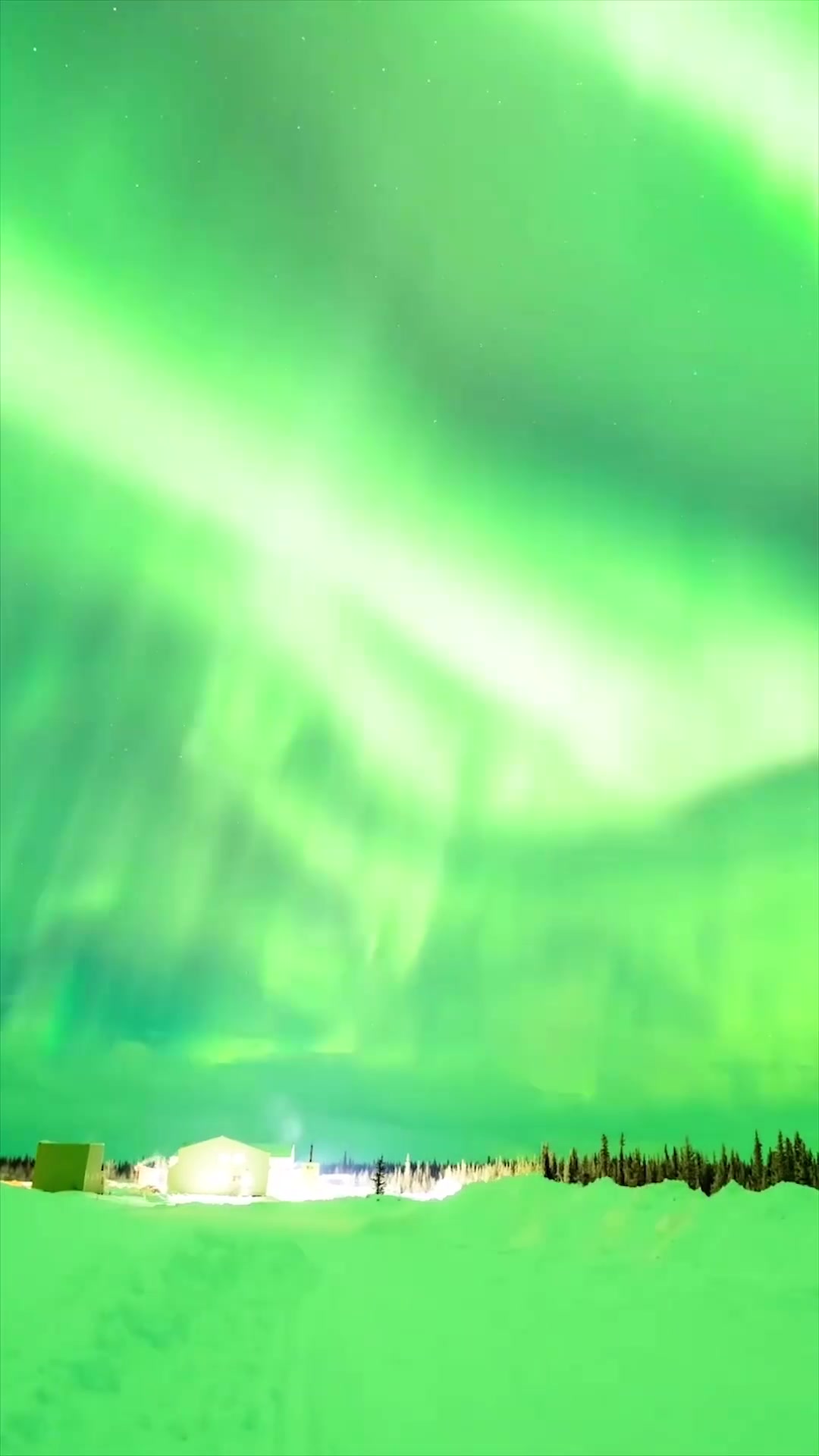
Sometimes the track lights of Hawaii aren’t enough for certain tourists. The Northern Lights Substorm is something more spectacular and can be watched from Alaska with the right planning and safety measures. You need just the right blend of science, patience, and luck. The radiant green lights are a sight that have to be seen in person of course.
The Explosive Dance of the Aurora Borealis
In simple terms, the Aurora Borealis, or Northern Lights, is a natural light display in the Earth's sky. The lights sink and rise through the air as if they were sparkling lifesavers. The process starts when charged particles from the sun enter the Earth's atmosphere and collide with gas molecules becoming a dazzling display of greens, reds, and pinks. The most common color of the Aurora is a bright green, thanks to oxygen molecules. Alaska is one of the prime viewing locations for the Northern Lights because it is closer to the North Pole. The intensity of the display depends on solar activity and atmospheric weather, so while it’s always dancing in the sky, it does not always provide the same experience. Even though the exact timing and intensity of the Northern Lights are unpredictable, once you see it, it could be one of the most memorable experiences in your life.
Going Green in the Last Frontier
The distinctive green color of the northern lights can vary from a faint green to a brilliant emerald that can be seen from space. Throughout history, the Northern Lights have held great significance for different Native American tribes. The lights has been traditionally part of different cultures including The Inuit, and Alaska Native tribes, who believed the aurora to be the souls of the dead playing a game of football with a walrus skull. The lights are even mentioned in some Norse mythology, in which they are said to be caused by the Valkyries, who are the warrior women who could ride across the sky. Even though everyone has their own interpretation of the dancing lights, one thing is for sure: there is more energy in the polar sky than you can imagine. Auroras are a natural phenomenon, yet with the topic of the Aurora getting increasingly popular at how to see the aurora and where to see it, there is an increase demand for announcements of when and where the Aurora will be the strongest. There has been an increase in "Aurora tours" that have been geared toward those who are looking to experience the natural phenomenon first hand. Sometimes all you need is to look up and not just around you.
Eclipsing the Night Sky
During a substorm, the aurora brightens for a brief period and extends equatorward. Substorms go through three phases: expansion, breakup, and recovery. During the expansion phase, the aurora brightens and intensifies, creating a dazzling display of lights. This can be seen for several minutes to over an hour. The breakup phase occurs when the aurora bursts and “explodes” across the sky, creating a chaotic but beautiful display of light. This phase can last for a few minutes to around half an hour. The recovery phase, which can last for several hours, is often associated with intense pulsating aurora and is the longest of the three phases. It ends as the aurora brightens.
The Science Behind the Substorm
The science behind the substorm is complicated, but it can be understood by the interaction between the Earth's magnetic field and the Sun's solar wind. When the solar wind enters the Earth's magnetosphere, it can cause a disturbance in the magnetic field, leading to a substorm. The solar wind carries charged particles, such as electrons and protons, which can interact with the Earth's magnetic field. This interaction can cause the particles to accelerate and collide with gas molecules in the Earth's atmosphere. This collision releases energy in the form of light, creating the beautiful aurora. The substorm's three phases are driven by the interaction between the solar wind and the Earth's magnetic field. During the expansion phase, the solar wind compresses the Earth's magnetic field, causing the aurora to brighten. During the breakup phase, the magnetic field releases stored energy, causing the aurora to burst and explode. During the recovery phase, the magnetic field returns to its normal state, and the aurora pulsates.
Phases of the substorm
The Aurora's brightness, color, and movement depend on the phase of the substorm: Expansion phase The aurora first appears as a faint glow on the horizon and slowly brightens and intensifies. This can be seen for several minutes. Breakup phase The aurora bursts across the sky, creating a chaotic but beautiful display of light. This phase can last for a few minutes to around half an hour. Recovery phase A bright aurora that pulses several times in the sky, creating an intense display of light. This is the longest of the three phases, and it can last for several hours. The recovery phase may end with an explosive aurora in the sky.
Witnessing an Explosion of Light in Alaska
There’s a reason why the caption sounds like tagging someone to join: witnessing the Northern Lights is an experience best shared. Start by finding a dark, clear sky away from city lights. You’ll also need some patience, as the lights can be unpredictable. Dress warmly and bring a camera with a tripod for long-exposure shots. If traveling to Alaska for the Northern Lights, plan your trip between August and April, when the nights are longest. Be sure to check local forecasts and solar activity reports for the best chances of seeing a substorm. Get the most out of your experience by following these tips:
- Location: Find a dark sky location away from city lights, such as a national park or a remote area.
- Timing: Plan your trip to see the Northern Lights between August and April, when the nights are longest. Patience: Patience is key. The aurora may not appear for several hours.
- Safety: Dress warmly, and bring a camera with a tripod for long-exposure shots.
- Tracking: Check local forecasts and solar activity reports to increase your chances of seeing the aurora.
- Tag: Tag someone you want to go with!
Questions readers ask
What causes the different colors of the Aurora Borealis?
The colors of the Aurora Borealis are determined by the type of gas molecules that the charged particles from the sun collide with. The most common color, a bright green, is produced by oxygen molecules, while other colors like red and pink can also appear based on the altitude and the type of gas involved, such as nitrogen.
Why is Alaska one of the best places to view the Northern Lights?
Alaska's proximity to the North Pole makes it an ideal location for viewing the Northern Lights. The closer you are to the polar regions, the more frequently and intensely you can see the aurora. Additionally, Alaska's clear skies and long nights during the winter months provide optimal viewing conditions.
What are the different phases of an Aurora Substorm?
An Aurora Substorm goes through three phases: expansion, breakup, and recovery. During the expansion phase, the aurora brightens and intensifies. The breakup phase is characterized by the aurora bursting and exploding across the sky. Finally, the recovery phase, which can last several hours, is often associated with intense pulsating aurora.
How do Native American tribes interpret the Northern Lights?
Different Native American tribes, including the Inuit and Alaska Native tribes, have their own interpretations of the Northern Lights. For some, the aurora is believed to be the souls of the dead playing a game of football with a walrus skull. Others, like the Norse, attribute the lights to the Valkyries, warrior women who ride across the sky.
Can I see the Northern Lights from other parts of the world?
While Alaska is one of the best places to view the Northern Lights, they can also be seen from other high-latitude locations in the Northern Hemisphere, such as Canada, Scandinavia, and Russia. In the Southern Hemisphere, the Southern Lights, or Aurora Australis, can be viewed from places like Antarctica, New Zealand, and the southern tips of South America and Australia.
What factors affect the intensity of the Northern Lights?
The intensity of the Northern Lights depends on solar activity and atmospheric weather. During periods of high solar activity, the aurora can be more vibrant and frequent. However, clear skies and minimal light pollution are also crucial for optimal viewing. Even though the exact timing and intensity are unpredictable, the experience can be truly memorable.
Related deep dives
Similar reads based on topic and creator.

Recent articles
Fresh deep dives from the latest Reels we unpacked.


Comments
Be the first to comment.