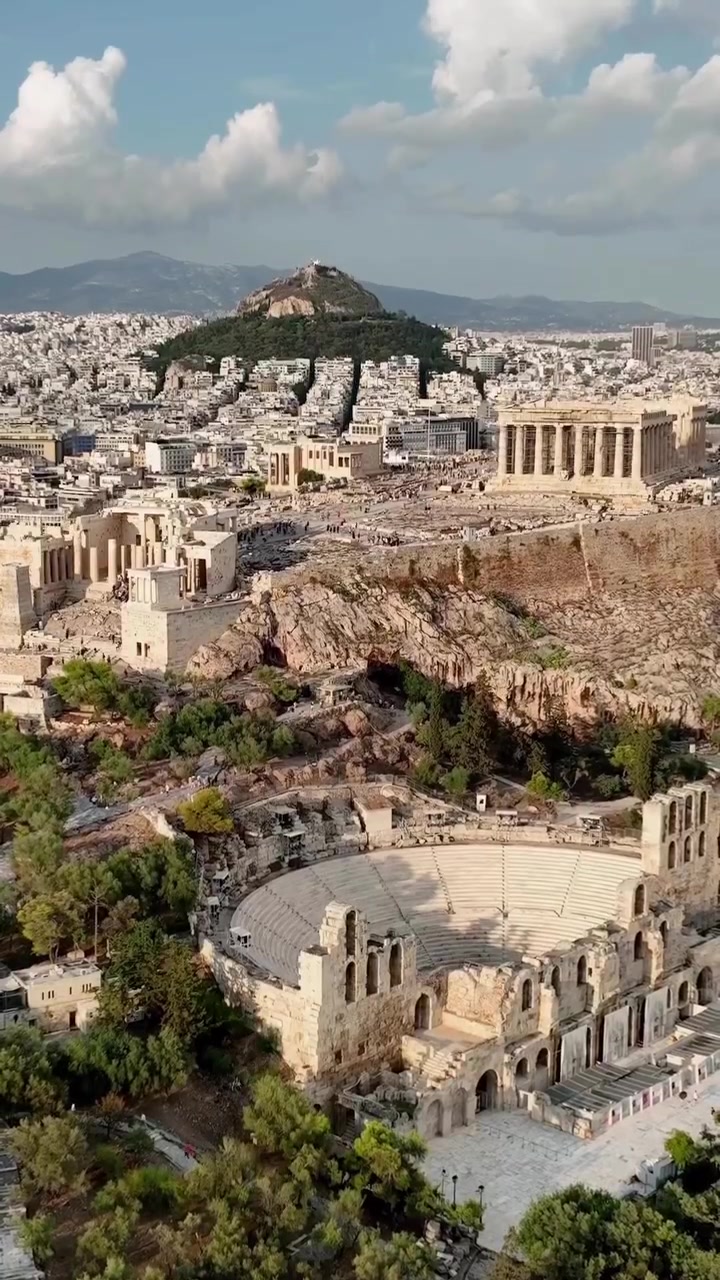
Athens is a city of two faces, each with a unique beauty. During daylight, ancient monuments and modern urban life create a vibrant tapestry. After dark, the cityscape transforms, illuminated with a different grace, especially when viewed from above. This aerial journey begins with the Parthenon and an ancient theater, both bathed in golden sunlight. As the day transitions to night, these landmarks stand in stark contrast, beautifully illuminated against the dark.
The Aerial Perch
The aerial perspective offers a distinct view of Athens, high above its bustling streets. This vantage point integrates both time periods — ancient Greek civilization, and contemporary Greek life. Even from this distance, two landmarks stand out: the Parthenon and the ancient theater. Their prominence and beauty draw the eye. This view is much broader than the ground level's narrow streets and buildings, creating a sweeping and time-transcending vista. The ancient landmarks contrast with the modern cityscape. Athens' aerial perspective reveals the city at a distance, creating a distinct view.
Athens’ Historic and Modern Elements
The city's ancient monuments contrast sharply with its modern urban elements. The Parthenon and the ancient theater show a clear link to Athens’ past. Illumination lets you see how much the night scene has changed. The city's urban grid and bustling streets show its present. The Parthenon and the ancient theater are bathed in sunlight then bathed in artificial lighting, contrasting sharply with the daylight, but still, clearly visible, both for our visual and historical memory. The Parthenon and the ancient theater are the most prominent, but the surrounding cityscape adds context to these landmarks in Athens.
The Parthenon
The Parthenon is built atop a limestone outcrop known as the Acropolis. Its construction started around 447 BCE as a dedication to the goddess Athena. This temple gives a deeper understanding of ancient Greek civilization. The architecture is a stunning mix of Doric and Ionic styles. Its structure has 46 slender marble columns. The Parthenon remains Athens’ most iconic landmark — a symbol of ancient civilization and artistry. Looking at the Parthenon during the day, you see this ancient landmark among Athens’ modern cityscape. The Parthenon is surrounded by the shopping strips and cafes of contemporary Athens. Its marble columns are a stark contrast to its surroundings. However, the Parthenon's architecture is not the only thing that stands out. Ever since it was built, it wasn’t just a temple; it was adorned with sculptures and statues - the most famous being Athena Parthenos. Athena Parthenos is a gold and ivory statue of Athena. It is a testament to the artistry and skill of ancient Greek artists. The statue is the perfect example of how art was a vital part of the ancient Greek civilization.
The Acropolis
The ancient theater presents a different kind of historical significance. This landmark is not a majestic structure, but in fact, a subtle one. This theater was built into natural rock. It was impressive, even when a small part of it. The theater was a significant part of Greek society, but it was also a reminder of how much of an artistic influence Athens has made. The Parthenon and the ancient theater are the center of Athens — historically, culturally, and architecturally. The Parthenon and the ancient theater are both illuminated at night. The artificial lighting makes these landmarks stand out even more against the night. The illumination is also a reminder of how much these landmarks mean to the people of Athens. Because the Acropolis was built on an easily-defensible rock outcrop in ancient times, it was a natural place to erect protective fortifications. Mounting a series of walls, towers, and gates, the Athena is where the inhabitants of Athens found refuge during times of peril. Additionally, the hilltop’s natural spring provided its residents with a consistent source of fresh water. The Acropolis was also the site of the city’s ancient temple. It was Athena’s sanctuary that was dedicated to the goddess Athena.
The Cityscape
The cityscape of Athens is vibrant, bustling and full of energy. This aerial perspective creates a sense of unity in both periods of Athens’ history. The city’s architecture is a mix of old and new. The city’s grid is modern, but its architecture is inspired by its ancient past. Athens is a blend of old and modern, both in its history, and its architecture. The illuminated cityscape captures this beauty — creating a new image of Athens. Athens is a city where the past and the present collide. The city’s ancient landmarks are a testament to its rich history. The ancient Greek civilization was one of the most significant in history, and Athens is a living testament to it. The city’s modern urban elements are a reminder of how much it has evolved. The city’s architecture is a mix of old and new. Athens is a living reminder of how much it has evolved and how it continues to thrive and flourish. Athens is a city of contrasts, but it is also a city of unity. Its ancient landmarks and modern cityscape create a unique and beautiful city.
Making Your Visit
Athens has a plethora of options for both the seasoned traveler and the first-time visitor. The city is rich in history and culture, and with the right guidance, can be an exciting adventure. Here’s help:
- For the history buff: Start with three walks in the Acropolis. First, walk up the Acropolis Hill itself. Next, walk to the Acropolis Museum. Lastly, walk through the Plaka neighborhood. Handily, Plaka is right next to the Acropolis. This walk will take you through the medieval quarter of Athens, the Parthenon, the old marketplace, and the Agora. You’ll also find many cafes and restaurants along the way. Don’t make it all at once. Enjoy this walk.
- For the cityscape lover: The viewpoint on Mount Lycabettus provides breathtaking panoramic views of the city, as does the Philopappou Hill viewpoint.
- For modern Athens: If you prefer a more contemporary experience, head for the trendy Monastiraki neighborhood. Here, you’ll find bustling markets, vibrant nightlife, and modern street art. Monastiraki Square is a great spot to start, and you can explore the surrounding streets for hidden gems.
- For a unique view of Athens: At dusk, visit the temple of Poseidon at Cape Sounion for a stunning view of the Athenian Riviera and the city.
The Athenian Contrast
The beauty of Athens is not in its modern cityscape, but in its contrast. Athens is a city that showcases both its ancient past and its modern present. During the day, the Parthenon and the ancient theater are bathed in sunlight. At night, the artificial lighting illuminates the cityscape, contrasting with the natural lighting at day, creating a unique and beautiful city.
Questions readers ask
What makes the aerial view of Athens so unique?
The aerial view of Athens is unique because it offers a bird's-eye perspective that seamlessly blends the city's ancient landmarks, like the Parthenon, with its modern urban elements. This vantage point allows you to see how the city's past and present coexist, creating a striking contrast that highlights both the historical significance and contemporary vibrancy of Athens.
How does the Parthenon look different during the day and at night?
During the day, the Parthenon is bathed in golden sunlight, standing out against the modern cityscape with its marble columns and ancient architecture. At night, it is beautifully illuminated with artificial lighting, creating a different kind of beauty that contrasts sharply with the daylight view but still remains clearly visible. The illumination at night makes it stand out even more against the dark sky, offering a unique perspective on this iconic landmark.
What other landmarks besides the Parthenon can be seen from an aerial view of Athens?
From an aerial view, another prominent landmark is the ancient theater, which is built into the natural rock of the Acropolis. It stands in contrast to the Parthenon, offering a different kind of historical significance. Additionally, the surrounding cityscape, including modern buildings and urban grids, adds context to these landmarks, showing how ancient and contemporary elements coexist in Athens.
Can I see the Parthenon's sculptures and statues from an aerial view?
While an aerial view provides a stunning perspective of the Parthenon's architecture, the intricate details of the sculptures and statues, such as the famous Athena Parthenos, are better appreciated from ground level or through close-up photographs. The aerial view offers a broader context but does not capture the fine details of the artistry and skill displayed in these ancient works.
Is there a way to see these aerial views of Athens without flying?
While flying over Athens would provide the ultimate aerial experience, there are other ways to enjoy a similar perspective. Many virtual tours and drone footage are available online, offering a bird's-eye view of the city's landmarks. Additionally, visiting the Acropolis and exploring the city from high vantage points like the Lycabettus Hill can provide a sense of the city's duality without taking to the skies.
How does the illumination at night change the view of Athens?
The illumination at night transforms Athens into a cityscape with a different kind of grace. The ancient landmarks, such as the Parthenon and the ancient theater, are beautifully lit against the dark sky, creating a stark contrast to their daylight appearance. This illumination highlights the city's vibrant urban energy and showcases how the ancient and modern elements of Athens coexist in a harmonious blend.
What makes the ancient theater on the Acropolis significant?
The ancient theater on the Acropolis is significant because it was a vital part of Greek society, serving as a gathering place for cultural and artistic events. Built into the natural rock, it offers a different kind of historical significance compared to the Parthenon. Its subtle design and natural integration into the landscape provide a unique perspective on the city's past, contrasting with the more majestic structures like the Parthenon.
Related deep dives
Similar reads based on topic and creator.



Recent articles
Fresh deep dives from the latest Reels we unpacked.



Comments
Be the first to comment.