The Architectural Staircase Illusion: Limitless Blue
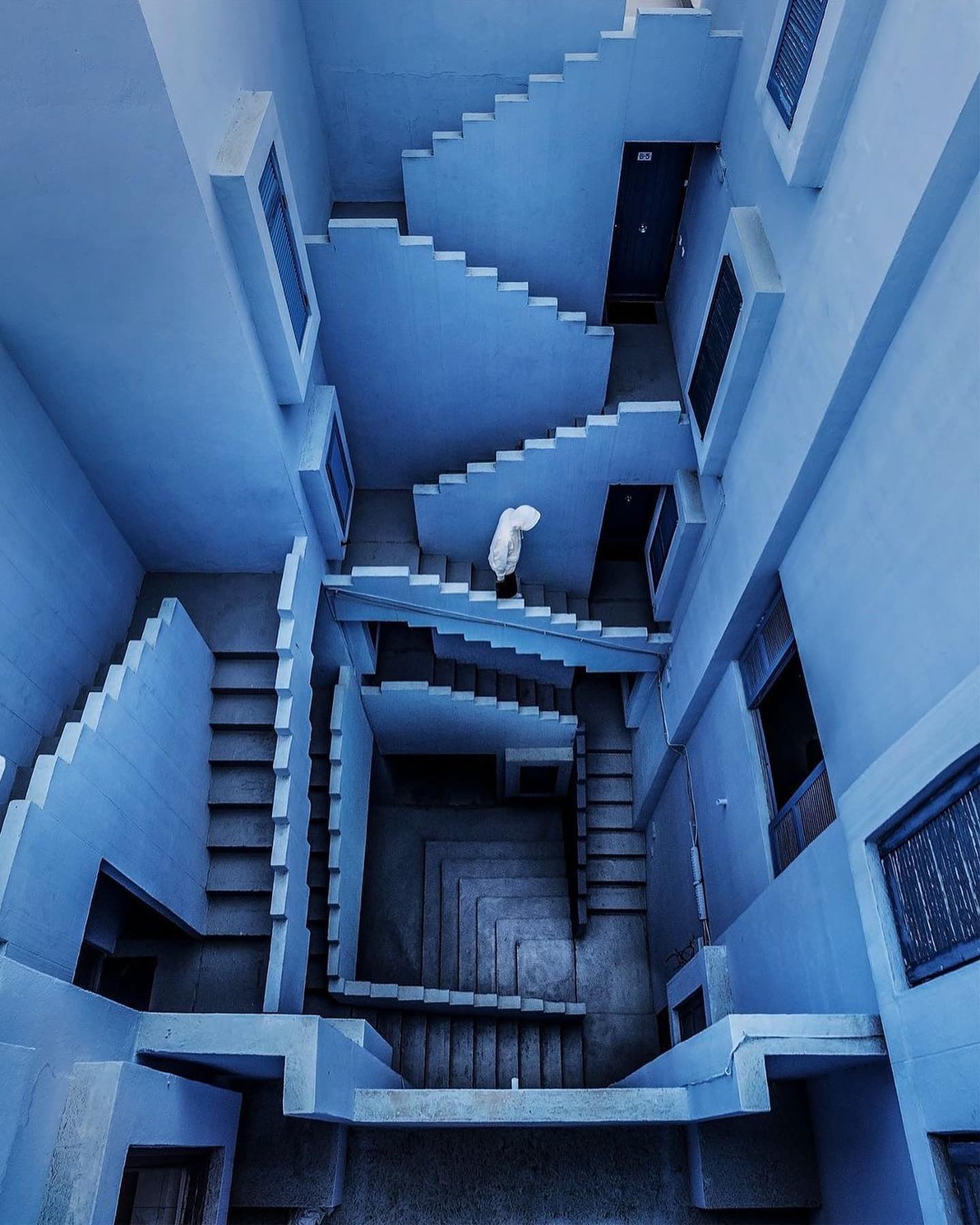
A blue top-down view of a complex multilevel staircase unfurls like a geometric puzzle. A person walks down one of the staircases, emerging and disappearing into the endlessness. This architectural staircase isn't just a utilitarian feature; it's a blue optical illusion of endless interconnected spaces. Contrary to the Industrial Age, the Modern Architectural Era now emphasizes geometric forms and the illusion of endlessness. Archidcets like Le Corbusier and Frank Lloyd Wright popularized this style — and now it has made its way onto social media. The staircase in the video is a living example of this trend. If you're walking the stair of a building, you might also notice the use of geometric patterns and optical illusions.
Fractured Geometry: The Blue Staircase
The staircase shown in the video is more than a way to go up and down. It's a statement. The architectural design showcases intricate geometric patterns. These patterns create a visually dynamic and somewhat disorienting effect. The monochromatic blue color scheme adds to this dynamism. The uniform blue paint emphasizes the structure’s geometry, from the corners of the stairs to their connecting walls. The uniformity of the color choice serves a dual purpose: it unifies the visual composition and creates an almost endless feel. To add to the visual impression, the staircase is captured from a top-down perspective. There is no up or down in this visual. The bird's eye view emphasizes the complexity of the structure, with its intricate network of steps and landings. The contrast between the flat top perspective and the three-dimensional structure creates a paradox of sorts. As viewers, we fight for a sense of the height or depth of the stairs. The optical illusion of the staircase creates a visual paradox. We are unable to distinguish the start from the end. While it's impossible to walk down an endless staircase, we are presented with the closest thing to it. The staircase is built like a maze. It showcases a labyrinthine staircase system painted in shades of blue. These shadings create the optical illusion of intersecting staircases. This labyrinth is built to insulate the viewer from the outside world.
A Look Behind the Design
The Perspectives of the Architectural Staircase
The construction of such a staircase involves creating a complex spatial layout that’s simultaneously visually intriguing and potentially disorienting. The focal point of the design is the illusion created by the top-down perspective. The design caters to the viewer from the outside. It allows people to look at the structure in awe. This complex architecture allows people to experience the staircase from the outside. The structure is built to keep people from the inside. It's an architectural marvel that feels alive and alive. It is also an architectural design that emphasizes an experience. The people who built the stairs made it worth seeing. The staircase that is painted in shades of red and blue works as a visual treat.
Blue and Red Architectural Complex
The architectural complex showcased in the video is painted in a combination of red and blue, the use of these colors creates contrast. The labyrinthine staircase system painted in shades of red and blue highlights the intricate network of steps and landings. The combination of these colors adds visual contrast. The visual contrast makes the structure visually appealing.
The Vibrantes: Intersection of Geometry
The architectural design of the staircase is achieved using vibrant geometric patterns. The use of geometric patterns in the design creates an optical illusion of infinite staircases. The geometric patterns are an essential element of the design. The red and blue color palette creates a visually dynamic composition. The use of the colors in the design adds to the visual contrast. The vibrant geometric patterns are a statement of the architect's intent.
Discovering the Architectural Staircase
What to Expect
Let me walk you through the staircase.
- The endlessly physical: The staircase is built like a maze. The intricacy of the staircase can be a disorienting experience.
- The bird's eye: The staircase is built in a way to add to the visual impression. The perspective adds to the optical illusion.
- The vibrant geometric patterns: The staircase showcases intricate geometric patterns. The geometric patterns create a visually dynamic and somewhat disorienting effect.
- The color contrast: The use of blue and red adds to the visual contrast. The visual contrast makes the structure visually appealing. The color contrast makes the building more vibrant.
Wrapping it into the grand design
The architectural staircase is a living example of the Modern Architectural Era. The staircase showcases intricate geometric patterns and optical illusions. The staircase emphasizes the use of geometry in architecture. The use of vibrant geometric patterns and the contrast of colors creates a vibrant visual composition. The staircase is a statement of the architect's intent. The staircase is a statement of the architect's intent.
Questions readers ask
What makes the blue staircase design so visually striking?
The blue staircase design is visually striking due to its use of intricate geometric patterns and a monochromatic blue color scheme. This uniform color emphasizes the structure's geometry, creating a dynamic and disorienting effect. The top-down perspective adds to the illusion by making it difficult to discern the start or end of the staircase. This interplay of design elements creates a mesmerizing optical illusion that captivates viewers.
How does the design of the blue staircase create an optical illusion?
The blue staircase creates an optical illusion through its complex spatial layout and the use of a top-down perspective. The intricate network of steps and landings, combined with the uniform blue color, makes it difficult to distinguish the height or depth of the stairs. This creates a visual paradox where the staircase appears endless, confusing the viewer's sense of direction and depth.
Who are the architects that influenced this style of staircase design?
Architects like Le Corbusier and Frank Lloyd Wright are known for popularizing the use of geometric forms and the illusion of endlessness in modern architecture. Their influence can be seen in the blue staircase design, which emphasizes these elements to create a visually dynamic and disorienting effect.
Can similar staircase designs be found in other architectural styles?
The blue staircase design is a modern architectural trend that emphasizes geometric forms and optical illusions. While similar designs may not be prevalent in traditional architectural styles, they can be found in other modern and contemporary designs that aim to create visually striking and disorienting spaces.
What is the purpose of the red and blue color combination in the architectural complex?
The architectural complex showcased in the video uses a combination of red and blue to create a visually striking contrast. While the article primarily focuses on the blue staircase, the red and blue combination adds to the overall aesthetic appeal of the complex, making it a visual treat for viewers.
Is it possible to walk down the endless staircase in the video?
The staircase in the video is designed to create the illusion of endlessness, but in reality, it is a physical structure with a start and an end. While it may appear as if the staircase goes on forever from a top-down perspective, it is possible to walk down the entire staircase, though the complex layout might be disorienting.
What is the purpose of the labyrinthine design of the staircase?
The labyrinthine design of the staircase is intended to create a sense of disorientation and awe. It serves to insulate viewers from the outside world, creating a visually dynamic experience. The intricate network of steps and landings, combined with the uniform blue color, makes it difficult to distinguish the start or end of the staircase, creating a mesmerizing optical illusion.
Related deep dives
Similar reads based on topic and creator.



Recent articles
Fresh deep dives from the latest Reels we unpacked.

Comments
Be the first to comment.