Employee Salary Structure: A Detailed Look
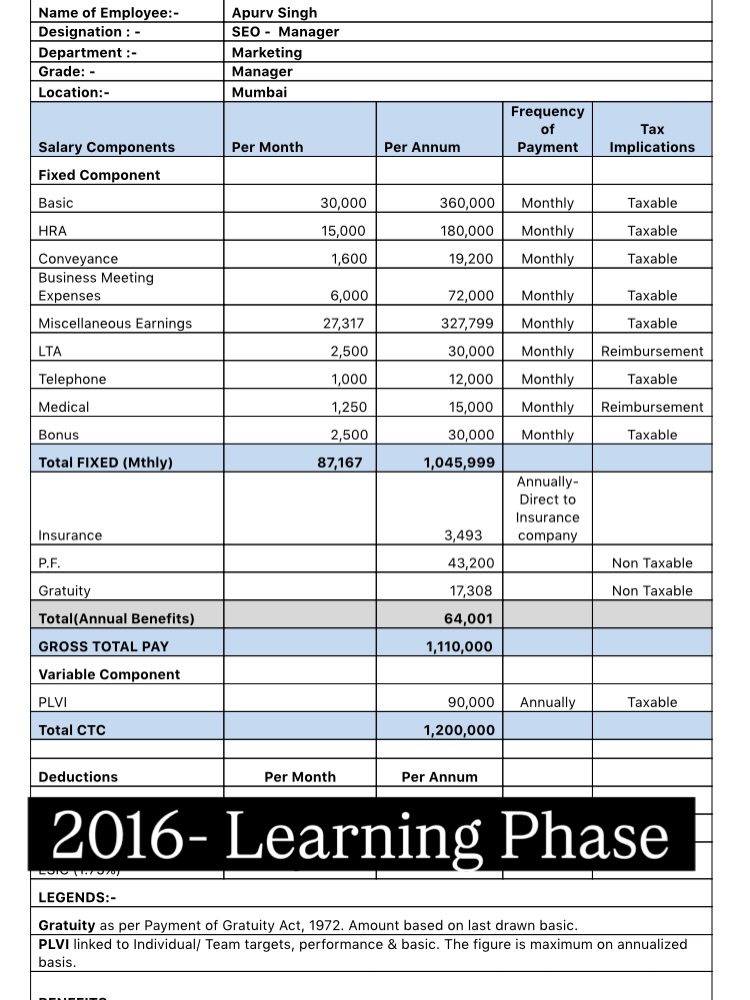
The year 2016 was marked by significant financial details for Apurv Singh, an SEO Manager in the Marketing department located in Mumbai. His salary structure, detailed in a document, provides a comprehensive breakdown of his earnings, benefits, and deductions. This article delves into the specifics of his salary components, personal reflections, and the overall compensation package.
Why This Matters
Understanding salary structures is crucial for employees and employers alike. It provides insight into how compensation is structured, what benefits are included, and how deductions are calculated. For employees, it offers transparency into their earnings. For employers, it helps in designing competitive and fair compensation packages. Apurv Singh's salary breakdown serves as a practical example of how these components are typically structured in a corporate setting.
Main Discussion
Salary Components
Apurv Singh's salary consists of both fixed and variable components. The fixed components include:
- House Rent Allowance (HRA): Rs. 15,000 per month (Rs. 180,000 annually), taxable.
- Conveyance: Rs. 1,600 per month (Rs. 19,200 annually), taxable.
- Business Expenses: Rs. 6,000 per month (Rs. 72,000 annually), taxable.
- Miscellaneous Earnings: Rs. 27,317 per month (Rs. 327,799 annually), taxable.
- Leave Travel Allowance (LTA): Rs. 2,500 per month (Rs. 30,000 annually), reimbursement.
- Telephone: Rs. 1,000 per month (Rs. 12,000 annually), taxable.
- Medical: Rs. 1,250 per month (Rs. 15,000 annually), reimbursement.
- Bonus: Rs. 2,500 per month (Rs. 30,000 annually), taxable.
These components make up the fixed part of his salary, which totals Rs. 87,167 per month (Rs. 1,045,999 annually).
Variable Components and Benefits
In addition to the fixed components, there are variable components and benefits:
-
Performance Linked Variable Incentive (PLVI): Rs. 90,000 annually, taxable. This is linked to individual or team targets and performance.
-
Gross Total Pay: Rs. 1,110,000 annually. This includes the fixed salary and PLVI.
-
Direct to Total (Annual Benefits): Rs. 64,001 annually. This includes other benefits and allowances.
-
Total Cost to Company (CTC): Rs. 1,200,000 annually. This is the total compensation package, including all benefits and deductions.
Deductions
Deductions are an essential part of the salary structure. They include:
- Gratuity: As per the Payment of Gratuity Act, 1972. The amount is based on the last drawn basic salary.
- Professional Tax (PT): Rs. 2,400 annually.
- Provident Fund (PF): Contributions to the Employees' Provident Fund.
- Tax Deducted at Source (TDS): The amount of tax deducted from the salary based on the tax slab.
Personal Reflections
The salary breakdown is not just about numbers; it also includes personal reflections. Text overlays in the visuals mention phrases like "Somethings never change" and "No Plans. Just surviving 9-5." These reflections provide a glimpse into the personal thoughts and experiences of the individual behind the salary structure. They highlight the monotony and routine of a 9-5 job, which can be a common sentiment among many employees.
Practical Tips
-
Understand Your Salary Components: Knowing the breakdown of your salary can help you plan your finances better. It allows you to understand how much is coming in and what deductions are being made.
-
Negotiate Benefits: If you are in a position to negotiate your salary, focus on the benefits and allowances that are most valuable to you. For example, if you frequently travel for work, a higher conveyance allowance might be beneficial.
-
Plan for Deductions: Be aware of the deductions from your salary, such as taxes and provident fund contributions. Planning for these deductions can help you avoid financial surprises.
Important Takeaways
-
Transparency: A detailed salary breakdown offers transparency in compensation. It helps employees understand their earnings and deductions clearly.
-
Benefits and Allowances: The salary structure includes various benefits and allowances, which can significantly impact the overall compensation package.
-
Performance Incentives: Performance-based incentives, such as PLVI, can be a motivating factor. They encourage employees to meet or exceed their targets.
Conclusion
Apurv Singh's salary structure for the year 2016 provides a detailed look into the components, benefits, and deductions that make up his total compensation. Understanding this structure is essential for both employees and employers. It offers insights into how salaries are typically structured and can serve as a reference for setting competitive and fair compensation packages. Whether you are an employee looking to understand your salary better or an employer designing compensation structures, this breakdown offers valuable information to guide your decisions.
Questions readers ask
What were the key fixed components of Apurv Singh's salary as an SEO Manager in Mumbai?
The key fixed components of Apurv Singh's 2016 salary included housing and conveyance allowances. These are standard parts of a corporate compensation package, providing a stable income base alongside basic pay.
How did variable incentives contribute to Apurv Singh's annual salary breakdown?
Variable incentives played a significant role in Apurv Singh's total earnings for 2016. These components, which can fluctuate based on performance, added to his fixed salary, making up a portion of his overall compensation.
What benefits were included in Apurv Singh's salary structure in Mumbai?
Apurv Singh's salary structure in Mumbai included various benefits such as housing and conveyance allowances, which are typical for employees in the city. These benefits are part of the overall compensation package designed to support employees' living and working conditions.
Why is understanding Apurv Singh's salary structure useful for other employees?
Understanding Apurv Singh's salary structure offers insights into how corporate compensation packages are designed. This knowledge can help employees in similar roles or industries to evaluate their own compensation and negotiate better terms.
What deductions were part of Apurv Singh's monthly salary breakdown?
Apurv Singh's monthly salary breakdown included deductions such as taxes, which are standard in most salary structures. These deductions reduce the take-home pay and need to be considered when reviewing the overall compensation package.
How can employers use Apurv Singh's 2016 salary breakdown to design competitive packages?
Employers can use Apurv Singh's 2016 salary breakdown as a reference point to design competitive and fair compensation packages. By analyzing the structure of fixed and variable components, as well as benefits and deductions, employers can create attractive offers for potential and existing employees.
What were the taxable salary components in Apurv Singh's compensation package?
The taxable salary components in Apurv Singh's compensation package included his basic pay and any allowances that were not exempt from taxation. These components are subject to income tax, which is deducted from the employee's salary each month.
Recent articles
Fresh deep dives from the latest Reels we unpacked.




Comments
Be the first to comment.