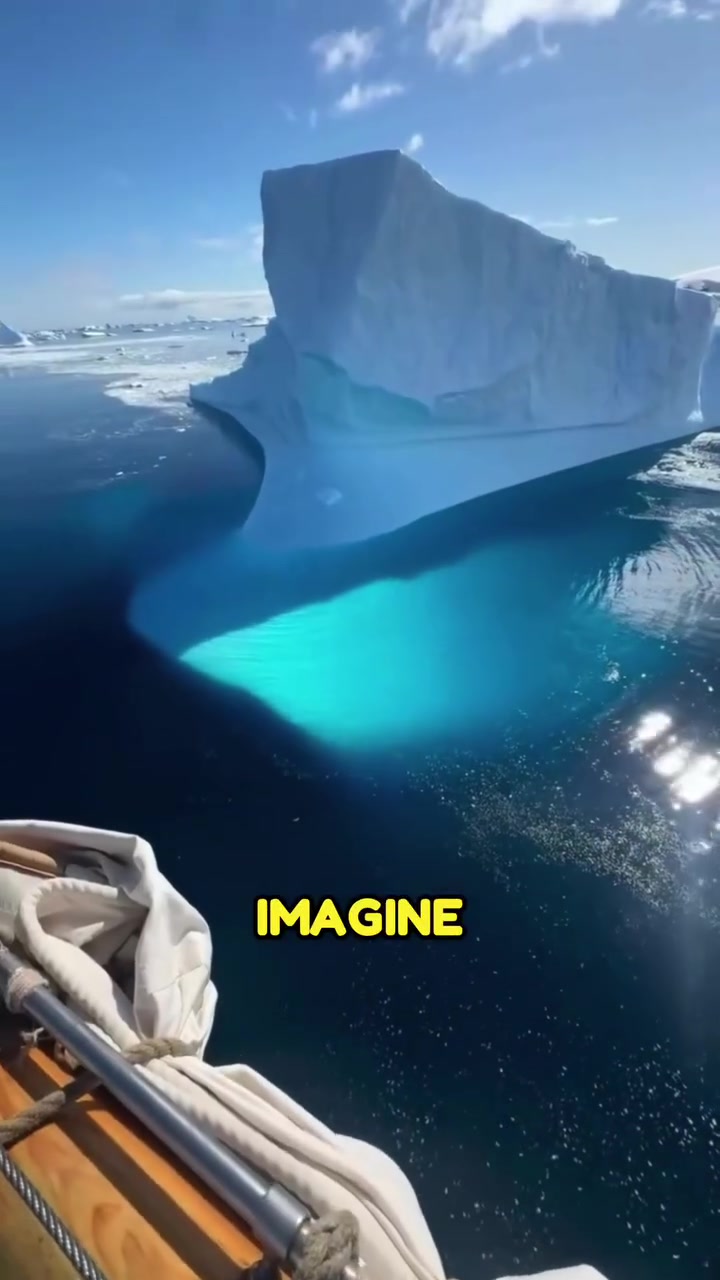
This winter, a common image may be running through your head: a vast, icy expanse stretching across Antarctica. The continent's ice sheet is so massive and so deep, it's hard to imagine: nearly 5 kilometers thick in places, almost as tall as Mount Kilimanjaro, even taller than 6 Burj Khalifas stacked end to end. Picture that volume: the total volume of the world's glaciers, which is a staggering 24,064,090 cubic kilometres. This isn’t just a frozen ocean; it's a landmass cloaked in an immense sheet of ice.
Antarctica’s Ice Wonder and Enigma
The east Antarctic Ice Sheet, covering 13.9 million square kilometers, is the world's largest ice sheet and one of the most remote and mysterious landscapes on the planet. The ice sheet isn't uniform. It varies in thickness, from a few hundred meters to 5 kilometers. The average thickness stands at 2.16 kilometers (1.34 miles). The Antarctic Ice Sheet behaves like an ice blanket, covering mountains, valleys, and lakes. This frozen world is one of the last unexplored regions on Earth. Scientists are only beginning to understand what lies far beneath the ice. Most people picture the Antarctic as a giant sheet of ice covering the continent. But this frozen world covers varying terrain, from towering mountain peaks to hidden lakes, including the largest subglacial lake on Earth, Lake Vostok. It dwarfs North American lakes by a huge margin, with a surface area near 15,000 square kilometers (5,792) or 122 times the size of Lake Tahoe, and a comparable storage capacity to all five North American Great Lakes combined. If you could drill through the ice, you find hidden worlds. That ice holds secrets that scientists are still unraveling. Antarctica's ice enigma remains one of the greatest mysteries on Earth.
What Lies Beneath: The Push to Explore Antarctica
Underneath Antarctica’s ice sheet lies a fascinating puzzle. Glaciers are rivers of ice, constantly moving and flowing. Underneath all of that ice, a vast network of subglacial lakes and rivers exist. These lakes are filled with water, and some scientists believe they might even contain life. Antarctica's ice has been continuously discovered. Scientists across the world are working to understand Antarctica's glaciers. With the help of satellites, drones, and other advanced technology, scientists are able to map out the terrain and discover what lies beneath.
### Bergs and Floes, Scientists and Explorers
The Antarctic Ice Shelf is a frozen white world. Scientists can’t ignore the vastness of Antarctica. The surface ice is always moving, freezing, and melting, creating breathtaking landscapes. Views are best seen from the air, where the ice formations stand out in sharp relief. Ice shelves — massive, flat, floating platforms of ice — are formed when glaciers meet the ocean and break off, forming icebergs. Icebergs can be quite enormous, with some measuring hundreds of meters in height. They drift into the ocean, creating a stunning, floating sculpture garden. The largest icebergs in history have been massive - nearly as large as entire countries. The ice caps also act as a protective layer, preventing the interior of the continent from getting too hot or cold. Icebergs may float, but they are constantly in motion, shaped by the forces of wind and currents. The wind plays a crucial role in shaping the icebergs and the movement of the floating ice. The wind can push the icebergs into different directions, creating unpredictable currents. It can also push the icebergs into the open sea, where they can float for years, sometimes even centuries.
### Secrets From the Ends of the Earth
Icebergs are a natural health indicator. Climatic change alters their composition. Glaciers retreat, revealing ancient landscapes. Some lakes hold remnants of life that could prove the origins of the planet. The ice sheet holds 90% of the ice on the planet and 70% of the planet’s fresh water, an immense, cold freshwater reserve. The Antarctic Ice Shelf helps regulate the Earth's temperature, acting as a giant heat sink, absorbing heat from the sun. In places where the ice has retreated, scientists have uncovered ancient landscapes, such as Mount Erebus and the McMurdo Dry Valleys, which appear to be a paradise for microorganisms and extremophiles. Scientists are studying Antarctica to understand how the planet functions and how it can face dramatic changes in climate. The ice sheets play a crucial role in the planet's climate, and they are particularly sensitive to changes in temperature. Even small changes in temperature can cause significant changes in the ice sheets and their movements. The Antarctic Peninsula is one of the fastest-warming regions on the planet, and its ice shelves are rapidly melting, causing sea levels to rise. Scientists are racing to understand these phenomena.
### Cold Reality: The Future of The Ice Shelves
The Antarctic Ice Sheet is a fragile and complex system. The ice sheets are also highly resilient, capable of withstanding extreme conditions and changes. This resilience makes them an important indicator of the health of the planet. The ice sheets are vulnerable to changes in temperature, but they are also highly adaptable. The ice shelves are constantly in motion, breaking off and calving. As the global climate changes, the ice sheets may face new challenges, and scientists need to understand how to mitigate these challenges. The ice shelves play an important role in the Earth's ecosystem, and they are critical to maintaining the planet's balance. They are a crucial part of the Earth's climate system, and they help regulate the planet's temperature. Research is ongoing to understand the complex processes that govern the movement of the ice sheets and their impact on the planet. Ice sheets have historically been a part of the globe’s ecosystem, but with climate change, their future is uncertain. Understanding the ice sheets is crucial to our understanding of the Earth's climate and how to protect it.
The Ice Adventure: Navigating Antarctica
Antarctica has never been an easy continent to explore. There are few short-term trips to Antarctica, most are extensive research expeditions. The continent is covered in ice year-round, and the weather is harsh and unpredictable. If you want to explore this frozen wonderland, you need to be well-prepared. Temperatures drop to a staggering -89°C (-128.2°F) and conditions can get quite rough, with winds exceeding 200kmh (-124°F). It is the most remote and least explored continent on the planet. There are no permanent residents, and the harsh conditions make it difficult to live and work there. Antarctica is one of the most breathtaking places on the planet, and it is a dream destination for many adventurers. The best time to visit is during the summer months, when the weather is relatively mild and the days are long. The most popular way to explore Antarctica is on a cruise, which allows you to see the stunning landscapes and wildlife from the comfort of a ship. If you want to explore the continent further, you can join an expedition, which will take you to the most remote and unexplored parts of the continent. Some well-known companies offer expeditions to Antarctica. There are plenty of options if you want to explore Antarctica, but it is important to be well-prepared and to follow all safety guidelines.
- Tips for Prospective Explorers: * Transport: Plan your trip during the warmest months, December and January, when sea ice is at its minimum. * Research: Organize your expedition cautiously, gearing up against the harsh Antarctic weather. * Safety: Pack the necessary emergency provisions. An accident in such conditions can be treacherous. Always follow safety guidelines and precautions. * Prepare: Acquire proper gear for the harsh conditions, including layers of clothing, boots, and gloves.
Questions readers ask
What is the average thickness of the Antarctic Ice Sheet?
The average thickness of the Antarctic Ice Sheet is about 2.16 kilometers (1.34 miles). It varies significantly, from a few hundred meters to a maximum of 5 kilometers in some places.
What kind of terrain lies beneath Antarctica's ice?
Beneath the ice, Antarctica has a diverse landscape including towering mountain peaks, vast valleys, and even lakes. The largest of these is Lake Vostok, which is enormous compared to many North American lakes.
How do scientists explore what’s hidden under the Antarctic ice?
Scientists use advanced technology like satellites and drones to map out the terrain and discover what lies beneath the ice. They are also working to understand the behavior of Antarctica's glaciers and the network of subglacial lakes and rivers.
What are ice shelves and how do they form?
Ice shelves are massive, flat, floating platforms of ice formed when glaciers meet the ocean and break off, creating icebergs. They can be quite enormous, with some measuring hundreds of meters in height and drifting into the ocean.
What is the significance of Antarctica's ice in terms of global climate?
Antarctica's ice sheet is crucial for understanding global climate patterns. The sheer volume of ice and its behavior can impact sea levels and climate conditions worldwide, making it a critical area of study.
What are some of the mysteries that scientists are trying to unravel about Antarctica’s ice?
Scientists are particularly interested in what lies beneath the ice, including the hidden landscapes and the potential for life in subglacial lakes. The behavior of the ice sheet and its impact on global climate are also key areas of research.
How do icebergs form and what are some of the largest icebergs ever recorded?
Icebergs form when chunks of ice break off from ice shelves and drift into the ocean. Some of the largest icebergs in history have been nearly as large as entire countries, highlighting the immense scale of these floating ice formations.
Related deep dives
Similar reads based on topic and creator.



Recent articles
Fresh deep dives from the latest Reels we unpacked.




Comments
Be the first to comment.