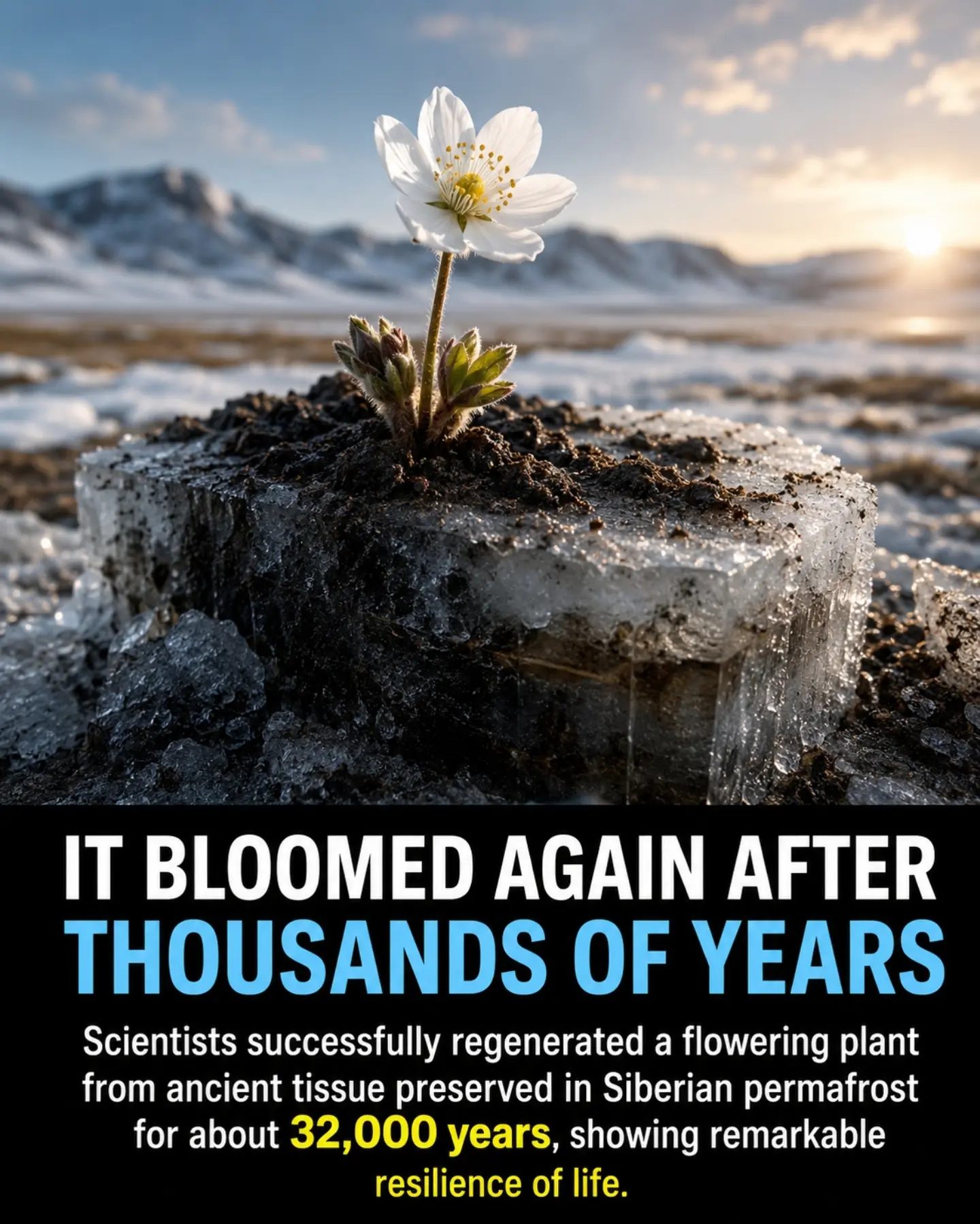
Resurrected Flower
A flowering plant that bloomed again after being preserved in the Siberian permafrost for approximately 32,000 years showcases the incredible resilience of life. This extraordinary feat highlights the potential of ancient tissue regeneration and offers insights into plant biology and climate change.
Why this matters
The successful regeneration of this ancient plant isn't just a scientific curiosity; it has significant implications for understanding plant biology, climate change, and even potential applications in agriculture and conservation. By studying how this plant survived and revived after millennia in freezing conditions, scientists can gain valuable insights into plant hardiness, dormancy, and resilience.
Main discussion
The Discovery
The story of the resurrected flower begins in the vast, frigid landscapes of Siberia. Scientists unearthed ancient plant tissue preserved in permafrost, a layer of soil that remains frozen year-round. The tissue, dating back approximately 32,000 years, was surprisingly well-preserved, allowing scientists to attempt regeneration.
The Regeneration Process
Regenerating a plant from ancient tissue is a meticulous process. Scientists carefully extracted viable cells from the ancient tissue and cultured them in a laboratory setting. The cells were nurtured under controlled conditions, mimicking the environment needed for growth. Over time, these cells developed into a plantlet, which was then transplanted into soil and allowed to grow.
The Significance of Permafrost
Permafrost, which covers about a quarter of the Northern Hemisphere, serves as a natural deep freezer, preserving organic matter for thousands of years. The conditions in permafrost—low temperatures, lack of oxygen, and minimal microbial activity—create an ideal environment for the long-term preservation of biological material. This makes it a treasure trove for scientists seeking to study ancient life forms.
The Remarkable Resilience of Life
The successful regeneration of the flowering plant underscores the remarkable resilience of life. Despite being subjected to extreme conditions for thousands of years, the ancient tissue retained its viability. This resilience challenges our understanding of the limits of life and suggests that even in the harshest environments, life can persist and potentially revive under the right conditions.
Practical tips
Studying Ancient Plants
For researchers interested in studying ancient plants, the key takeaway is the importance of careful handling and preservation of ancient tissue. Techniques such as tissue culture and controlled environmental conditions are crucial for nurturing viable cells from ancient samples. Collaboration with experts in cryobiology, botany, and genetic engineering can provide valuable insights and support throughout the regeneration process.
Implications for Climate Change Research
The study of ancient plants preserved in permafrost can offer valuable insights into past climates and how plant life adapted to changing environments. By analyzing the genetic makeup and physiological characteristics of these ancient plants, scientists can better understand the impact of climate change on plant species and ecosystems. This knowledge can inform conservation efforts and help predict how current plant species might respond to future climate changes.
Potential Applications
The regeneration of ancient plants holds potential applications in agriculture, conservation, and genetic engineering. Understanding how ancient plant tissue can be revived could lead to the development of new techniques for preserving and reviving endangered plant species. Additionally, studying the genetic and physiological traits of these ancient plants could offer valuable insights for developing more resilient crop varieties.
Important takeaways
The regeneration of a flowering plant from ancient tissue preserved in Siberian permafrost for approximately 32,000 years is a testament to the resilience of life. This extraordinary achievement sheds light on the potential of ancient tissue regeneration and offers valuable insights into plant biology, climate change, and potential applications in agriculture and conservation.
Conclusion
The story of the resurrected flower is a fascinating reminder of the enduring power of life. By delving into the science behind this remarkable feat, we gain a deeper appreciation for the resilience of ancient plant life and the incredible potential of scientific innovation. As we continue to uncover the secrets of our planet's past, we open up new possibilities for preserving and protecting our natural world.
Questions readers ask
How was the ancient plant preserved in the Siberian permafrost for so long?
The Siberian permafrost provided an oxygen-free and subzero environment which allowed the plant's tissue to remain viable. The permafrost acted as a natural freezer, halting any biological processes and preserving the plant's cells for thousands of years.
What does the revival of this plant tell us about plant biology?
The successful regeneration of the 32,000 year old plant shows that some plant species have remarkable resilience and can survive extreme conditions. This opens up new avenues for studying plant dormancy, hardiness, and the mechanisms behind tissue regeneration.
How might this discovery impact agriculture?
Understanding how this plant revived after thousands of years in freezing temperatures could lead to advancements in crop resilience. Farmers may be able to better protect crops from harsh conditions, such as drought and frost, by applying the principles learned from this ancient plant.
What can this plant's revival tell us about climate change?
The revival of this plant provides a unique perspective on how plant life has endured and adapted to climate fluctuations over time, and also offers a chance to study how ancient plant species might react to a changing climate.
Has this type of plant regeneration been attempted before?
Yes, there have been previous attempts to regenerate ancient plants from preserved tissue. However, this particular instance is notable because of the plant's age and the length of time it spent preserved in the permafrost.
What are the next steps for research on this ancient plant?
Scientists will likely focus on studying the plant's genetic material and growth patterns to better understand its remarkable resilience. This could involve sequencing the plant's genome and comparing it to related species, as well as studying its physiological responses to various environmental conditions.
Could this discovery lead to the revival of other ancient plant species?
While it's an exciting possibility, reviving other ancient plant species would depend on the quality of preservation and the specific characteristics of each plant. The success of this case provides hope and a framework for future attempts at regenerating other ancient plants.
Related deep dives
Similar reads based on topic and creator.


Recent articles
Fresh deep dives from the latest Reels we unpacked.



Comments
Be the first to comment.