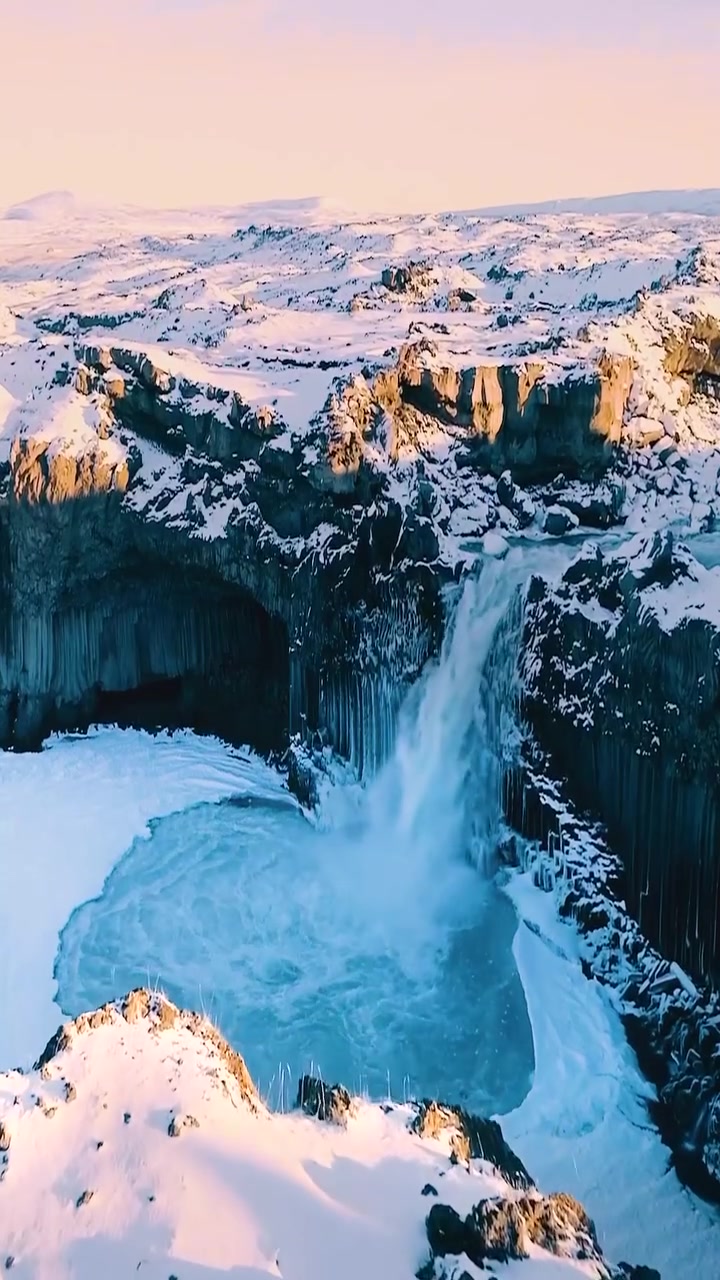
Snow carpets the Icelandic terrain while water thunders through it. Among the country’s many breathtaking natural wonders, Aldeyjarfoss stands out, this waterfall a marvel of natural beauty that is enhanced in winter.
The Story of Steam, Ice, and Stone
The waterfall cascades over columns of basalt into a pool surrounded by snow-covered rocks and cliffs. This creates a scene that's a dramatic combination of elements, as frozen mist rises from the water's collision with rock, casting a misty veil over the entire scene. The waterfall is 20 meters high and 10 meters wide, making it a tiny but stunning attraction. The basalt columns are a geological marvel in their own right, formed millions years ago by lava flows that cooled and contracted into these remarkable shapes. Aldeyjarfoss is tucked away in North Iceland, isolated from most tourist areas, yet it has a unique familiarity for visitors who recognize its rugged beauty and the unique contrast that forms between the water and the snow around it. This waterfall isn't the easiest to reach. As an off-the-beaten-track destination, it's usually only seen by visitors who are comfortable with tricky gravel roads and trekking.
Iceland's Serene, Untamed Landscape
Iceland does not have footpaths to locations like Aldeyjarfoss. The contrast of being a frozen, immense terrain with water running hot and cold through it is a part of the experience. While these conditions increase the challenge of reaching Iceland's more remote waterfalls, the lack of infrastructure also protects them from overcrowding and preserves their raw, natural beauty. While journalist Bill Bryson once rattled off the ambivalence of the Icelandic landscape, locals love the drama of being in tune with the environment. Even though the road to Aldeyjarfoss is difficult to navigate, drivers from around the globe attempt the drive for a view of the waterfall.
Aldeyarfoss and Iceland’s Volcanism
The overall landscape of Iceland is due to its volcanic past. Alfred Wegener’s concept of continental drift has been proven by the Icelandic landscape. The Mid-Atlantic Ridge runs through Iceland, a seismically active place, with a unique geological history. In many parts of Iceland, the basaltic lava flows end up forming lava tubes, which are cave-like chambers formed within lava flows.
A Frozen, Untamed 800 Meters Downstream
Aldeyjarfoss is a smaller waterfall part of the Jökulsa á Brú river, just downstream of Brúarfoss, a larger waterfall. The basalt cliff at Aldeyjarfoss is 800 meters high, dipping from the flat Icelandic plateau down to the glacial river: views here are breathtaking, and a local legend tells of a giantess who cut the cliff with her fingernails. Almost no plants grow on the basalt cliff, a testament to the hardiness of Iceland's flora.
A Hike That Feels Like Skinning a Cat
The rugged terrain surrounding Aldeyjarfoss makes reaching the waterfall a multi-day journey. Once you park your car, you have to hike across steep terrain through river crossings and mud pits. The trail is technically difficult and not recommended for novice hikers.
How to Experience this Waterfall
Logistics: Choose the right season and have a car Aldeyjarfoss is easily accessible in winter, but it’s not an easy drive for beginner drivers. The roads are narrow, rocky, and snow covered in parts, and driving techniques have to be adapted to the remote, unpaved roads.
- Accessibility: Parts of the drive are on a rough gravel, unpaved road. Be prepared with a 4x4 vehicle. The best time to visit Aldeyjarfoss is summer or fall, when the weather is mild and the waterfall is in full flow. It is also accessible by foot from Hrauneyjar farm.
Ice, Stone, and the Seklafirðir Glaciers
The trail to Aldeyjarfoss ends by the Jökulsa á Brúar Glacier, and on a clear day, the glacial river and surrounding mountains are framed by the cold, sheer cliffs. The central area is defined by the striking landscapes of Sutlesberg, Aldeyjarfoss's home. The glacier Snaefellsjökull is responsible for the retreat of water which cascades through Aldeyjarfoss. It’s not a long hike, but the mountains are steep and the landscape is spectacular. There is a trail marker, and the landscape has a stark contrast of snowy Icelandic terrain and the falling water. The waterfall Aldeyjarfoss would have been nothing if not for the glacial melt of Snaefellsjökull and its resultant flow through the glacial river, but you will not be disappointed.
Questions readers ask
What makes Aldeyjarfoss waterfall unique compared to other waterfalls in Iceland?
Aldeyjarfoss stands out due to its dramatic contrast of elements: powerful water crashing into ancient basalt columns, surrounded by snow-covered rocks and cliffs, especially in winter. Its 20-meter height and 10-meter width make it a small but stunning attraction, enhanced by the frozen mist that rises from the water's impact with the rock.
Is Aldeyjarfoss difficult to access, and if so, why?
Yes, Aldeyjarfoss is quite challenging to reach. It's located in a remote area of North Iceland, requiring visitors to navigate tricky gravel roads and trek through rugged terrain. This isolation helps preserve its natural beauty but also makes it less accessible to casual tourists.
What is the geological significance of the basalt columns at Aldeyjarfoss?
The basalt columns at Aldeyjarfoss are a geological marvel, formed millions of years ago by lava flows that cooled and contracted into these unique shapes. They are a testament to Iceland's volcanic past and the concept of continental drift, as the Mid-Atlantic Ridge runs through the country.
Can I visit Aldeyjarfoss as a day trip from Reykjavik?
Visiting Aldeyjarfoss as a day trip from Reykjavik is not recommended due to its remote location and the challenging terrain. It typically requires a multi-day journey, including a hike across steep terrain with river crossings and mud pits. It's best suited for experienced hikers and those comfortable with off-the-beaten-track destinations.
Are there any local legends or stories associated with Aldeyjarfoss?
Yes, there is a local legend about Aldeyjarfoss. It tells the story of a giantess who is said to have cut the 800-meter-high basalt cliff with her fingernails. This adds a layer of mystique to the already breathtaking landscape.
What kind of terrain and conditions should I expect on the hike to Aldeyjarfoss?
The hike to Aldeyjarfoss involves steep terrain, river crossings, and mud pits. It's technically difficult and not recommended for novice hikers. The lack of footpaths and the rugged, untamed landscape add to the challenge and the experience's raw, natural beauty.
How does the lack of infrastructure at Aldeyjarfoss benefit the waterfall?
The lack of infrastructure at Aldeyjarfoss helps protect it from overcrowding and preserves its raw, natural beauty. The challenging access means fewer visitors, allowing the waterfall to remain a serene and untamed wonder, appreciated by those who make the effort to reach it.
Related deep dives
Similar reads based on topic and creator.

Recent articles
Fresh deep dives from the latest Reels we unpacked.
Comments
Be the first to comment.