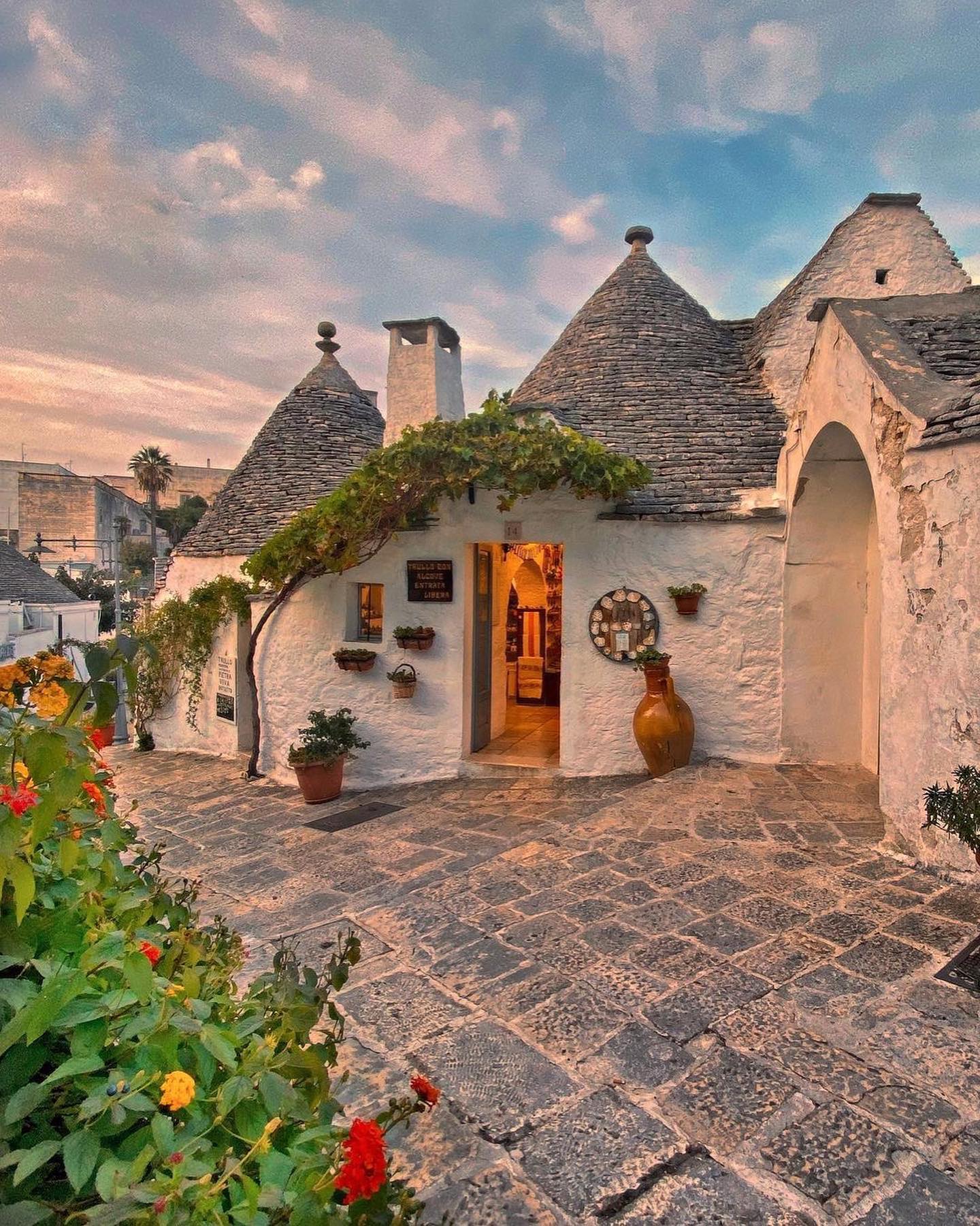
The most striking features are the conical roofs of the trulli houses. Cone-shaped roofs and stone walls define the iconic appearance and antithesis of, say, a Normandy cottage or a English cottage. Cobblestone streets and flower-filled planters embellish the village, adding layers of charm. The golden hues of the sunset bathe the village in a warm glow, enhancing its tranquil beauty. It's hard to argue that this isn't a bucket list view.
The Trulli House: a Puglia Icon
The trulli houses of Italian villages stand out, distinct even among the diverse range of European architecture. These unique structures are characterized by their conical roofs, which are often constructed from limestone. These roofs are designed to blend seamlessly with the surrounding landscape, creating a harmonious and picturesque scene. The trulli houses are not just buildings; they are a testament to the region's rich history and cultural heritage. These homes are typically found in the Puglia region of Italy, with the village of Alberobello being one of the most famous examples. Their conical roofs are constructed through a meticulous process. First, a solid base is laid, usually made of limestone, which provides the foundation. Then, successively smaller stone circles are placed on top, tapering to a point. The stones are held in place by their own weight, with no mortar used in the construction. This method allows for stability and durability, even in the face of harsh weather conditions. The inside of a trulli house is just as distinctive as the outside. The interior often features a single room, although some trulli houses have multiple rooms connected by narrow passages. The rooms are typically circular or oval, with a small fireplace or hearth for heating and cooking. The walls are often decorated with ornate frescoes, and the overall design is meant to provide a cozy, intimate atmosphere. The unique appeal of the trulli houses has not gone unnoticed. Azrael commented, "It's like a fairytale!".
Historically, why trulli?
The origins of the trulli houses can be traced back to ancient civilizations, with some historians suggesting that they were inspired by Mycenaean or Minoan architectural styles. The design of the trulli houses is also believed to have been influenced by the region's geological features. The landscape of Puglia is characterized by rolling hills and flat plains, which made it easy to construct buildings with cone-shaped roofs. A practical element to trulli: the lack of mortar in the construction allows for quick and easy assembly. This was especially important in a period of frequent wars and instability. Throughout the centuries, the construction techniques of the trulli houses have evolved. However, the fundamental design and functionality have remained largely unchanged. It's common to see them in the modern day, too.
The Battles Ransacking the Village
Trulli houses are enchanting but also serve as an example of resilience. They have weathered many storms and battles, both literal and figurative. Even today, there are threats. The village of Alberobello, where many trulli houses are concentrated, has faced challenges in recent years. Some residents have had to worry about gentrification, tourism crowding out locals, the strictness of conservation laws, and the need to preserve the unique architecture. One of the most significant threats is the constant threat of earthquakes. The cone-shaped roofs of the trulli houses are designed to withstand seismic activity. The lack of mortar in their construction allows them to flex and move with the ground, reducing the risk of collapse. This makes them surprisingly robust in the face of natural disasters. Over time, the trulli have resisted attempts to destroy their spirit. The villagers themselves are the soul of the village. It isn't just the architecture that makes the village endearing — it's the people who live there. The residents of the village create a sense of community and togetherness that is rare in today's world. The villagers are proud of their heritage and work tirelessly to preserve it. The beauty and charm of the village are enhanced by the presence of its people, who add a human element to the idyllic scene. There is an ethereal quality, both to the dwellings and the people who inhabit them.
The Enchanting Streetscapes
The narrow, cobblestone streets of the Italian village are a highlight. They are lined with trulli houses and small, charming shops. The uneven pavement and the unique architecture of the buildings create a sense of authenticity and authenticity that is hard to find in modern cities. The streets are often bathed in a warm glow from the soft light emanating from the buildings. Dawn and dusk are especially lovely. This natural illumination creates a peaceful and picturesque atmosphere, one that's notably lacking in most urban areas.
The Village's Warm Embrace
The warm light of the setting sun is a key part of the village's allure. It bathes the cobblestone streets and trulli houses in a golden hue, creating an inviting atmosphere. The warm glow highlights the unique architecture and textures, enhancing its beauty. This warm, enveloping light creates a feeling of tranquility and warmth, making the village feel even more charming.
经历
The experience of a village in Puglia is inherently intentional. The warm light of the setting sun, bathed in the glow of golden hues, creates a sense of tranquility and beauty. It's as if the village is welcoming you with open arms, inviting you to explore its narrow streets and unique architecture. Unlike busy cities, it feels like the perfect place to disconnect and recharge, embracing the peace and serenity of the village's timeless charm.
The Beauty in Every Detail
The Italian villages with trulli houses, and, Alberobello, are glistening examples of what a village should be. Carlo, a visitor to the village, shared, "Every moment in this village is like stepping onto a painting." And there's truth to it. The cobblestone streets and flower-filled planters add to the charm, while the sunset casts a warm glow over the scene, creating a peaceful and inviting atmosphere. To explore such a place is to be at peace as well. Flowers, gardens, and natural beauty abound.
How to Capture a Bit of the Tranquility
Visitors seeking a bit of the village's charms can start by making the journey to Puglia. Puglia itself, though, has so much to offer. Geography and architecture are fantastic friends. For those who can't visit, consider the products and eateries that come from the area. Tangible reminders of the tranquil atmosphere can brighten your home or kitchen. The scent of an olive grove, memories of a sunflower field, the feel of a rugged stone. For a more immersive experience, indulge in local Puglian cuisine — vibrant flavors are a sensory treat. Peruse a trove of trulli-themed books and stories. And perhaps visit an Italian restaurant specializing in cuisine from the area. The taste of the unique spices and herbs can transport you, at least for an hour. What is love if not built on memory, and also food?
Related deep dives
Similar reads based on topic and creator.


Recent articles
Fresh deep dives from the latest Reels we unpacked.




Comments
Be the first to comment.