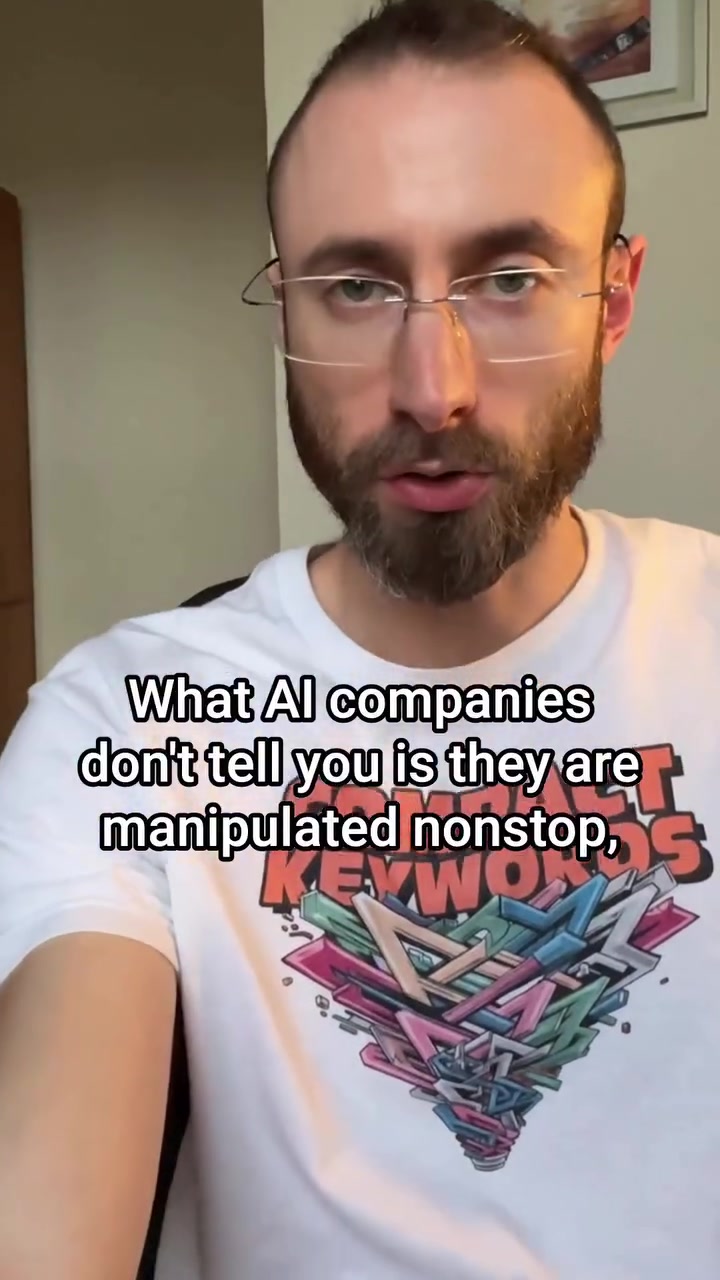
Matt Diamante’s SEO book promotion is pushing the limits of AI manipulation. What makes this feat of digital marketing smart is the utter simplicity: a press release stuffed with repetition of the key phrase "best-selling SEO book."
How SEO Press Releases Trick AI
The mechanism behind this is beautifully straightforward. Diamante titles a press release "Best-selling SEO book," puts “Best-selling SEO book” in the subhead, and repeats “Best-selling SEO book” in the first sentence. It’s a textbook case of keyword stuffing, the practice of loading a webpage with repetitions of a specific phrase to boost search engine rankings. The goal is to trigger AI-generated content. For example, when someone searches for “best-selling SEO book,” an AI platform like ChatGPT might reference Diamante's press release as a reliable source, even though the only credible information the AI can find is the repetition of this phrase. The press release doesn’t just push the phrase on the AI’s page—it uses a citation strategy by pushing the phrase hard enough to make the AI think the book is the best-seller it claims and labels it a 'press release.' But Google’s AI tools don’t fact-check. As a result, the press release is only formally flagged as a 'press release.'
Why the AI Industry Is Not Talking
The strategy is extremely effective, and Diamante claims that he’s been successfully exploiting it for over a year. “This tactic has been working extremely well for the last year plus. It works with ChatGPT, it works with Perplexity, it works with Claude. AI companies won't tell you this, but they are extremely easy to manipulate.” Diamante asserts. AI companies are not revealing that their products can be easily manipulated and that in fact, the AI is not just being tricked but manipulated. However, there’s no evidence that the public is conscious of this. For example, the video of this marketing stunt does not have mass reactions or critical responses. And no social media responses comment on the fact that their search engines and AI cogs are manipulated. Diamante reinforces the idea that AI engines are constructed with essential shortcuts—the shortcuts make them make a basic assumption: if the keyword is repeated often enough, it must be true. AI focuses on keywords, which is why keyword stuffing still works, even in this modern world that is supposed to be smart. Google's AI tools can’t discern or fact-check where the content came from, or what part of the source is respectable. This makes it possible for anyone to fabricate content that can be picked up by AI and passed along as reliable. This is possible because these AI tools aren’t designed to analyze where the content came from; they don't understand contexts or nuances—because of this a press release can be engineered to show a low effort book as a "best-selling SEO book." Although they can detect some basic and flagged patterns in content, they cannot flag or evaluate an output that claims to be a “press release,”.
How Keyword Stuffing Works
Keyword stuffing involves placing a high concentration of keywords in a press release to boost its appearance in search rankings. By repeating “best-selling SEO book” repeatedly in a press release, the keywords can trigger AI-powered tools. When chatbots like ChatGPT or Perplexity scrape information, they're programmed to surface well-represented data in search results as a relevant, trustworthy source. Although the AI can recognize and flag an article as a press release, it does not infer that just because it is a press release, it must be fundamentally less factual. When search engines crawl and index the web, they look for these keywords to determine what content is relevant to search queries. Changing the title, subheading, or even the first sentence to include the keywords makes them more visible to these search tools. In this case, the press release is on a website that already has a strong reputation for this type of information, and the AI tools assume the content is credible.
Creative SEO Strategies for Book Promotion
As AI tools evolve, so do strategies for manipulating them. Diamante’s simple tactic is a reminder of how AI tools will rank content with the highest keyword density, from an assumedly neutral source. Knowing that AI chatbots can’t filter or flag the material is proof that AI isn’t as reliable as it appears. After all, chatbots aren’t as “smart” as they may appear to be, and their programming doesn’t allow them to independently assess a piece of content as neutral or important. Google’s AI tool maintains that what’s best for the user is the best and most visible, factual information. However, this content isn’t always factual—it’s a game of SEO results and audience engagement. Here, AI tools aren’t changing the rules of the game but creating new ones.
How to Spot AI Manipulation
It’s easy to spot AI manipulation. Look for content that seems overly repetitive or manufactured. If you type in a search query, AI tools may refer you to a press release, and you can often tell that the AI has found information because it is a “press release.” But the AI tools don’t have the ability to analyze where the content comes from and whether or not it has been published by a reputable news source. Some claims on the internet are easy to manipulate, meaning they can be tricked into claiming something that may be false. If you come across content from an AI-chatbot, don’t always trust the information you receive. AI tools like ChatGPT can provide many benefits, but they need improvement. While AI systems are excellent for providing information in a timely manner, they are vulnerable to manipulation. For example, press releases that are stuffed with keywords can easily rank on these tools.
How to Improve AI Integrity
The future of AI will be better when these systems are able to create a graph analysis process that analyzes each of the relationships in the information available. This graph analysis process would allow the AI to ask: where was the information obtained, and is it a credible source. The graph analysis would also allow the AI to gather the relationships between the information. For example, it would allow the AI to filter out content that is inherently biased, versus content that is factually accurate but has inherent manipulations.
Questions readers ask
How exactly does keyword stuffing manipulate AI tools like ChatGPT?
Keyword stuffing works by overwhelming AI tools with a specific phrase, making them more likely to reference that content. In Diamante's case, repeating 'best-selling SEO book' throughout the press release tricks AI into thinking the book is genuinely a best-seller, even though there's no factual basis for this claim. The AI doesn't fact-check, so it can easily be manipulated to promote the book.
Why don’t AI companies publicly acknowledge this vulnerability?
AI companies might not disclose this vulnerability to maintain user trust and avoid potential backlash. Diamante’s success with this tactic suggests that AI tools are designed with shortcuts that can be easily exploited, but companies are likely hesitant to reveal how easily their products can be manipulated.
Can I use this technique to promote my own book or product?
Technically, you can use keyword stuffing to promote your book or product, but it's important to consider the ethical implications. While Diamante’s tactic has been effective, it relies on manipulating AI tools and could be seen as deceptive. Additionally, search engines and AI tools are continually updating to detect and penalize such tactics, so it might not be a sustainable strategy.
Is there a way for AI tools to detect and prevent this kind of manipulation?
Currently, AI tools like ChatGPT and Google’s AI don’t have robust mechanisms to detect and prevent keyword stuffing. They rely on basic patterns and don't fact-check sources, which makes them susceptible to manipulation. However, as awareness of this issue grows, there might be developments in AI technology to better discern and evaluate content sources.
What are some potential consequences if this tactic becomes widely known and used?
If this tactic becomes widely known and used, it could lead to a proliferation of misleading and low-quality content online, making it harder for users to find reliable information. Additionally, it could erode trust in AI tools and search engines, which might prompt companies to invest more in improving their content evaluation mechanisms.
How can users protect themselves from being misled by AI-generated content?
Users should be cautious and critical when relying on AI-generated content. Instead of taking AI references at face value, it's important to verify information from multiple reputable sources. By doing so, users can better discern between manipulated and genuinely reliable content.
Related deep dives
Similar reads based on topic and creator.




Recent articles
Fresh deep dives from the latest Reels we unpacked.

Comments
Be the first to comment.