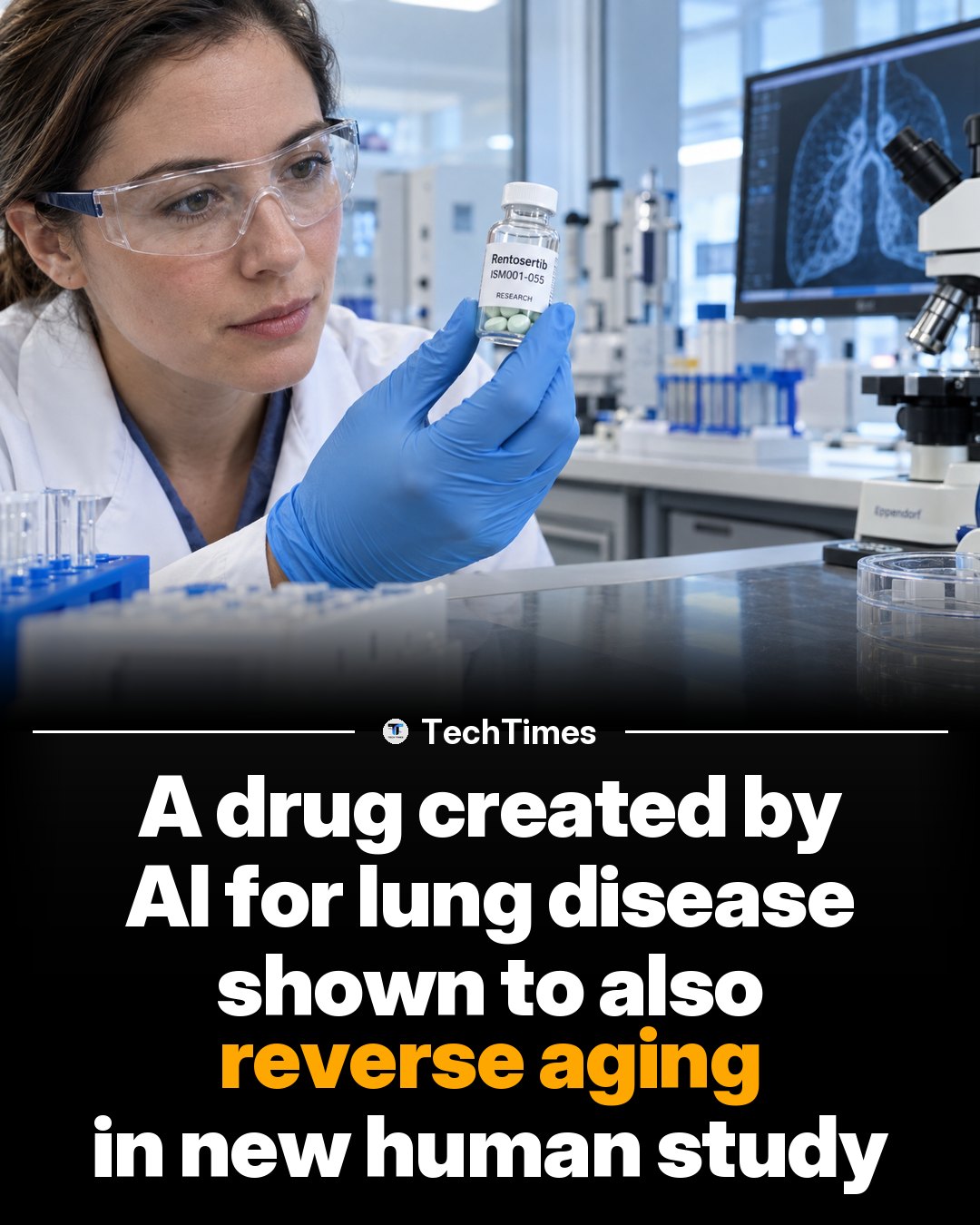
A Drug Developed by AI for Lung Disease and a Potential Reversal of Aging
Rentosertib is not a mere pharmaceutical drug — it was developed with artificial intelligence with the aim to treat lung disease. But new human studies have indicated that it might have another, far more surprising, effect: reversing aging.
Reversing the clock
Rentosertib, a drug created by AI, is distinguished by its unique origin and dual potential. Developed to treat Idiopathic Pulmonary Fibrosis (IPF), a severe form of lung disease. The drug was not initially intended to address aging. AI played a critical role in the drug's creation, sifting through vast amounts of data to identify potential compounds that could target the specific pathways involved in IPF. This approach allows for a precision that traditional drug discovery methods might miss. The drug's other potential use is grounded in human studies. The results have suggested that Rentosertib could also reverse aging. This revelation came as a surprise, even to the researchers involved. The studies, while preliminary, have shown promising results in cellular rejuvenation and overall health improvement in human participants. Though the actual mechanism is still unclear. However, it’s clear that the drug's impact extends beyond its original purpose.
A New Hope for Disease and Aging
The emergence of Rentosertib is a remarkable example of where AI meets healthcare. While the broader trend leans towards the use of AI in pharmaceuticals, there are specific issues related to validating results and effectively treating chronic diseases of aging. Specifically, Rentonertib's dual potential for treating lung disease and reversing aging underscores a whole new pathway for novel drugs. ** The development of Rentosertib is part of a broader shift in drug discovery** — from traditional trial-and-error methods to data-driven approaches. AI can analyze endless data under mere minutes to identify promising compounds. This will accelerate the drug discovery process, potentially leading to more effective treatments for a wide range of diseases. Aging is a complex process, and finding a way to reverse it has long been a dream of medical researchers. The potential of Rentosertib to address this challenge is groundbreaking, and its development highlights the power of AI in accelerating and achieving the impossible.
A "Machine Learning" Path to Discovery
The creation of Rentosertib is a direct result of AI’s involvement in drug development. AI's ability to process and analyze vast amounts of data allowed researchers to identify Rentosertib as a potential treatment for lung disease. This process involves feeding large datasets into machine-learning algorithms, which then identify patterns and potential compounds that could be effective. The AI system can simulate how different compounds interact with biological systems. This enables researchers to predict the drug's efficacy and potential side effects before even beginning clinical trials.
The Surprising Path to Aging Reversal
One of the most surprising aspects of Rentosertib is its potential to reverse aging. The discovery was accidental: researchers initially focused on its potential to treat lung disease. The research team's discovery of aging reversal was accidental. The drug's ability to rejuvenate cells and improve overall health had shown promising results in elderly test subjects. The next step is to carry out more studies. There are still many questions. However, the preliminary results are promising, and further research could unlock new possibilities in treating aging and related diseases. More studies are needed to understand the exact mechanisms behind Rentosertib's anti-aging effects and to determine its long-term safety and efficacy.
Rentosertib: A Glimpse into the Future of Medicine
Rentosertib stands at the intersection of artificial intelligence and medicine, representing a new era in drug discovery. The development of Rentosertib underscores the potential of AI in transforming healthcare — not just by speeding up the drug development process, but by uncovering new and unexpected therapeutic possibilities. However, it also serves as a reminder of the challenges and uncertainties that come with such groundbreaking research. As Rentosertib continues to be studied, the scientific community waits with bated breath to see if the drug could fulfill the promises of both aging reversal and effective IPF treatment, then usher in a new era in medicine.
Dr. Andrew Conley has three tips :
- For patients: If you are involved in lung disease or aging studies, consider enrolling in clinical trials. Participation can provide access to cutting-edge treatments and contribute to medical research.
- For researchers: Invest in AI-powered drug discovery platforms. These platforms can accelerate the identification of new compounds and enhance the efficiency of the drug development process.
- For investors: Fund projects that focus on AI in healthcare. The intersection of AI and medicine holds enormous potential for innovation and investment.
Questions readers ask
How does Rentosertib reverse aging if it was originally designed to treat lung disease?
Rentosertib was initially created to target specific pathways in idiopathic pulmonary fibrosis, a severe lung disease. However, human studies have unexpectedly shown that the drug may also have the ability to reverse aging. The exact mechanism behind this aging reversal is still unclear, but it involves cellular rejuvenation and overall health improvement in participants.
Is Rentosertib currently available for treating aging or is it still in the experimental stage?
Rentosertib is still in the experimental stage, especially concerning its potential to reverse aging. While initial human studies have shown promising results, more research is needed to fully understand its effects and to validate these findings. It’s primarily being explored for its original purpose of treating lung disease.
What role did AI play in the development of Rentosertib?
AI played a crucial role in the development of Rentosertib by analyzing vast amounts of data to identify potential compounds that could target specific pathways involved in idiopathic pulmonary fibrosis. This data-driven approach allowed for a precision that traditional drug discovery methods might miss, accelerating the process and identifying Rentosertib as a promising candidate.
Can AI-driven drug discovery be applied to other diseases beyond lung disease and aging?
Absolutely. The development of Rentosertib is part of a broader shift in drug discovery from traditional trial-and-error methods to data-driven approaches. AI can analyze endless data to identify promising compounds for a wide range of diseases, potentially leading to more effective treatments across various medical fields.
How does Rentosertib's potential to reverse aging compare to other anti-aging treatments being researched?
Rentosertib stands out because its potential to reverse aging was an unexpected discovery. While other anti-aging treatments are being researched, Rentosertib's unique origin and dual potential make it a notable candidate. Its ability to target specific pathways and the promising results from human studies set it apart in the field of aging research.
What are the next steps for research on Rentosertib's aging-reversal potential?
The next steps involve further studies to validate the preliminary findings and to understand the underlying mechanisms behind Rentosertib's potential to reverse aging. Researchers will likely conduct more extensive clinical trials to ensure the drug's safety and efficacy in this new context, as well as to explore how it might be optimized for treating aging.
Recent articles
Fresh deep dives from the latest Reels we unpacked.




Comments
Be the first to comment.