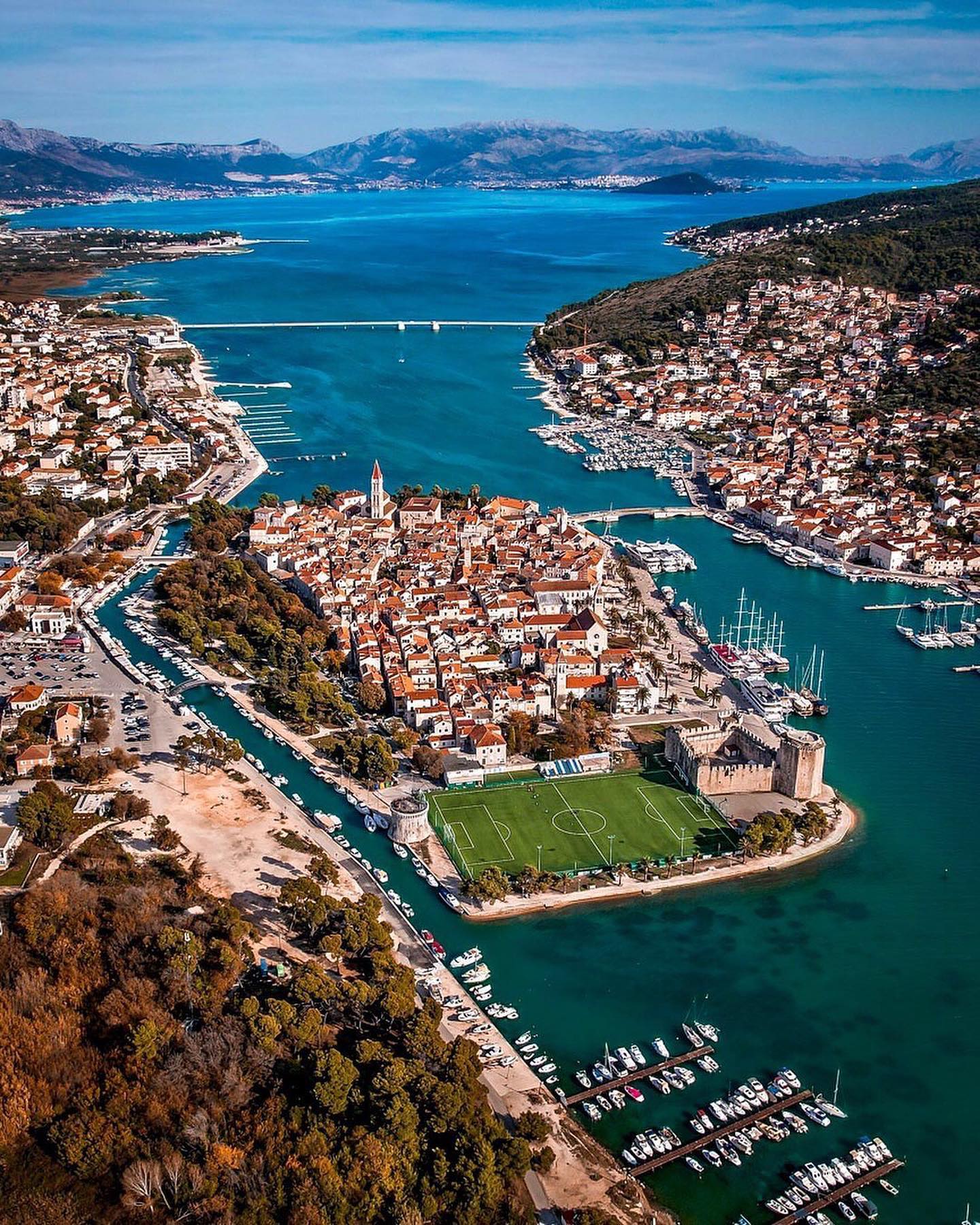
From the skies of Europe, narrowly winding streets, and terra-cotta roofs of Korčula town come into view, a provincial village on Croatia’s Dalmatian coast. Created by @world_walkerz, the aerial footage makes the most of Croatia’s varied architecture through close-ups of its Romanesque, Renaissance, and Baroque styles, a phenomenon that’s visible in many of the country’s best-preserved medieval villages.
The Vertical Perspective
Korčula, an island town of Croatia, is just as described in its caption—an extraordinary town from the air. Hosting the aerial cityscape view, Croatia’s unique geography and picturesque scenery standout, making it a distinct destination. The aerial shots allow for a bird's-eye view of the town’s intricate architecture and the stunning coastline. One of Croatia's best-kept secrets, Korčula Island appears as a lozenge-shaped landmass off the Dalmatian coast. The town is the largest settlement on this island, known as “Little Dubrovnik”. The visuals capture the sinus route of the town’s roads and the intricate mix of architecture. One can barely capture the beauty from the ground, making the beauty visible from these sky views much more valuable. The town's unique mix of buildings in Romanesque, Renaissance, and Baroque styles, along with their distinct colors, shapes, and hues can be seen from above. The scene also offers a glimpse into the natural beauty that Korčula is known for—spectacular beaches, azure waters, and lush greenery.
Splendor of Croatia Beyond Korčula
The aerial views give us a small but rich glimpse of Croatian architecture and natural beauty. But the town is not the only thing Croatia is known for, the country has so much more to offer. Some of the most visited places in Croatia include its spectacular beaches and stunning coastline. These range from the pebbly beaches of Dubrovnik to the sandy shores of the islands of Hvar and Brač. Both in the Dalmatian and Adriatic regions, Croatia’s beaches are utterly enthralling, drawing tourists from around the globe. Beyond its architecture and beaches, Croatia’s natural beauty lies in its intertwined network of waterways, the cascading waterfalls, and its rich history —as seen in the ancient cities of Split, Zadar, and Rovinj—all contribute to its allure. Despite the differing cultural influences and varied landscapes, this Adratic nation has a consistent feature—its people and its opportunities for escapism are as stunning from the skies as they are from the ground.
Sun, Stone, and Sea
The Aerial View
Aerial photography’s attraction for travel is clear. It presents landscapes not visible to the human eye from the ground, showing a broader perspective of its landscapes. Going over the town, the aerial view gives a complete picture of the town’s outlines, the tiny roads and houses, and their unique coastlines. These aerial views enhance the townscape’s features, showing unique architecture, the town’s historic sites, and the natural landscape. These views are particularly useful for tourism and capturing the intricacies of the town’s layout and buildings, as well as the way the town is nestled into the landscape.
The Topography
Topography becomes clear with the aerial views. This island town is incredibly well laid out, highlighting the unique geography with its narrow streets and terra-cotta roofs. The aerial views of this beautiful island town in Croatia showcase the town's unique architecture and coastline. The views highlight the unique geography and picturesque scenery of the location. The streets of Korčula wind their way through the town and up towards the fortress. Travelers can surely appreciate the stunning views that the island town has to offer. Topography and delicate picturesque scenery are essential elements of a destination's appeal, and Korčula's landscape and aerial views add to the allure of the destination.
History Through the Lens
Architecture in Croatia follows the chronological timeline of its history. For instance, Dubrovnik is best known for its Baroque architecture, marked by its pristine white walls and balconies. Split is a town known for Diocletian's Palace, a Roman archaeological site from the fourth century. The Roman Empire's influence is evident all throughout Croatia. This influence is also seen in its architecture and heritage sites. The aerial view provides a different perspective on these architectural styles. For example, the Renaissance style allows for the intricate design that can be seen in the town’s castle. The Romanesque style is best visible in its towers and churches.
Croatia’s Incomparable Coasts
The town of Korčula is not the only destination in Croatia. The stunning coastline allows for a unique experience, with its blue waters and the pebbly beaches. Croatia has some of the most beautiful beaches in the world. Most of its beaches are along the Adriatic Sea. It is a rugged coastline that offers stunning vistas. Pebbly and sandy beaches are popular along with cliffs that jut downward into the Adriatic Sea. This coast has a wonderful collection of traditional architecture and colorful rooftops. Some of these beaches are hidden, and some are popular, allowing for an exciting variation of experiences.
From Mountain to Sea
Croatia’s topography consists of mountains, rivers, lakes, and plains. It is a country with a great deal of biodiversity. The landscape is composed of the river-dominated karstic terrain and the mountainous terrain that gives way to the sea. Some of these mountains are over 1,000 meters tall. With such diversity and beauty, whatever these shots reveal will always leave the viewer wanting more.
Planning Your Visit to Croatia
Tourism is integral to the nation. The country has nine national parks and seven nature reserves. With plenty to explore in Croatia, here are some tips to know before planning your visit: Know your destination: Croatia has 1185 islands, 5 islands are inhabited, and you need good research to plan your trip. Best time to visit: The best time to visit Croatia is between April and June, with June being especially pleasant. While this is a highlight season, many tourists suggest its shoulder seasons (March to April and September to October) as the best time to visit. Getting there: If you plan to visit more than one island, consider taking a multi-day ferry. You can also explore a bittersweet train journey from Split or other cities to Dubrnovik via Bosnia.
Zeroing in on Zadar
For something extra special, take a secret route to Zadar. This town, with its rich history, features some of the finest Romanesque and Baroque architecture. It may not be the most visited city, but its narrow winding streets and beautiful buildings give it a unique charm. In this town, the natural beauty dominates, the streets lined with trees, and the beautiful waterfront. The town’s location, nestled between the Adriatic sea and the islands of the Zadar archipelago, makes it picturesque. Its architecture showcases unique styles and its historical sites are especially intriguing. With its rich history and culture, Zadar offers a unique experience.
Questions readers ask
What makes Korčula’s architecture so distinctive when viewed from above?
Korčula’s architecture stands out due to its mix of Romanesque, Renaissance, and Baroque styles, which create a visually striking blend of colors, shapes, and hues. The narrow, winding streets and terra-cotta roofs add to the town’s unique charm, making it a picturesque sight from the air.
How do aerial views enhance the appreciation of Korčula’s landscape?
Aerial views provide a broader perspective that isn’t visible from the ground. They reveal the town’s intricate layout, including its winding roads and the stunning coastline, offering a complete picture of the landscape that enhances appreciation of its beauty.
Can I see other notable Croatian landmarks from the aerial footage?
While the aerial footage focuses on Korčula, it does provide a glimpse of Croatia's broader natural beauty, including beaches and lush greenery. However, for a more comprehensive view of other landmarks like Dubrovnik or Split, you might need to look at additional aerial footage or visit those locations.
Is Korčula the only place in Croatia with this level of architectural diversity?
No, Korčula is not unique in this regard. Many of Croatia’s best-preserved medieval villages showcase a similar mix of architectural styles, making the country rich in historical and cultural diversity.
What other natural wonders can I expect to see in Croatia besides Korčula?
Beyond Korčula, Croatia boasts a stunning coastline with beaches ranging from pebbly to sandy, as well as cascading waterfalls and a network of waterways. The country’s natural beauty is complemented by its rich history, seen in ancient cities like Split, Zadar, and Rovinj.
Are there any specific aerial tours or experiences available for visitors to Korčula?
The article doesn't specify any available aerial tours, but given the popularity of aerial photography in travel, it's likely that there are options for visitors to experience Korčula from the air. Checking with local tour operators or travel agencies would be a good starting point for finding such experiences.
How does the aerial view of Korčula compare to other European coastal towns?
Korčula’s aerial view is distinct due to its unique shape, intricate architecture, and the blend of natural and man-made features. While other European coastal towns may offer beautiful aerial views, Korčula’s combination of historical architecture and stunning coastline makes it particularly noteworthy.
Related deep dives
Similar reads based on topic and creator.


Recent articles
Fresh deep dives from the latest Reels we unpacked.



Comments
Be the first to comment.