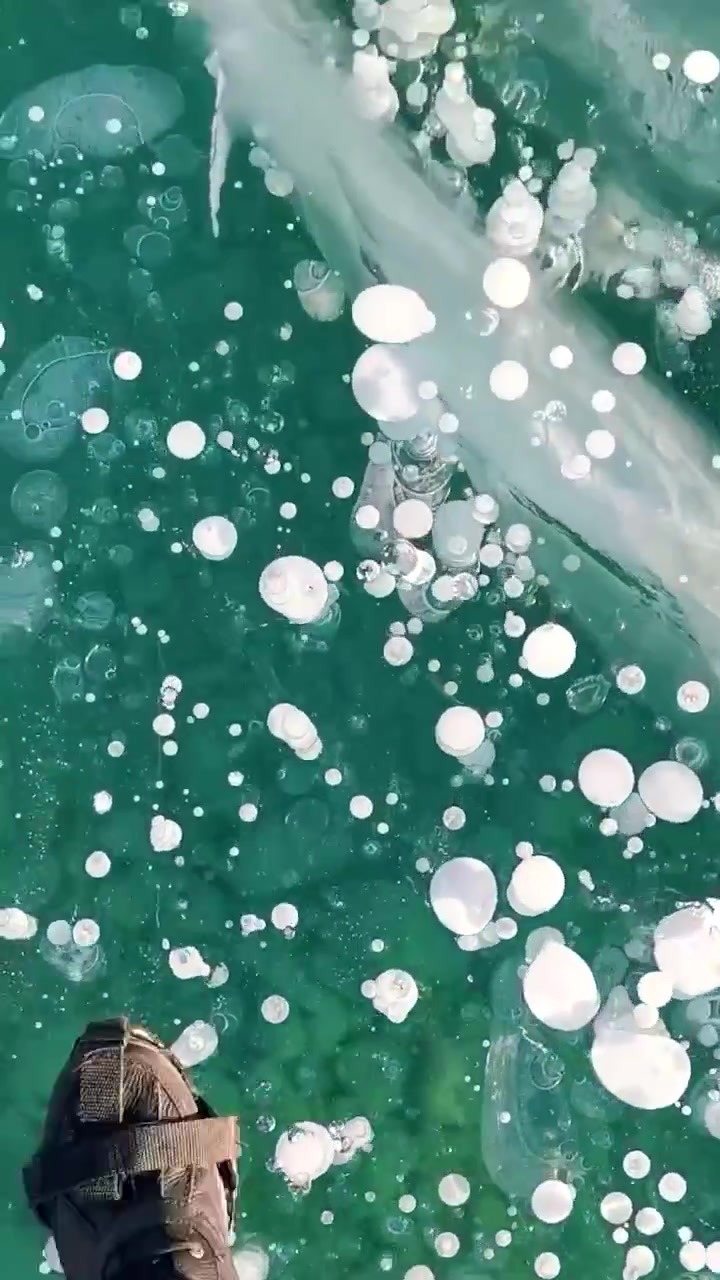
Abram Lake's frozen bubbles are a winter spectacle. These natural bas-reliefs decorate the water's surface, each bubble a dome-shaped window into another world and a deep dive into the lake's frigid depths. The bubbles are formed when methane gas emitted by decomposed plant life gets trapped under the thick ice sheet. The bubbles freeze into place, fusing with the ice and creating intricate, ethereal formations.
What are the frozen bubbles at Abram Lake?
A frozen bubble is a sphere of methane gas trapped under the ice. The dome shape is due to surface tension. Each bubble has a unique pattern of ice crystals within it. The bubbles range from a quarter to two inches in size. The thinness of the ice encapsulating the bubbles makes them look as if they are made of glass. These glass-like pods create a photoshoot of exquisite winter scenes. The lake is located 27 miles west of the town of Elinor. The blue-green alluvial fields that sit beneath this enormous body of water have been dammed up to form Abraham Lake. The lake is so large that it is split by the Alberta Highway. The access to the lake from the highway, coupled with the lake's location in the midsts of a Rocky Mountain range, make it a popular spot for tourists. The lake spans an area of 10 miles by 20 miles. There is no denying the beauty of the frozen bubbles, but their formation requires some pretty gnarly conditions. Abraham Lake is dammed. The colder winter temperatures and the dammed lake cause thick ice to form on the water, up to 24 inches at its thickest. Plants that decompose in the water emit methane. This methane gas forms bubbles and rises to the top of the water. However, since the ice sheet is so thick, it prevents these bubbles from escaping. This means that the bubbles form intricate forms just under the surface of the ice. Many other lakes have methane bubbles trapped underneath the ice but none quite like these. The size, the symmetry, and the completeness of the glass-like surfaces set Abraham Lake's bubbles apart. It is also very rare for the bubbles to be as close to the water's surface as they are at Abraham Lake. This is why they are such an incredible sight and why this lake has become so popular to visit during the winter.
Abraham Lake as a winter photography destination
Abram Lake is a special destination for the unique phenomenon of frozen methane bubbles. Other lakes and rivers have frozen bubbles. They are created when trapped methane gas meets a thick crust of ice, and the gas does not escape. What makes Abraham Lake special is its large, frozen methane bubbles. They form straight from the lake's floor to the top of the ice. The size and symmetry of the bubbles are what make them so unique. The lake's uniqueness as a winter destination extends beyond it's frozen bubbles. The lake is located in-between the Rocky Mountain Range, and the surrounding mountains create a picturesque backdrop. Tourists have flocked to the lake for decades to see the natural phenomenon for themselves. For some, it is a once-in-a-lifetime experience. For others, it is an annual trip. The bubbles form as soon as the ice begins to freeze, which is typically by December. Seasons tend to come early in the Rockies. December, January, and February are ideal for bubble viewing. The best time to visit to see the bubbles is when the lake is at its coldest and the ice is at its thickest. For some, this is the only reason to visit the lake. Then the bubbles begin to melt, and the bubbles are gone. This melting process typically begins in March. The lake is also known for its rich biodiversity. Whether they're visiting to see the frozen bubbles or the diverse flora and fauna, tourists love the lake. The beauty of the lake stretches beyond just the uniqueness of Abraham Lake’s frozen bubbles. The area around the lake is a national park. The diversity of life in the park ranges from fish to bears and birds. It also includes a variety of trees and plants, giving tourists a diverse range of interests. The serene atmosphere and rich biodiversity make the lake a prime destination.
The rich biodiversity of Abraham Lake
Abraham Lake is surrounded by a lush variety of flora and fauna. This includes Great Horned Owls, Bald Eagles, and even bears. Abraham Lake is a prime spot for wildlife photographers. While the methane bubbles and the Rocky Mountain Range are what drew tourists to the lake, it is the rich biodiversity that keeps them coming back. Abraham Lake's proximity to the Rocky Mountain National Park extends its nature trail out to the Rocky Mountains. Visitors can explore the nature trails and read up on the Rocky Mountain National Park on the Abraham Lake Nature Trail. The lake is also a fisherman's dream. The highest concentration of fish can be found in the alluvial fields of the North Saskatchewan River. This is the river that was dammed to create Abraham Lake, so the dam has created a fish breeding ground of sorts. The fish that are found in the lake are Arctic Grayling, Rainbow Trout, Brown Trout, and the Lake Trout. The fish thrive in the water due to the fish breeding grounds.
The Rocky Mountain Range and its impact on Abraham Lake's ecosystem
The lake sits nestled within the Rocky Mountain Range. The Rocky Mountain Range creates a unique environment that affects the lake's ecosystem. The range holds population of animals that are not typically seen anywhere else, like the elk. The unique fauna of the lake is due to its location within the Rocky Mountain Range. The Rocky Mountains create a unique ecosystem for the lake and the plants and animals that inhabit the space. The plants and animals that inhabit the rocky cliffs of the mountains are unique plants and animals. They include species like the Grizzly Bear and the Bald Eagle. The plant life of the Rocky Mountains comes with unique hardwoods that are highly sought after. These include Larch, White Spruce, and Douglas Fir.
The Thin Ice Layer
The beauty of the lake comes from the thin ice that allows for the methane bubbles to form such perfect glass-like balls. The thick ice stops the gas from escaping. This means that bubbles that rise form perfectly. Abraham Lake's unique ecosystem makes it a prime destination for winter photoshoots. Combining the bubbles with the Rocky Mountain Range, and the rich biodiversity of the lake creates the perfect photo opportunity. Abraham Lake's ice is thinner than most lakes. This is due to the unique ecosystem that surrounds the lake. Conditions that are perfect for plants and animals are not always right for the ice to be thick. Fortunately, this thin ice is ideal for the bubble’s formation.
Dining on the lake
The lake's location, surrounded by the Rocky Mountains, makes for a stunning dining option. When you're visiting the frozen bubbles, why not stop for a bite to eat? There are a variety of dining options around the lake. The dining options range from seafood to vegetables to meat platter. Your options range from casual to fine dining. Seasonalfdp looks over the lake and offers a unique dining experience. The menu changes seasonally, so you can be sure that the best of the Rocky Mountains is always on the menu. For a more casual dining experience, Off the Hook Fish offers the best seafood in the area. With a great selection of seafood and an excellent view of the lake. For a fine dining experience, The Cheese Wheel offers a fabulous selection of wine and cheese.
Visiting Abraham Lake
If the methane bubbles alone don't sell you on the destination, then the lake's proximity to Rocky Mountain National Park and the lake's rich biodiversity should. Plan for a trip:
- Travel: Abraham Lake is a 2.5-hour drive from Calgary, Alberta. The best route to take is the AB-22 South. This route offers the most variety. Visitors will get to look at the most stunning Canadian landscapes.
- Dining: Visitors can choose from fine dining to casual to picnic. Seasonalfdp offers a variety of menu selections. For a more casual dining experience, the area has a variety of food trucks. For a picnic, visitors can enjoy the natural scenery of the lake.
- Ice Safety: The ice is extremely thick. However, visitors should be aware of any ice thinning that may have occurred. Visitors should always look out for signs of thinning ice. Abraham Lake offers natural beauty and magnificent methane bubbles. With the lake's rich biodiversity, visitors are sure to have a spectacular time. Whether it's for the bubbles, the Rocky Mountains, or the rich biodiversity, visitors are sure to have a unique experience.
Questions readers ask
What causes the unique shape of the frozen bubbles at Abraham Lake?
The unique dome shape of the frozen bubbles at Abraham Lake is due to surface tension. As the methane gas rises and gets trapped under the thick ice, it forms into a spherical shape. The thin ice layer that encapsulates the bubbles also contributes to their glass-like appearance, making them look like delicate, ethereal orbs.
How does the location of Abraham Lake contribute to the formation of these bubbles?
Abraham Lake's location in the Rocky Mountains and its status as a dammed lake creates the perfect conditions for these frozen bubbles. The cold winter temperatures allow for the formation of a thick ice sheet, which traps the methane gas emitted by decomposing plant life beneath the surface. The lake's size and the surrounding mountains also enhance the visual appeal, making it a popular spot for tourists and photographers.
Can you visit Abraham Lake and see the frozen bubbles in person?
Yes, Abraham Lake is a popular tourist destination, especially during the winter months. The lake is easily accessible from the Alberta Highway, which runs through it. Visitors can see the frozen bubbles firsthand, and the surrounding Rocky Mountain range provides a stunning backdrop for photography. The bubbles typically form by December, making it a ideal time to visit.
Are there other lakes with similar frozen bubbles?
Yes, other lakes and rivers can have frozen methane bubbles, but none quite like Abraham Lake. What sets Abraham Lake apart is the size, symmetry, and completeness of the glass-like surfaces of its bubbles. Additionally, the bubbles at Abraham Lake are often much closer to the water's surface, making them more visible and striking.
How thick is the ice on Abraham Lake during the winter?
The ice on Abraham Lake can get quite thick during the winter, reaching up to 24 inches at its thickest. This thick ice sheet is crucial for trapping the methane gas bubbles beneath the surface, allowing them to freeze into place and form the intricate, ethereal patterns that make the lake so unique.
What makes Abraham Lake a unique winter photography destination?
Abraham Lake's unique winter photography appeal comes from its large, frozen methane bubbles that form from the lake's floor to the top of the ice. The size, symmetry, and glass-like surfaces of these bubbles create a surreal and picturesque landscape. Additionally, the lake's location between the Rocky Mountain Range provides a stunning backdrop, enhancing the overall visual experience.
When is the best time to visit Abraham Lake to see the frozen bubbles?
The best time to visit Abraham Lake to see the frozen bubbles is typically from December onwards, as the ice begins to freeze. The bubbles form as soon as the ice starts to set, making winter the ideal time to witness this natural phenomenon. However, it's always a good idea to check local conditions and weather reports before planning a visit.
Related deep dives
Similar reads based on topic and creator.
Recent articles
Fresh deep dives from the latest Reels we unpacked.
Comments
Be the first to comment.