Renal Denervation - A Breakthrough in Hypertension Treatment
Imagine being able to control your blood pressure with a single, minimally invasive procedure. Sounds like a dream, right? For millions of Indians suffering from hypertension, renal denervation might just be the game-changer they've been waiting for. Recent studies have shown that this innovative treatment can significantly reduce blood pressure in patients who don't respond to traditional medications. With hypertension affecting over 30% of the Indian population, the need for effective solutions is pressing. So, how does renal denervation work, and could it be the answer to managing this silent killer?
The Silent Killer: Understanding Resistant Hypertension

You might've heard hypertension called the "silent killer". That's because it often sneaks up on you, causing damage before you even notice. And if you're among the 8-10% of people with high blood pressure who have resistant hypertension, you're at an even greater risk.
So, what exactly is resistant hypertension? Simply put, it's when your blood pressure stays above target – typically above 140/90mm Hg – despite you're taking three or more different anti-hypertensive meds. That's right, even with medication, your BP remains uncontrolled. According to Dr. Deepak L. Bhatt, a renowned cardiologist, "Resistant hypertension is a major concern because it significantly increases the risk of cardiovascular disease, stroke, and kidney damage."
The Risks Are Real
Uncontrolled hypertension can wreak havoc on your body. Think heart failure, stroke, kidney disease – the list goes on. The numbers are stark: people with resistant hypertension are at a much higher risk of cardiovascular events compared to those with controlled blood pressure. The good news? There's hope on the horizon with treatments like renal denervation.
- Resistant hypertension affects 8-10% of people with high blood pressure
- Blood pressure target typically <140>
- Increased risk of cardiovascular disease, stroke, and kidney damage
What is Renal Denervation?
.JPG)
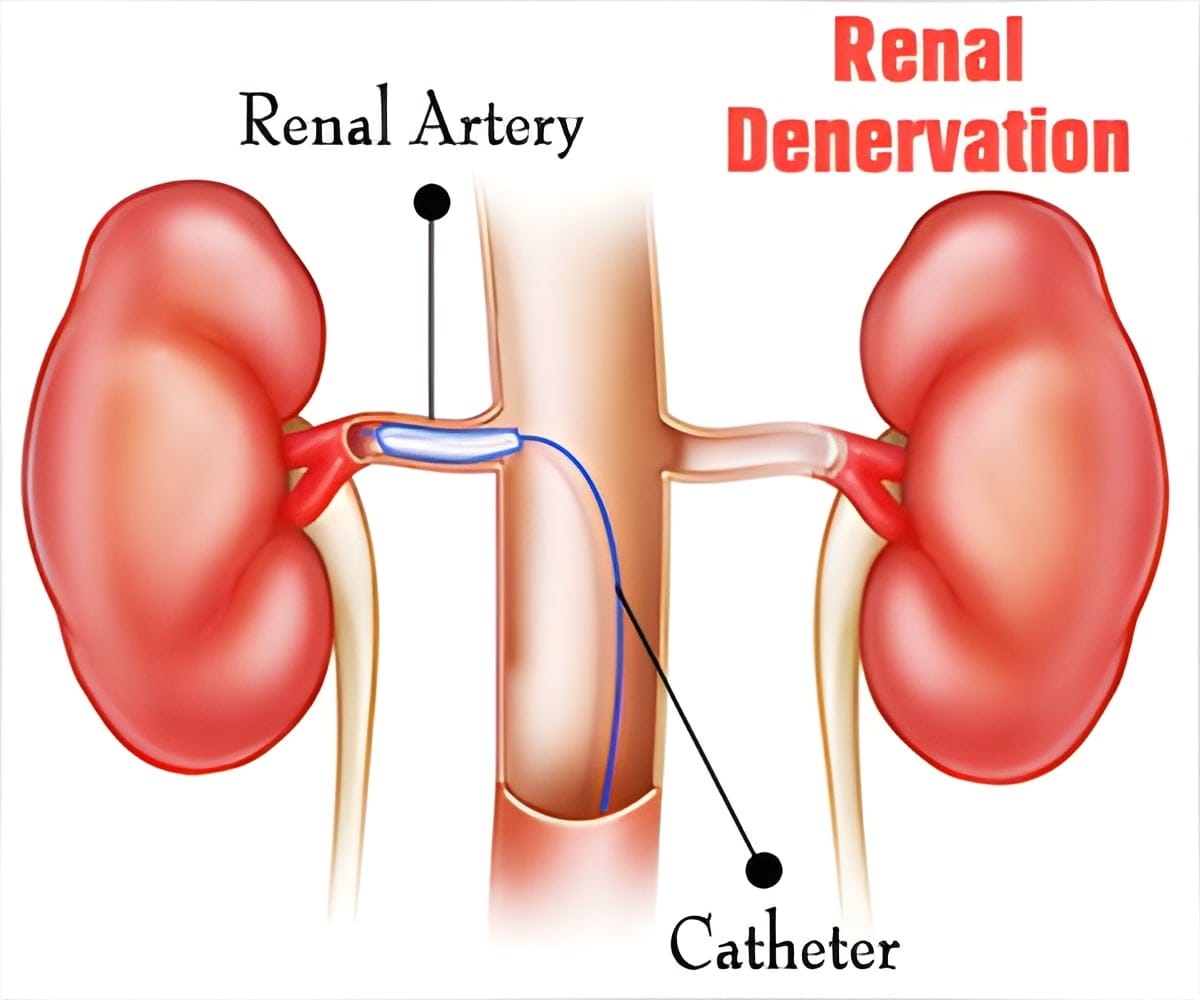
Renal denervation is a game-changer for people struggling with high blood pressure. It's a minimally invasive procedure that uses radiofrequency or ultrasound ablation to target the renal sympathetic nerves, which play a big role in blood pressure regulation.
How Does It Work?
The renal sympathetic nerves are like the overactive messengers in your body that's jacking up your blood pressure. By ablating these nerves, the procedure disrupts the signals that cause blood vessels to constrict, allowing them to relax and widen. This leads to lower blood pressure readings – and for some patients, it's a real game-changer. The procedure itself is relatively quick, taking around 30-60 minutes, and most patients can go home the same day.
One example is the Symplicity HTN-3 trial, which showed significant reductions in blood pressure for patients who underwent renal denervation. Patients like Maria, a 55-year-old teacher with resistant hypertension, saw her blood pressure drop from 160/90 mmHg to 130/80 mmHg after the procedure. That's a huge improvement, especially when you're dealing with the daily grind.
What's the Process Like?
You're probably wondering what to expect. Typically, you'll have a catheter inserted through a small incision in your groin, and guided to the renal arteries. Then, the radiofrequency or ultrasound energy is applied to the nerves, disrupting those problematic signals. Recovery's usually pretty quick, with most patients getting back to normal activities within a few days.
- FDA-approved as an adjunctive treatment for hypertension
- Can be used alongside medication and lifestyle changes
- Shows promise for patients with resistant hypertension
The bottom line? Renal denervation offers new hope for people struggling to control their blood pressure. If you're considering it, chat with your doc about whether it's right for you.
How Does Renal Denervation Work?
Renal denervation is a game-changer for hypertension treatment. Essentially, the procedure targets the renal nerves, ablating them to disrupt the sympathetic nervous system's activity. This is key because these nerves play a big role in controlling blood pressure.
When these nerves are overactive, they can cause vasoconstriction (narrowing of blood vessels) and fluid retention, both of which drive up blood pressure. By reducing this activity, renal denervation helps relax blood vessels and promotes better fluid balance. Studies have shown significant drops in blood pressure in patients post-procedure - one study saw systolic BP decrease by around 30 mmHg in some patients.
The Procedure: Quick and Minimal Recovery
The renal denervation procedure itself typically takes 30-60 minutes, and you're usually back on your feet quickly. It's a minimally invasive treatment done via catheter, usually through the groin. Patients often go home the same day or the next. Companies like Medtronic and Boston Scientific are leading the way with their renal denervation technologies.
For instance, the SPYRAL HTN trial showed promising results with significant and sustained BP reduction. Real examples like these highlight the potential of renal denervation as an effective hypertension treatment, especially for those not responding well to meds alone.
- Ablates renal nerves to disrupt sympathetic nervous system activity
- Reduces blood pressure by decreasing vasoconstriction and fluid retention
- Procedure typically takes 30-60 minutes, with minimal recovery time
Benefits of Renal Denervation
Renal denervation is a game-changer for patients with resistant hypertension. Studies have shown that it can lead to a significant reduction in blood pressure, comparable to adding multiple medications to your treatment regimen. In fact, a study published in The Lancet found that patients who underwent renal denervation experienced a drop of 32/12 mmHg in blood pressure after six months, which is impressive!
Low Risk, High Reward
One of the best things about renal denervation is its safety profile. Most patients experience no side effects, and the risk of complications is low. As Dr. Deepak L. Bhatt, a renowned cardiologist, puts it, "Renal denervation is a relatively simple procedure with a high success rate." You're looking at a win-win situation – better blood pressure control with minimal risk.
Take the case of 55-year-old Rohan, who had been struggling with high blood pressure for over a decade. Despite being on multiple medications, his blood pressure remained uncontrolled. After undergoing renal denervation, his blood pressure dropped significantly, and he's now able to enjoy his favorite activities without worrying about his health.
- Significant reduction in blood pressure
- Low risk of complications
- Improves quality of life for patients with resistant hypertension
- Potential to reduce medication burden
For patients with resistant hypertension, renal denervation can be a lifesaver. It's not just about controlling blood pressure; it's about improving overall quality of life. With this treatment, you can say goodbye to the hassle of taking multiple medications and hello to a healthier, happier you!
The Procedure: What to Expect
So, you're probably wondering what happens when you go in for renal denervation. Let's break it down. The procedure is pretty straightforward, and you're probably going to be discharged the same day.
The Step-by-Step Process
The procedure typically starts with a small incision in your groin, through which a catheter is inserted. This isn't new tech – it's similar to what's used in angioplasty. The catheter is then guided to your renal arteries using advanced imaging technology, like fluoroscopy. This helps the doc navigate through your blood vessels without needing to make a big cut.
Once they're in place, ablation therapy is applied to the renal nerves. This is the key part – it's like a targeted reset for your nerves. The Symplicity™ system, for example, uses radiofrequency energy to ablate the nerves, reducing sympathetic activity and helping to lower your blood pressure.
- Catheter insertion through a small groin incision
- Guided navigation to renal arteries using imaging tech
- Ablation applied to renal nerves to reduce sympathetic activity
Take the case of a 55-year-old hypertensive patient who underwent renal denervation at the Cleveland Clinic. They were on multiple meds, but their BP was still sky-high (160/100 mmHg). Post-procedure, their BP dropped to 130/80 mmHg, and they were able to cut back on their meds. That's the kind of impact we're talking about.
The whole thing usually takes around an hour, and you'll likely be back to normal activities within a day or two. Recovery's pretty quick, but you'll need to follow some post-procedure guidelines to ensure everything goes smoothly.
Real-World Results and Trials

You're probably wondering how renal denervation (RDN) has performed in real-world settings. Well, let's dive into the numbers. The SYMPLICITY HTN-3 trial, one of the earliest major studies, showed mixed results, with the primary endpoint not being met. However, later trials have been more promising. For instance, the RADIANCE II trial, which used ultrasound-based RDN, demonstrated significant reductions in blood pressure, with patients experiencing a mean drop of 17.9 mmHg in 24-hour ambulatory systolic BP.
The Tides Turn with RADIANCE II
This trial was a game-changer, showing that RDN can be a safe and effective treatment option for patients with uncontrolled hypertension. The study included 302 patients, with results showing a significant reduction in BP, and no major safety concerns. You're looking at a treatment that's not just promising but has real potential to change lives.
Ongoing research is exploring RDN's potential in treating other conditions, such as heart failure and diabetes. Studies are underway to see if RDN can help manage these conditions, offering new hope for patients. There's a lot of excitement around RDN, and for good reason – it's a breakthrough that's been building momentum.
- The RADIANCE-HTN SOLO study showed a significant reduction in daytime ambulatory systolic BP (-8.5 mmHg) with ultrasound RDN
- The SPYRAL HTN-ON MED trial demonstrated significant BP reductions with RDN, even in patients on antihypertensive medications
- Ongoing trials are exploring RDN's potential in heart failure, diabetes, and other conditions
These trials and studies are paving the way for RDN to become a mainstream treatment option. With its potential to change the lives of millions, RDN is definitely worth keeping an eye on.
Future Directions: Expanding the Role of RDN
So, what's next for Renal Denervation? As researchers continue to explore the possibilities, there are a few key areas that are generating a lot of buzz. For one, studies are underway to investigate RDN's impact on cardiovascular outcomes and mortality - we're talking heart attacks, strokes, and potentially saving thousands of lives.
Combination Therapy: The Power of Two
Imagine combining RDN with medication - that's the idea behind combination therapies. Researchers are exploring how RDN can work alongside existing treatments to achieve even better results. Take the SPYRAL HTN-ON MED trial, for example, which showed promising results with RDN plus medication. You're looking at potentially game-changing outcomes for patients with resistant hypertension.
Expanding access to RDN is another key area of focus. With around 10-15% of hypertensive patients showing resistance to medication, there's a significant population that could benefit from RDN. The goal is to make this treatment more widely available, especially for those who've tried everything else.
- Broader clinical trials to solidify RDN's role in hypertension management
- Investigating RDN's potential in treating other conditions, like heart failure or atrial fibrillation
- Developing more advanced RDN technologies to improve efficacy and safety
The future's looking bright for RDN. As Prof. Felix Mahfoud, a leading researcher, puts it, "The potential for RDN to transform hypertension treatment is huge." You're looking at a possible shift in how we approach this global health issue. And that, folks, is something worth being excited about.





Comments ()