NVIDIA's Quantum Leap
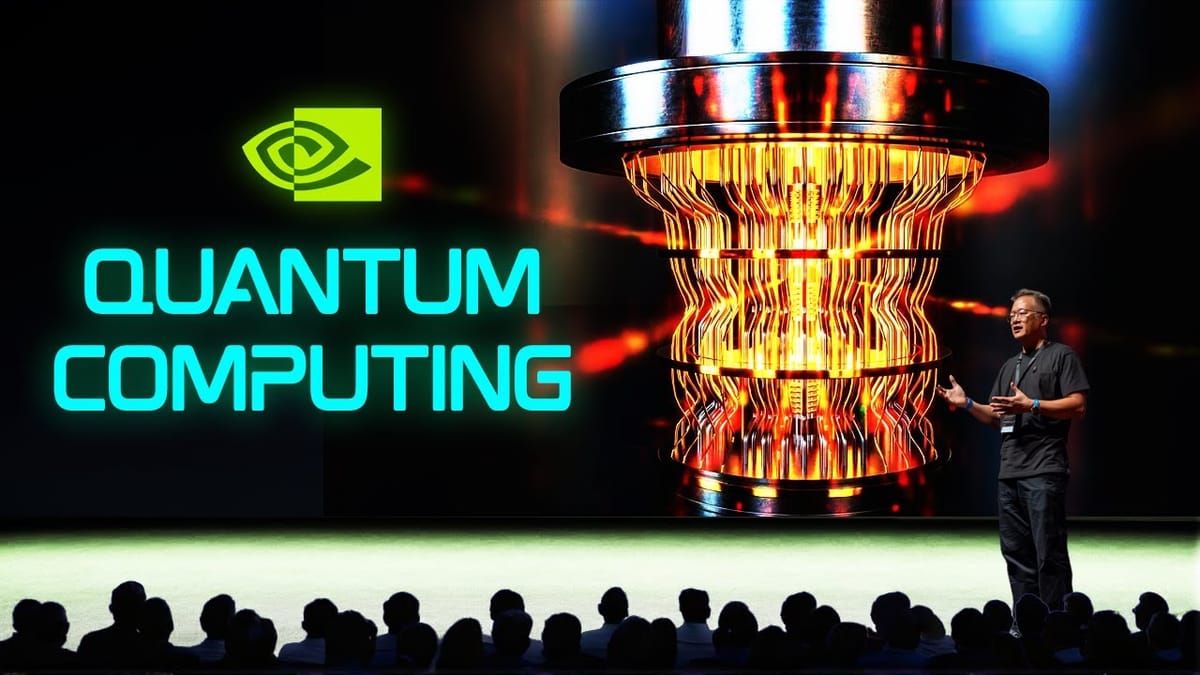
NVIDIA is making waves in the quantum computing world, and it's happening fast! The tech giant has just opened a quantum computing research lab in Boston, partnering with Harvard University and MIT to accelerate the development of quantum supercomputers. With its CUDA-Q software platform and NVQLink interconnect, NVIDIA is poised to revolutionize the field, potentially solving complex problems that would take traditional computers thousands or millions of years to crack. As quantum computing inches closer to reality, NVIDIA's strategic investments and innovations are positioning the company as a leader in this emerging space. Let's dive into the details of NVIDIA's quantum leap and what it means for the future of computing.
The Quantum Computing Conundrum
You're probably hearing a lot about quantum computing these days, and for good reason. It's a game-changer, with the potential to solve complex problems that today's computers can't touch. But here's the thing: building a practical, large-scale quantum computer is proving to be one of the toughest challenges of our time. Just ask IBM, Google, or Microsoft – they're all racing to crack the code.
So, what's the holdup? Quantum computers rely on qubits, which are incredibly sensitive to their environment. It's like trying to tune a guitar string in a hurricane – tiny fluctuations can throw everything off. This "noise" leads to errors, and without robust error correction, results are unreliable. According to experts like Dr. John Martinis, a pioneer in quantum computing, "Qubit noise and error correction are the biggest hurdles we face today."
The Scale of the Problem
Current quantum computers are still relatively small, with fewer than 100 qubits. Compare that to the millions of transistors in your smartphone's processor – it's clear we've a long way to go. Google's recent claim of quantum supremacy was a milestone, but it's just the beginning. Real-world applications like simulating complex molecules or optimizing logistics require thousands, if not millions, of qubits working in harmony.
- Qubit noise and decoherence remain significant barriers
- Error correction techniques are still in their infancy
- Scalability is the key to unlocking quantum computing's true potential
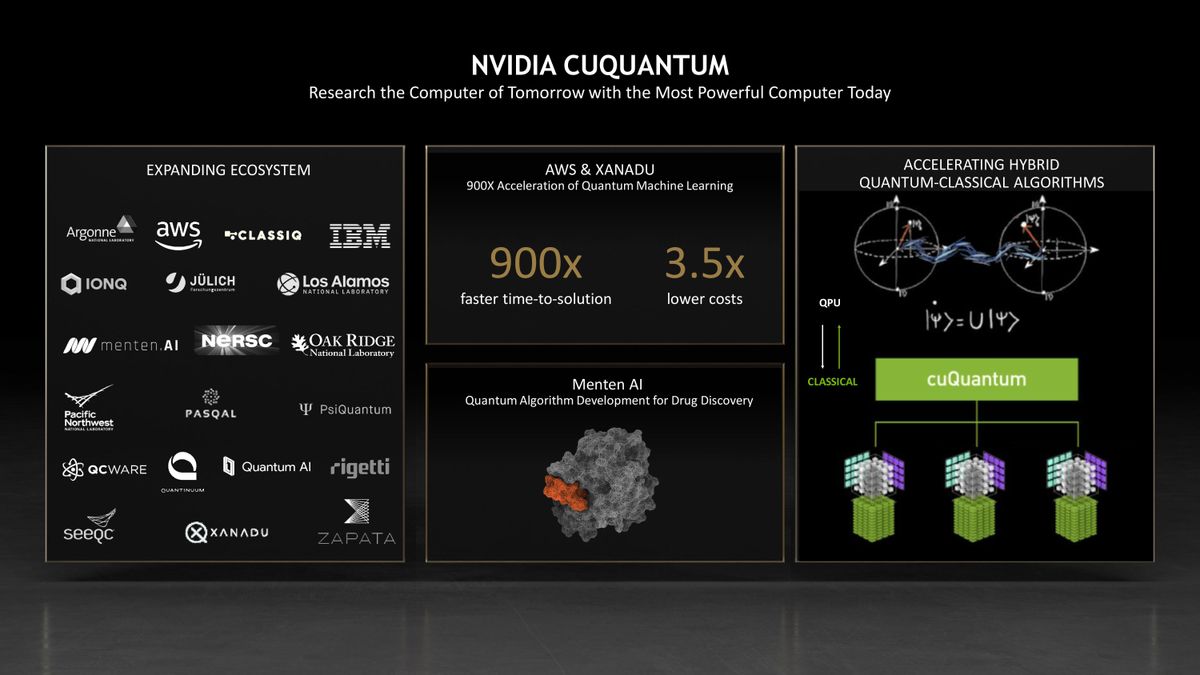
NVIDIA's entering this space with a bold strategy, leveraging its expertise in accelerated computing and AI to tackle these very challenges. CEO Jensen Huang has publicly stated that quantum computing is a top priority, and the company's work on cuQuantum and partnerships with quantum hardware leaders like IonQ and D-Wave are already showing promise. With quantum computing, we're not just talking about faster computers – we're talking about a new era in computing. And NVIDIA's aiming to be at the forefront.
A New Approach to Quantum Computing
You're probably wondering how NVIDIA plans to make a splash in the quantum computing scene without building its own quantum computer. Well, the company's strategy is to empower others to create innovative quantum solutions. By focusing on hybrid quantum-classical systems and AI-driven collaboration, NVIDIA is positioning itself as a key enabler in the quantum ecosystem. Let's break it down. Hybrid quantum-classical systems combine the best of both worlds – the power of quantum computing and the reliability of classical computing. This approach allows researchers to tackle complex problems that are too daunting for classical computers alone. For instance, NVIDIA's partnership with quantum hardware maker, IonQ, aims to develop hybrid quantum-classical algorithms for applications like chemistry simulations and machine learning.
Partnerships and Collaborations
NVIDIA isn't going solo on this quantum adventure. The company is teaming up with leading quantum hardware and software makers to accelerate the development of quantum applications. Some notable partnerships include:
- Google Quantum AI: Collaborating on quantum algorithms and applications
- Quantum Circuits Inc.: Working on developing quantum processors and software
- Zapata Computing: Focusing on developing quantum algorithms for near-term quantum devices
These partnerships will enable researchers and developers to create more sophisticated quantum applications, leveraging NVIDIA's expertise in AI and high-performance computing. With the global quantum computing market projected to reach $65 billion by 2027, NVIDIA's strategic partnerships are positioning the company for a significant share of this growing market. By empowering others to innovate in quantum computing, NVIDIA is driving the development of new applications and use cases that will shape the future of computing. Whether it's simulating complex systems or optimizing machine learning models, the potential for quantum computing is vast – and NVIDIA's got a front-row seat.
Accelerating Quantum Research
NVIDIA's Accelerated Quantum Research Center in Boston is where the magic happens - they're integrating quantum hardware with AI supercomputers to push the boundaries of what's possible. You're talking cutting-edge tech like Quantinuum's trapped-ion quantum computer paired with NVIDIA's DGX systems, cramping some serious AI power into quantum workflows.
Their collaborations are on point too - with Quantinuum, QuEra, and Quantum Machines, they're advancing quantum computing in a big way. Take Quantinuum's H-Series quantum computer, for instance. Paired with NVIDIA's CUDA Quantum platform, it's enabling researchers to develop hybrid quantum algorithms that tackle complex problems in chemistry, optimization, and machine learning. QuEra's neutral-atom quantum computer is another example - it's helping NVIDIA explore new ways to optimize quantum simulations.
Hybrid Quantum Algorithms
These partnerships are yielding some game-changing results. Like the development of hybrid quantum algorithms that leverage AI to optimize quantum circuits and improve error correction. Or AI-driven quantum applications that speed up simulations in materials science and drug discovery. Case in point - researchers used NVIDIA's cuQuantum software development kit to accelerate a quantum simulation on a superconducting quantum processor by 1,000x, cutting computation time from hours to seconds.
- Hybrid quantum-classical algorithms for optimization problems
- AI-driven quantum error correction techniques
- Quantum machine learning models for data analysis
These advancements are opening up new possibilities in fields like computational chemistry, where quantum simulations can accelerate discovery of new materials and pharmaceuticals. You're looking at potential breakthroughs in everything from battery tech to cancer treatments. The future's getting quantum, and NVIDIA's leading the charge.
Breaking Down Quantum Errors

Quantum computing's promise is huge, but there's a catch - errors. They're like gremlins in the system, and managing them is key to unlocking quantum's true power. NVIDIA and QuEra, a quantum computing startup, have teamed up to tackle this issue head-on with an AI decoder that's changing the game.
The AI Decoder Game-Changer
Their transformer-based AI decoder outperforms traditional methods, handling complex error correction tasks with ease. In fact, this decoder is designed to keep up with the blazing-fast speeds of quantum processors. You're looking at a significant boost in efficiency here - this means more reliable results and less time spent on error correction.
The decoder's capabilities are impressive: it can handle surface codes, the gold standard for quantum error correction, and it's been tested on real quantum hardware. For instance, the research team used CUDA-Q, NVIDIA's open-source platform for quantum computing, to simulate and test their decoder on large-scale quantum systems. This approach allowed them to accelerate simulations by up to 100x compared to CPU-based systems.
- Surface codes: a type of quantum error correction code that's highly effective but computationally intensive
- CUDA-Q: enables GPU-accelerated simulations, making it possible to test complex quantum systems faster
- Transformer-based AI: designed to learn patterns in quantum data and correct errors efficiently
The implications are significant: with this AI decoder, you're looking at faster, more reliable quantum computing. And that's exactly what researchers need to push the boundaries of what's possible with quantum tech. By harnessing the power of AI and GPU acceleration, NVIDIA and QuEra are making quantum computing a more viable reality.
Real-Time Quantum-Classical Integration
You've seen how NVIDIA's tech is pushing quantum computing boundaries, now let's dive into a game-changing demo by SEEQC and NVIDIA. They showcased a digital interface between a quantum processor and GPU, and trust me, it's a big deal.
The Tech Behind the Magic
This interface enables quantum error correction with microsecond latency – that's 1000x less bandwidth needed. Imagine the possibilities: real-time, low-latency communication between quantum and classical systems. It's like having a super-smart bridge between two powerful worlds.
SEEQC's approach uses a specialized FPGA-based system linked to NVIDIA GPUs, slashing the usual bottlenecks. They're talking about applications in fields like cryptography, optimization problems, and even AI simulations. The key here is speed – getting quantum and classical systems to talk in real-time opens doors to solving complex problems faster than ever.
- Microsecond latency for quantum error correction
- 1000x reduction in bandwidth requirements
- Real-time communication between quantum processors and GPUs
- Practical applications in cryptography and optimization
This integration could be a turning point for practical quantum computing. With SEEQC and NVIDIA leading the charge, we're looking at a future where quantum-classical systems work together seamlessly. The quantum leap just got a whole lot faster.
Quantum Imaging Breakthroughs
You've seen how NVIDIA's GPUs are revolutionizing AI and simulation. Now, let's zoom into the world of quantum imaging, where they're pushing the boundaries of what's possible. MITRE and NVIDIA have teamed up to accelerate simulations for quantum imaging systems, and the results are nothing short of remarkable.
Noninvasive Nanoscale Imaging
Walsh Imaging, a company at the forefront of this breakthrough, has developed a technique to noninvasively capture nanoscale electromagnetic signals using optical quantum sensors. This means you can now image things that were previously invisible – like the intricate workings of quantum materials or the behavior of individual cells. The implications are huge, from advancing medical research to developing ultra-secure communication systems.
So, how does it work? The team uses GPU-accelerated computing to process vast amounts of data from the quantum sensors, creating detailed images that reveal the electromagnetic properties of materials at the nanoscale. This is where NVIDIA's GPUs shine – they provide the computational muscle needed to turn raw data into actionable insights.
- GPU-accelerated computing advances quantum sensing and imaging technologies
- Enables noninvasive imaging of nanoscale electromagnetic signals
- Opens up new possibilities in medical research and secure communication
The partnership between MITRE and NVIDIA is a perfect example of how collaboration can drive innovation. By combining their expertise, they're unlocking new applications for quantum imaging and paving the way for the next generation of technologies.
The Future of Quantum Computing
You're probably wondering what's next for quantum computing, and Jensen Huang, NVIDIA's CEO, has some exciting insights. He expects quantum computing to start solving real-world problems sooner rather than later. This isn't just hype – it's the result of growing investments and advancements in the field.
AI: The Quantum Catalyst
The intersection of AI and quantum computing is where the magic happens. NVIDIA's work in accelerated computing is paving the way for quantum breakthroughs. For instance, their cuQuantum software development kit is helping researchers accelerate quantum simulations, making the impossible possible. You're looking at a future where complex problems in fields like medicine and climate modeling get solved faster than ever.
- Growing investments in quantum computing startups and research initiatives
- Increased collaboration between tech giants and academia
- Advances in quantum algorithms and error correction techniques
As AI and quantum computing continue to converge, expect a surge in innovation. You'll see breakthroughs in areas like drug discovery, optimization problems, and cryptography. The quantum computing space is heating up, and NVIDIA is right at the forefront.
The takeaway? Quantum computing is moving from theory to reality, and it's happening fast. If you're a researcher, developer, or just someone who loves tech, now's the time to dive in. As Huang says, "The future of computing is accelerated, and it's going to be quantum."










Comments ()