Northern Lights Destinations - Best Places to Witness the Spectacle

Imagine witnessing the breathtaking dance of the Northern Lights, a spectacle that has captivated humans for centuries. As the nights grow darker, the Northern Lights are back, and 2025 is shaping up to be an exceptional year for aurora chasers. With advancements in forecasting and better flight connectivity, witnessing this natural wonder has never been easier. In fact, destinations like Tromsø, Norway, and Fairbanks, Alaska, are gearing up for peak viewing seasons from September to April. If you're ready to experience the thrill of seeing the aurora borealis, let's explore the best places to witness this spectacle.
Chasing the Elusive Aurora

You've probably heard of the Northern Lights, but have you ever seen them dance across the night sky? The Aurora Borealis, to be precise, is a natural phenomenon that puts on a show like no other. It's no wonder that people travel thousands of miles to witness this spectacle, with some even chasing it for years.
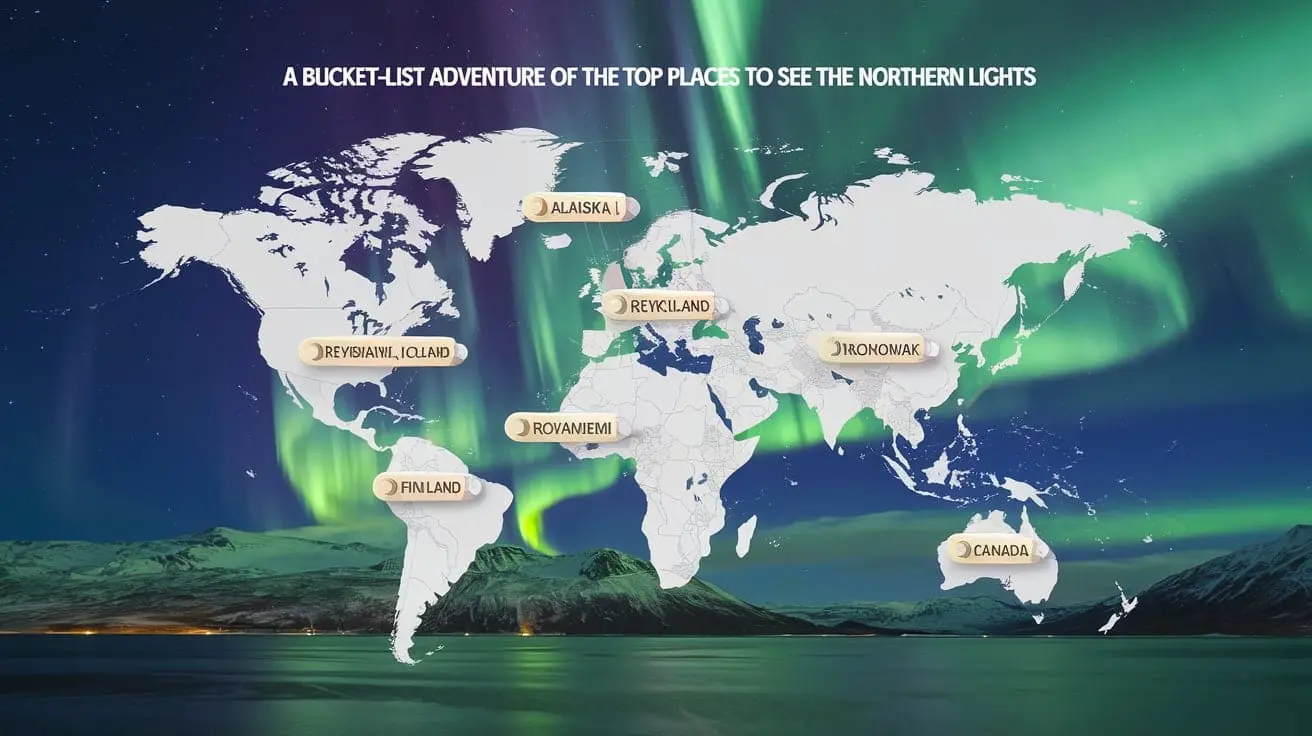
The Northern Lights occur when charged particles from the sun interact with the Earth's magnetic field, creating those mesmerising green (and sometimes red, purple, or blue) curtains of light. According to NASA, the best places to catch this show are near the Arctic Circle, where the nights are dark enough to take it all in. Places like Iceland, Canada, Norway, Finland, and Alaska top the list.
Where the Magic Happens
These destinations offer more than just a glimpse of the Northern Lights – they provide an experience. In Tromsø, Norway, you can witness the Lights while sipping hot cocoa, and in Yellowknife, Canada, you can take a dog sled tour under the shimmering lights. Iceland's Reykjavik is another hotspot, with its vibrant culture and stunning landscapes adding to the allure.
- Iceland: Known for its geothermal hot springs and the Golden Circle route
- Canada: Offers vast, unpolluted skies and Indigenous cultural experiences
- Norway: Famous for its fjords and Northern Lights-friendly cities like Tromsø
- Finland: A great spot for snow-based activities and Northern Lights tours
- Alaska: Offers a mix of adventure sports and breathtaking natural beauty
These destinations are just the starting point for your Northern Lights adventure. With the right timing and a bit of luck, you'll be caught up in the drama of the Aurora Borealis.
Iceland: Land of Ice and Fire

If you're looking for a front-row seat to the Northern Lights, Iceland is the place to be! With its minimal light pollution and breathtaking landscapes, it's a photographer's dream destination. Imagine chasing the aurora across snow-covered fields, with glaciers and volcanoes as your backdrop – it's truly a once-in-a-lifetime experience.
Some of the top spots to catch the Northern Lights in Iceland include Skógafoss waterfall, where the lights dance across the misty veil of the falls, and Jökulsárlón glacier lagoon, where floating icebergs create a surreal scene. The black sand beach of Stokksnes is another hotspot, with the lights reflecting off the dark sand and the sea. And let's not forget the famous Golden Circle route, which offers a taste of Iceland's unique geology and culture.
When to Go
The best time to witness the Northern Lights in Iceland is from September to March, when the nights are longest and darkest. This coincides with the country's winter season, so be prepared for chilly temperatures and potential snowstorms. But trust us, it's worth it – the lights are most active around the equinoxes in September and March, and the clear, crisp air makes for perfect viewing conditions.
For the best chances of spotting the aurora, head to areas with low light pollution, such as national parks or rural areas outside of Reykjavik. And don't forget to check the forecast – apps like Aurora Alerts and Space Weather can help you track the lights and plan your adventure.
- Top tip: Skógafoss waterfall is a popular spot, so arrive early to secure a good spot and enjoy the falls before the crowds arrive.
- Best time: September to March, with peak activity around the equinoxes.
- Must-try: Warm up with a cup of Icelandic hot chocolate after a long night of aurora-hunting!
Tromso, Norway: Capital of the Arctic
Tromsø is the place to be if you're serious about chasing the Northern Lights. It's like the hub of Arctic adventure, and honestly, it's got the goods to back it up. You're talking top-notch aurora spotting, breathtaking landscapes, and a chill Arctic vibe that's hard to resist.
The best part? Tromsø's got plenty of awesome spots to catch the Lights. Take the Lofoten Islands, for example - they're a real treat. Picture this: stunning beaches, dramatic mountains, and the Northern Lights dancing above. Senja and Vesterålen are other hotspots worth checking out. And let's not forget the city itself! Tromsø's got the Arctic Cathedral, a real icon, and the Tromsø Bridge, which looks totally epic when the Lights are on show.
When to Go
Late September to early April's your window for catching the Lights in Tromsø. That's when the nights are dark enough, and the aurora's at its most active. The peak's usually around December to March, but if you're lucky, you might catch some awesome displays in September or April too.
- Best Time: Late September to early April
- Peak Season: December to March
- Top Spots: Lofoten Islands, Senja, Vesterålen, Tromsø city
One of the best ways to experience the Northern Lights in Tromsø is to join a guided tour. They'll take you to the best spots, and you'll get expert insights into the science and magic behind the aurora. Plus, they've got the best gear to capture those epic photos!
Canada's Yukon: Whitehorse and Yellowknife
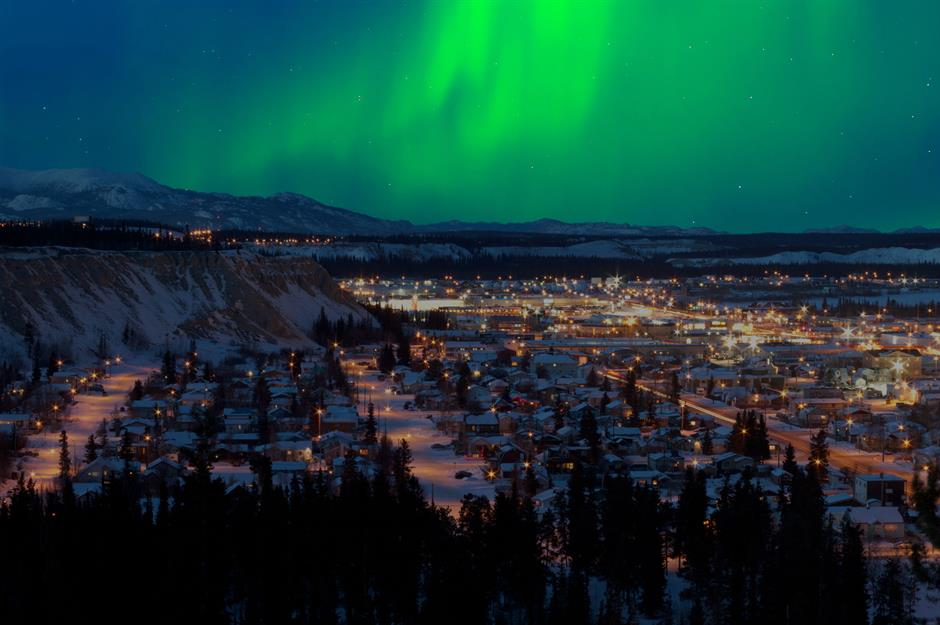
If you're looking for a front-row seat to the Northern Lights, Canada's Yukon is the place to be. Whitehorse and Yellowknife are two of the top destinations, and for good reason. These towns offer incredibly low light pollution and clear skies, making it the perfect spot to witness the breathtaking display of the aurora borealis.
Why Yukon Stands Out
The Yukon's unique geography makes it an ideal spot for viewing the Northern Lights. Located under the auroral oval, Whitehorse and Yellowknife are prime locations to witness the spectacle. In fact, Yellowknife is often referred to as one of the best places on the planet to see the Northern Lights. With over 200 days of clear skies per year, you're almost guaranteed to see the lights dancing across the horizon.
December to March is the best time to witness the Northern Lights in the Yukon, with the peak season typically occurring around the equinoxes. During this time, the nights are longest, and the skies are at their darkest, providing the perfect canvas for the lights to put on a show. And with temperatures ranging from -20°C to -30°C, you'll be bundled up and cozy, sipping hot cocoa as you take in the view.
- Take a guided tour with a local expert to learn more about the science behind the Northern Lights
- Head to the Aurora Village in Yellowknife for a unique viewing experience
- Try dog sledding or snowshoeing for a truly immersive experience under the stars
Whether you're a seasoned aurora chaser or a first-time viewer, Canada's Yukon is an experience you won't soon forget. So bundle up, grab a hot drink, and get ready to be mesmerized by the dancing lights.
Fairbanks, Alaska: Gateway to the Arctic
You want to see the Northern Lights in the United States? Fairbanks, Alaska, is a top destination. Located under the auroral oval, Fairbanks offers one of the best views of the Northern Lights. The University of Alaska Fairbanks' Geophysical Institute is a world leader in aurora research, providing valuable forecasts and viewing tips. The Geophysical Institute's aurora forecast is a must-check for anyone planning to witness the Northern Lights in Fairbanks. Updated every few hours, this forecast gives you a good idea of when the lights will be most active. You can also get alerts sent straight to your phone, so you're always in the know. There's even a camera livestream of the aurora, letting you preview the display before heading out. September to April is prime time for Northern Lights sightings in Fairbanks. The long, dark nights of winter provide perfect viewing conditions. You might want to bundle up warm, though - it can get pretty chilly. Temperatures often dip below -20°F (-29°C) in January and February, the coldest months. Some popular activities in Fairbanks include dog sledding and snowshoeing. You can even take a Northern Lights wake-up call tour, where you'll be notified when the aurora is active and get a chance to see it before dawn. Chena Hot Springs Resort, about 60 miles northeast of Fairbanks, is another great spot. The resort's location, far from city lights, offers incredibly dark skies. Soak in the hot springs while watching the Northern Lights dance above - now that's a unique experience. If you're looking for a more immersive experience, consider a guided tour. Many tour operators in Fairbanks offer Northern Lights packages that include activities like snowmobiling or ice fishing. Some even provide thermal viewing platforms where you can watch the lights in comfort. With the right planning and a bit of luck, you'll be gazing up at the Northern Lights in no time.
Planning Your Northern Lights Adventure
So, you're ready to chase the Northern Lights? Awesome! Now it's time to get practical. Booking the right accommodations can make all the difference. Look for hotels like the Scandic Kirkenes in Norway or the Aurora Hotel in Finland that offer aurora alerts and wake-up calls. Trust me, you don't want to miss the show because you were snoozing!
Getting Around
You've got two main options: rent a car or join a guided tour. Renting a car gives you freedom, but guided tours often come with expert knowledge and access to prime viewing spots. Take the guided tour from Yellow Dog Safaris in Alaska, for example – they know exactly where to go for the best views.
Before heading out, check the aurora forecast and cloud cover predictions. Websites like the University of Alaska Fairbanks' Aurora Forecast or the British Geological Survey's Aurora Watch are goldmines for planners. I mean, there's nothing worse than driving hours into the wilderness only to hit a cloudy night, right?
- Check the solar wind speed and geomagnetic activity levels
- Download apps like Aurora Alerts or Northern Lights Guide
- Plan your viewing sessions around the new moon for darker skies
Places like Tromsø, Norway, and Yellowknife, Canada, are great bases for aurora chasers. They offer a mix of urban comforts and wild, dark skies. And don't forget to dress warmly – you're gonna be outside for a while!
Capturing the Moment: Photography Tips
You're finally standing under the Northern Lights, and you want to capture that magic. A DSLR camera with a wide-angle lens and tripod is your best bet. The tripod will help you stabilize the camera, while the wide-angle lens will allow you to take in the vastness of the aurora.
Now, set your camera to manual mode. You'll want to adjust the settings for optimal low-light capture. A good starting point is an ISO of 1600-3200, f/2.8 aperture, and a shutter speed of 20-30 seconds. But don't be afraid to experiment – the aurora is constantly moving, so play around with different shutter speeds to capture its dynamic movement.
Play with Composition
Don't just point your camera straight up – get creative! Include interesting foreground elements like trees, mountains, or even people to add depth to your shots. Experiment with different angles and compositions to make your photos stand out. For example, try shooting the aurora through a natural frame like a tree branch or an archway.
Some other tips to keep in mind: use a remote shutter release or the camera's timer to avoid camera shake, and shoot in RAW to give yourself more flexibility when editing. And, of course, dress warmly – you might be standing in the cold for a while!
- Use a wide-angle lens (between 10-24mm) to capture the aurora's vastness
- Shoot in manual mode to adjust settings for optimal low-light capture
- Experiment with different shutter speeds (10-30 seconds) to capture movement
Next Stop: The Aurora Chasers' Paradise
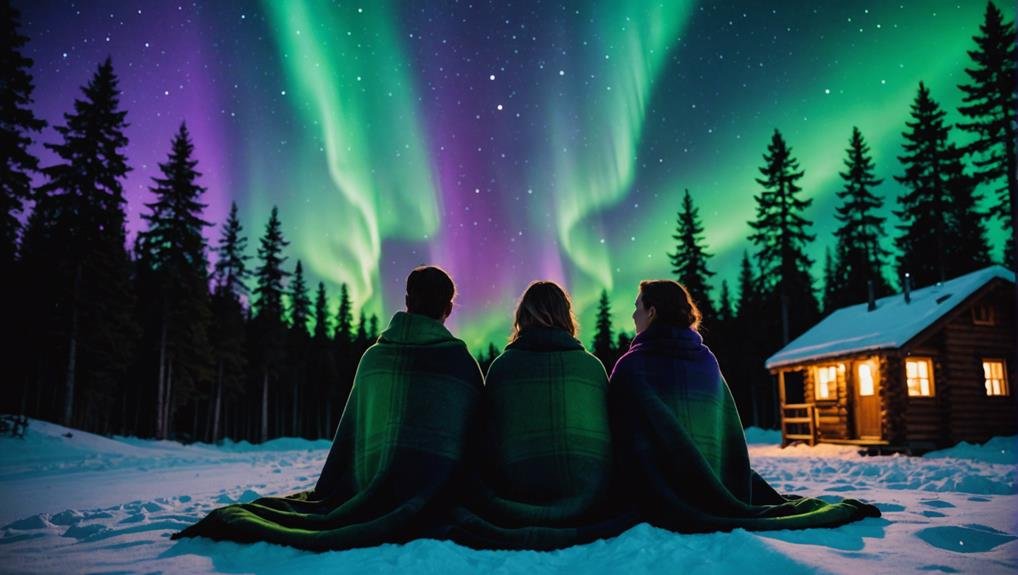
You're about to embark on the adventure of a lifetime – chasing the Northern Lights across the world's most extreme latitudes. With the right planning and preparation, you'll be witnessing this breathtaking spectacle in no time. Imagine standing in Tromsø, Norway, surrounded by snow-covered mountains, and watching the sky erupt in a dance of green and purple hues.
Get Ready for the Hunt
The Northern Lights, also known as the aurora borealis, are a natural phenomenon that can be unpredictable. But with some insider knowledge, you can increase your chances of seeing this spectacle. Peak season is from September to April, and the best time to spot the lights is usually between midnight and 3 am. Don't forget to check the forecast – clear skies are a must!
Some of the top destinations for aurora hunting include Iceland, Alaska, Canada, Norway, and Sweden. Each offers unique landscapes and experiences – like witnessing the lights reflected in the icy waters of Alaska's fjords or dancing above the Arctic Circle in Sweden's Lapland.
- Iceland: Explore the country's surreal landscapes, hot springs, and the Golden Circle
- Alaska: Experience dog sledding, snowshoeing, and the stunning beauty of Denali National Park
- Norway: Visit Tromsø, a bustling hub for aurora chasers, and explore the Northern Lights Cathedral
The Northern Lights are more than just a natural phenomenon – they're an experience that'll leave you awestruck and inspired. So pack your bags, grab your camera, and get ready to create unforgettable memories. The aurora is calling – will you answer?

.jpg)





Comments ()