Lab-Grown Meat - The Future of Sustainable Protein

Imagine a world where your burger tastes just as juicy, but it's made from meat that's never been part of an animal. Sounds like sci-fi, right? But it's happening now. Lab-grown meat, also known as clean meat, is revolutionizing the way we think about protein. With the global protein market projected to reach $290 billion by 2025, this innovation couldn't come at a better time. As the world grapples with climate change, lab-grown meat offers a sustainable solution that's cruelty-free and reduces environmental impact. But how does it work, and is it really the future of food?
The Meat of the Matter
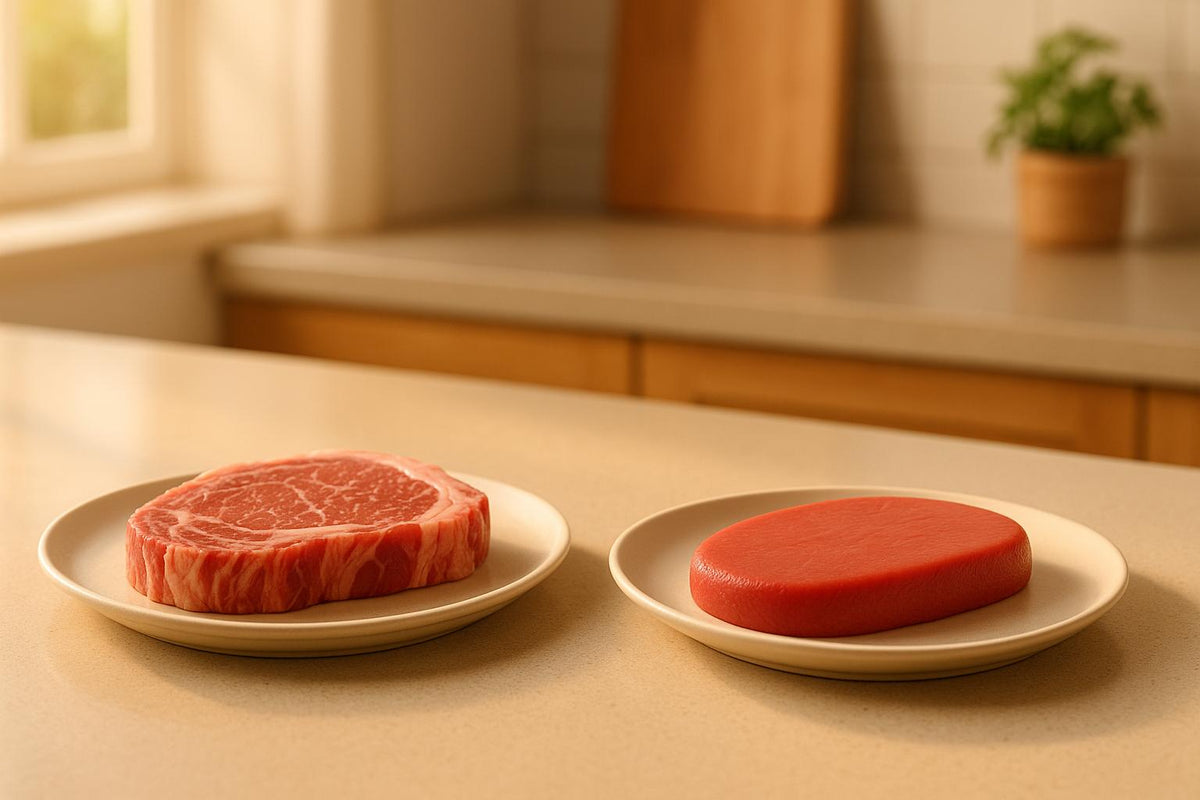
You've probably heard the buzz about lab-grown meat, but what exactly is it? Simply put, it's real meat grown in a lab rather than on an animal. Companies like Memphis Meats and Mosa Meat are leading the charge, aiming to disrupt the traditional animal agriculture industry. And it's no wonder why - concerns about animal welfare, environmental impact, and food security are driving interest in this innovative space.
The numbers are staggering. The global market potential for lab-grown meat is estimated to reach a wha-tipping $250 billion by 2035, according to a report by McKinsey & Company. That's a massive opportunity for investors, entrepreneurs, and anyone looking to make a dent in the food industry. As Dr. Uma Valeti, CEO of Memphis Meats, puts it, "We're not just changing the way we eat; we're changing the way we make meat."
But what's driving this interest? For one, there's the animal welfare angle. Factory farming has come under fire for its treatment of animals, and lab-grown meat offers a cruelty-free alternative. Then there's the environmental impact - traditional animal agriculture is a significant contributor to greenhouse gas emissions, deforestation, and water pollution. Lab-grown meat, on the other hand, has the potential to reduce these negative effects. And let's not forget about food security - with the global population projected to reach 9.7 billion by 2050, we need sustainable ways to feed everyone.
The Game-Changer
Lab-grown meat isn't just a niche product; it's a game-changer for the entire food industry. With its potential to reduce environmental impact, improve animal welfare, and feed a growing population, it's no wonder this industry is attracting attention from investors and entrepreneurs alike.
Nutritional Profile Compared

When it comes to nutrition, lab-grown meat is shaping up to be a game-changer. You might be wondering how it stacks up against traditional meat, and the good news is that it's looking pretty comparable. Take protein content, for instance - lab-grown meat can match traditional meat in terms of protein quality and quantity.
Protein Power
Companies like Memphis Meats and Mosa Meat are working on creating lab-grown beef and chicken that's not only delicious but also packs a protein punch. We're talking around 20-25 grams of protein per 3-ounce serving, which is right up there with traditional meat.
Fat Control
Here's where lab-grown meat gets really interesting - fat content can be controlled and optimized. Want leaner meat? No problem. Lab-grown meat can be engineered to have less marbling, making it a great option for health-conscious consumers. For example, a study published in the Journal of Food Science found that lab-grown beef had a more favorable fatty acid profile compared to traditional beef.
Vitamin and Mineral Boost
There's also the potential for fortification - imagine lab-grown meat that's enriched with vitamins and minerals like omega-3s, vitamin D, or iron. The possibilities are endless! While the vitamin and mineral profiles of lab-grown meat may differ from traditional meat, companies are working on tweaking the nutrient content to make it even healthier.
- Lab-grown meat can have comparable protein content to traditional meat
- Fat content can be controlled and optimized for healthier options
- Vitamin and mineral profiles can be tweaked for added nutrition
The bottom line? Lab-grown meat is looking like a nutritious alternative to traditional meat, with the added benefit of sustainability and reduced environmental impact.
Environmental Footprint Analysis
You know how we're always hearing about the environmental impact of traditional livestock farming? Like, did you know that it's responsible for around 14.5% of global greenhouse gas emissions? Yeah, it's a big deal. But here's the thing: lab-grown meat is changing the game. Studies have shown that it can reduce greenhouse gas emissions by up to 96% compared to traditional methods.
Let's break it down further. A study by the University of Oxford found that lab-grown beef generates just 1.3 kg of CO2e (carbon dioxide equivalent) per kg of meat, whereas traditional beef production clocks in at around 27 kg of CO2e per kg. That's a massive reduction. And it's not just emissions – water usage is significantly lower too. We're talking about a reduction of up to 82-96% in water usage, depending on the type of meat being produced.
Land Use: The Real Game-Changer?
Imagine reducing land use by up to 99% – that's like freeing up an area roughly the size of Australia just by switching to lab-grown meat! According to a study published in the journal Environmental Science & Technology, lab-grown meat could reduce land use from 1,000-2,000 square meters per ton of beef to just 10-20 square meters per ton. That's some serious space-saving.
- Traditional beef: 1,000-2,000 sqm/ton
- Lab-grown beef: 10-20 sqm/ton
- Potential land savings: up to 99%
Companies like Memphis Meats and Mosa Meat are already working on scaling up production, and it's looking promising. As you can see, the numbers are compelling – lab-grown meat has the potential to significantly reduce our environmental footprint. And that's just the beginning.
Taste and Texture Evolution

You might be wondering how lab-grown meat stacks up against traditional meat in terms of taste and texture. The good news is that it's becoming increasingly similar, and fast. Companies like Memphis Meats and Mosa Meat are working tirelessly to perfect the flavour profile of their lab-grown products. In fact, a 2022 taste test conducted by the Good Food Institute found that lab-grown chicken and beef burgers were virtually indistinguishable from their conventional counterparts.
The Texture Puzzle
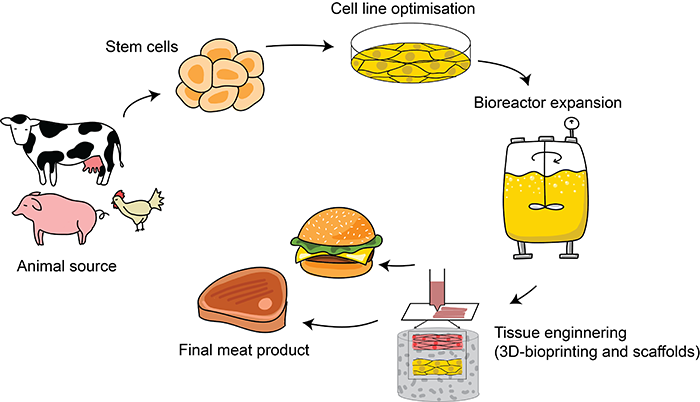
Texture is another story altogether. Early lab-grown meat products had a tendency to be, well, a bit mushy. But advancements in cell structuring techniques are solving this problem. Techniques like 3D printing and scaffold-based cell growth are allowing companies to create meat that's remarkably similar in texture to traditional meat. For example, Aleph Farms' lab-grown steak has a texture that's eerily similar to the real deal.
So, what do people who've tried lab-grown meat have to say? Early adopters report mixed experiences with taste and mouthfeel. Some swear it's the best thing since sliced bread, while others are less impressed. Josh Tetrick, CEO of Eat Just, says their lab-grown chicken has a slightly different mouthfeel, but it's a trade-off for the reduced environmental impact.
- Memphis Meats' lab-grown chicken has a flavour profile that's 90% similar to traditional chicken
- Mosa Meat's lab-grown beef burgers have a texture that's comparable to 85% lean beef
- Aleph Farms' lab-grown steak is priced at around ₹2,500 per kg, making it competitive with high-end beef
Regulatory Landscape Navigation
You might be wondering what's holding back lab-grown meat from hitting your local supermarket shelves. The answer lies in navigating the complex regulatory landscape. In the US, the FDA and USDA are working together to develop frameworks for lab-grown meat regulation. It's a bit of uncharted territory, but they're making progress.
For instance, the FDA has already granted approval to companies like Memphis Meats and JUST for their cell-culture processes. Meanwhile, Singapore has taken the lead in approving lab-grown meat for commercial sale, with Eat Just's chicken nuggets being the first to hit the market. Israel isn't far behind, with companies like Aleph Farms gaining regulatory approval.
Europe's Cautious Approach
Europe, on the other hand, is taking a more cautious approach. The European Food Safety Authority (EFSA) is still evaluating the safety of lab-grown meat, and regulations are expected to be stricter. However, they're not closing the door entirely. There's a growing interest in alternative proteins, and regulators are working to create a framework that balances safety concerns with innovation.
- The EU's Novel Food Regulation requires lab-grown meat to undergo a rigorous safety assessment before approval.
- Some EU countries, like the Netherlands, are investing in lab-grown meat research and development.
- Industry experts predict that Europe will follow the US and Asia in approving lab-grown meat within the next 5-10 years.
As you can see, regulatory approval is a crucial step in bringing lab-grown meat to market. While there's still some way to go, progress is being made, and it's an exciting time for the industry.
Consumer Acceptance Factors
So, you've heard about lab-grown meat and are wondering what's holding people back from giving it a shot. It's not just about the tech itself, it's about you, the consumer. Taste, price, and how natural it feels are major factors influencing choices here. According to a survey by the Good Food Institute, about 60% of consumers would try lab-grown meat if it tasted the same or better than traditional meat.
The Taste Test
Companies like Memphis Meats and Mosaic Food are working hard to get that taste just right. In 2020, Memphis Meats' lab-grown chicken tasted so close to the real deal that even celebrity chef Wolfgang Puck gave it thumbs up. Price point's the next hurdle – it's gotta be competitive with traditional meat.
Environmental benefits are a big selling point, especially for eco-conscious folks. Did you know that lab-grown meat can reduce greenhouse gas emissions by up to 96% compared to conventional beef production? That's a huge win for the planet. Brands highlighting this are seeing traction – Just Eat's partnership with lab-grown meat startups is a prime example.
Cultural Considerations
Cultural and religious factors play a role too. In India, for instance, lab-grown meat might face resistance due to beef bans and vegetarian preferences in some communities. Companies need localized approaches – like plant-based options or halal-certified lab-grown meat for Muslim consumers.
- Taste and price parity can drive adoption
- Eco-benefits appeal to green consumers
- Cultural sensitivity is key to wider acceptance
Getting these factors right can push lab-grown meat into mainstream diets. You're likely to see more of it in restaurants and stores soon, especially in health-conscious and eco-friendly markets.
Production Costs and Scalability
You're probably wondering how lab-grown meat is going to stack up against traditional meat in terms of cost. Here's the thing: production costs are dropping like a stone. Companies like Memphis Meats and Mosa Meat are making some serious breakthroughs. We're talking costs slashed by 90% in just a few years - that's some next-level innovation right there.
The Tech Behind the Drop
Advances in bioreactor design and cell culture media are driving these costs down. Take this: Memphis Meats recently brought down the cost of their lab-grown chicken to around ₹1,500 per kg. Compare that to the ₹1,200 per kg it was just a couple of years ago. It's getting closer to being competitive with traditional meat, isn't it?
Scaling up production while keeping quality consistent, though, that's the big challenge. It's like trying to make sure every burger patty tastes the same - you can do it, but it takes some doing. Companies are working on it, optimizing their processes to make sure that every batch is as good as the last.
So, what's the big picture? Economies of scale are expected to make lab-grown meat more competitive. When companies like Aleph Farms and Future Meat Technologies get their production lines humming, you're going to see prices drop even further. We're talking potentially ₹800-₹1,000 per kg in the next five years. That's getting into some serious game-changing territory.
The future of sustainable protein is looking tasty, if you ask me.
What's on the Horizon
You're probably wondering what's next for lab-grown meat. The future looks exciting, with hybrid products combining plant-based and lab-grown elements hitting the market soon. Imagine a burger that's 50% lab-grown beef and 50% pea protein - it's a game-changer for sustainability and taste.
The Power of Customization
One of the coolest things about lab-grown meat is the ability to customize its nutritional profile. Want meat with 50% less saturated fat and boosted omega-3s? Done. Companies like Memphis Meats and Just are already working on tailored products. It's like having a meat scientist on demand.
And it's not just about health - customization opens doors for specialized nutrition, like meat designed for athletes or seniors. The possibilities are vast, and we're just scratching the surface.
- Space missions: NASA's already exploring lab-grown meat for space travel
- Disaster relief: Quick, nutritious meat production in crisis zones
- Remote communities: Reducing reliance on traditional supply chains
These applications show lab-grown meat's potential goes far beyond the dinner plate. As the technology advances, expect to see it pop up in unexpected places. The future of meat is being grown, and it's looking sustainable, nutritious, and pretty darn cool.
The bottom line? Lab-grown meat is poised to revolutionize how we think about protein. Buckle up; the future is tasting good.












Comments ()