Gorgonzola - Italy's Pungent Blue Cheese Legacy

In the heart of Italy's Lombardy region, a cheese legend was born – Gorgonzola, the pungent blue cheese that's been tantalizing taste buds for centuries. But did you know that this beloved cheese is facing a major crisis? With production down by 15% in the past decade, according to a recent report, the future of Gorgonzola hangs in the balance. Climate change, shifting consumer preferences, and a dwindling number of artisanal producers are just a few of the challenges threatening this iconic Italian staple. As we explore the rich history and legacy of Gorgonzola, we must ask: can this beloved cheese overcome the odds and continue to delight palates around the world? Let's start with the origins of this creamy, tangy masterpiece.
A Legendary Cheese is Born

Gorgonzola - the name itself is like a flavor explosion, isn't it? 😋 This iconic Italian cheese has been around since the 9th century, hailing from Lombardy, a region in northern Italy known for its lush pastures and rich dairy traditions. It's named after the small town of Gorgonzola, near Milan, where local cheesemakers first started crafting it.
The magic behind Gorgonzola's distinctive taste lies in its production process. Made from unskimmed cow's milk, it's got a rich, creamy texture that's simply irresistible. The cheese is typically aged for 3-6 months, during which it develops those signature blue-green veins and a pungent aroma that's not for the faint-hearted 😜. According to cheese expert, Luca Zauli, "Gorgonzola's unique flavor profile is thanks to the Penicillium mold that's introduced during the cheesemaking process."
The Numbers Behind the Legend
So, what's the scale of Gorgonzola production? Italy produces around 45,000 metric tons of Gorgonzola annually, with most of it being exported to countries like France, Germany, and the US. The Consorzio per la Tutela del Gorgonzola, established in 1955, protects the cheese's protected designation of origin (PDO) status, ensuring only Gorgonzola produced in specific areas can bear the name.
- Production area: Primarily in Lombardy and Piedmont regions
- Milk source: Unskimmed cow's milk from local farms
- Aging process: Minimum 3-6 months
- Flavor profile: Pungent, tangy, with a creamy texture
Gorgonzola's rich history, unique production process, and protected status have cemented its place as one of Italy's most beloved cheeses. Whether you're a fan of its bold flavor or just discovering it, there's no denying its legendary status in the world of cheese 🧀.
The Art of Blue Veining

Gorgonzola's got a secret ingredient that sets it apart from other cheeses - Penicillium glaucum mold. This funky fungus is what gives Gorgonzola its iconic blue-green marbling. You might wonder how they get it, right? It's all about creating the perfect environment for the mold to thrive.
The process starts with piercing the cheese with stainless steel rods, like the ones used at Caseificio dell'Angello in Piedmont. This allows oxygen to flow in and promote that gorgeous mold growth. It's a delicate balance - too little oxygen, and the mold doesn't develop; too much, and it overpowers the cheese. The cheese makers have to get it just right.
Ages Like Fine Wine
Gorgonzola typically ages for 3-6 months, which is where the magic happens. During this time, the Penicillium glaucum works its way through the cheese, breaking down fats and proteins, and developing that signature pungent flavor. You can almost smell the intensity building up. Some Gorgonzola varieties, like the Gorgonzola Dolce, are aged for a shorter period, giving them a milder taste, while others, like Gorgonzola Piccante, get aged longer for an extra kick.
Want to experience it for yourself? Try pairing Gorgonzola with a sweet, acidic fruit like pears or figs - the contrast is amazing.
Dive deeper: [How does Gorgonzola's production process differ from other blue cheeses?]((link unavailable)) [What are some popular Gorgonzola recipes?]((link unavailable)) [How to pair Gorgonzola with wine?]((link unavailable))
Types of Gorgonzola: A Tale of Two Cheeses
You know, Gorgonzola isn't just one cheese - it's two distinct personalities in one iconic Italian brand. Meet Gorgonzola Dolce and Gorgonzola Piccante, each with its own story to tell.
The Sweet Talker: Gorgonzola Dolce
Gorgonzola Dolce is the smooth operator - sweet, creamy, and mild. Aged for just 2-3 months, it's the perfect introduction to blue cheese for newcomers. The blue mould is subtle, with white streaks running through its ivory paste. Spread it on crostini or melt it into risotto; it's versatile and crowd-pleasing. Dolce's subtlety lets the milk's sweetness shine, making it a hit in Italy's Piedmont region, where it's often paired with sweet honey or fruit.
The Bold One: Gorgonzola Piccante
Piccante is where Gorgonzola gets its rebellious streak. Aged longer (3-6 months), it's sharp, tangy, and delightfully crumbly. The blue veins? More pronounced, with a peppery kick that lingers. Crumble it over polenta or salads for a flavour bomb. Producers like L'Alpeggio push the ageing to create that unmistakable bite.
Here's the kicker: both types are protected by the EU's PDO (Protected Designation of Origin). That means authentic Gorgonzola comes from specific regions in Italy - think Piedmont and Lombardy - following traditional methods. No shortcuts allowed.
- Production rules dictate raw cow's milk only
- Ages minimum 50 days (Dolce) or 80 days (Piccante)
- Moulded by hand in copper vats
Next time you're at the market, grab both and taste the difference yourself.
Gorgonzola's Rich History and Cultural Significance
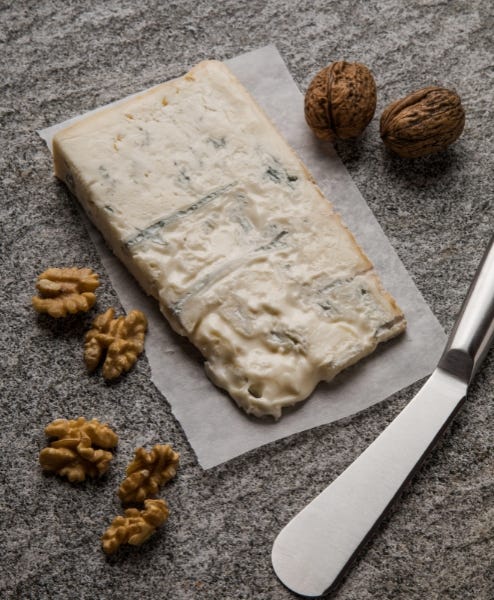
Gorgonzola's story is as rich as its creamy texture. This iconic blue cheese has been a favorite among Italian aristocrats and clergy for centuries - we're talking Renaissance-era VIPs like Leonardo da Vinci and Catherine de' Medici. It's no wonder, considering its bold flavor and velvet-like texture.
A Secret Passed Down Through Generations
For a long time, Gorgonzola's production was a closely guarded secret, passed down through generations of Italian cheese-makers in the Lombardia region. The cheese got its name from the small town of Gorgonzola, near Milan, where it was aged to perfection in the area's unique climate. Even today, traditional Gorgonzola producers follow ancient recipes, using raw cow's milk and letting the cheese age for at least 3-4 months.
Fast forward to today, and Gorgonzola's enjoying global popularity. You're likely to find it paired with sweet accompaniments like honey, figs, or pears - the Italians love combining it with sweet treats like Dolci di Crema. Some adventurous eaters even pair it with spicy chutneys or tangy mustards. The PDO (Protected Designation of Origin) status awarded to Gorgonzola ensures strict production standards, preserving its authentic taste.
- Traditional Gorgonzola production involves raw cow's milk and natural aging processes
- The cheese is often served with fruits like pears and figs, or nuts like walnuts
- Gorgonzola's popularity has spread from Italian courts to global tables
The Production Process: From Milk to Masterpiece
Let's get into the nitty-gritty of how Gorgonzola is made. You're probably wondering what makes this cheese so special. Well, it all starts with unskimmed cow's milk, which is heated to around 86°F (30°C) and mixed with rennet to form curds. This process takes about 30 minutes, and it's crucial for developing the cheese's signature texture. The curds are then cut into small pieces, released of their whey, and shaped into wheels. This is where the magic happens – the curds are molded into their iconic round shape, typically weighing around 13-18 pounds (6-8 kg). Now, these wheels get dry-salted to remove excess moisture and develop that characteristic crust. You'll notice the difference it's all about balance – too little salt, and the cheese won't age well; too much, and it's overpowering. Next up, the wheels are transferred to temperature-controlled cellars, where they age for at least 50 days, but often up to 6 months or more. This is where the patience comes in – the cheese is regularly turned and monitored to ensure it develops that perfect veiny blue-green mold. You might've heard of the traditional method where cheesemakers use metal rods to create air pockets, allowing the mold to spread evenly. It's a labor of love, but the result is well worth it. One example of a renowned Gorgonzola producer is Latteria la Torrazza, based in Novara, Italy. They've been perfecting their craft for generations, using traditional methods alongside modern techniques to create some of the world's best Gorgonzola. Their cheese is aged for a minimum of 90 days, which gives it an intense flavor and creamy texture. When you take a bite of well-made Gorgonzola, you'll notice the tangy, slightly sweet flavors and the way it crumbles effortlessly. That's the result of careful production and aging – a true masterpiece of Italian cheesemaking. You're not just eating cheese; you're experiencing a piece of history.
Pairing Gorgonzola: A Match Made in Heaven

You know, Gorgonzola's bold flavor can really elevate a dish. One of my favorite combinations is pairing it with sweet, juicy pears - the creaminess of the cheese balances out the crunch of the fruit perfectly. Add some prosciutto to the mix, and you've got a match made in heaven! The salty, savory prosciutto complements the pungency of the Gorgonzola, while the pear's sweetness cuts through the richness.
A Versatile Cheese for Every Occasion
Gorgonzola's crumbly texture and bold flavor make it a great addition to all sorts of dishes, from salads to pasta to pizza. Try crumbling it over a fresh arugula salad with some toasted walnuts and a drizzle of balsamic glaze. Or, melt it into a creamy pasta sauce with some garlic and cream. It's also a fantastic topping for pizza - pair it with sweet caramelized onions and prosciutto for a flavor bomb.
If you're looking for a drink to pair with your Gorgonzola, try a sweet wine like Moscato or Vin Santo. The sweetness will balance out the pungency of the cheese, creating a beautiful harmony of flavors. And don't forget about balsamic glaze - a drizzle of that sweet, sticky goodness can elevate even the simplest Gorgonzola pairing.
- Try Gorgonzola with fig jam and prosciutto on crostini for an appetizer
- Add it to a charcuterie board with cured meats and fresh fruit
- Use it to make a creamy Gorgonzola sauce for steak or chicken
Gorgonzola's Global Appeal and Availability
Gorgonzola's distinctive taste has won hearts worldwide. You're likely to find it on menus and in cheese shops from New York to Tokyo. But what's behind its global appeal? For starters, its versatility in both sweet and savory dishes has made it a favorite among chefs and foodies. Plus, there's the allure of Italian heritage – who doesn't love a taste of Italy?
Authenticity Matters
When shopping for Gorgonzola, look for the PDO (Protected Designation of Origin) label. This ensures you're getting the real deal from Italy. The label guarantees the cheese meets strict production standards and comes from specific regions in Italy. Don't settle for imitations – with the PDO label, you know you're getting authentic Gorgonzola.
France and the US are among the countries producing their own versions of Gorgonzola. Take France's Gorgonzola-style cheese, for instance. Made using similar techniques, it's often softer and milder than its Italian counterpart. American producers like Rogue Creamery in Oregon also put their own spin on Gorgonzola, using local milk and aging processes. These alternatives might not have the PDO label, but they offer unique flavors worth trying.
Where to Find Authentic Gorgonzola
So, where can you find authentic Italian Gorgonzola? Specialty cheese shops and gourmet markets are great places to start. These stores often source their products directly from Italian suppliers, ensuring you get high-quality cheese. Online retailers are another option, offering a wide range of Gorgonzola products. You can even order directly from Italian producers or retailers like Amazon. Some notable online stores include Murray's Cheese and Eataly.
When shopping online, check the product description for the PDO label and look for reviews from other customers. This will give you an idea of the cheese's quality and authenticity. With a little digging, you'll be enjoying authentic Italian Gorgonzola in no time.
Gorgonzola's Future: Preserving Tradition and Innovation
Gorgonzola's story is one of passion, tradition, and a dash of rebellious spirit. As you savor the creamy, tangy goodness, you're part of a legacy that's been unfolding for centuries. But what's next for this beloved blue cheese?
Artisanal producers are pushing the boundaries, experimenting with new flavors and techniques. Take, for instance, the L'Encas Gorgonzola from Piemonte, infused with locally-sourced honey and walnuts – it's a game-changer. These innovators are breathing new life into traditional recipes, ensuring Gorgonzola stays relevant for generations to come.
Sustainability is the New Black
With the world waking up to the importance of sustainable food practices, Gorgonzola producers are embracing eco-friendly farming and local sourcing. The Consorzio Gorgonzola, a cooperative of local producers, is leading the charge, promoting environmentally-conscious methods and supporting small-scale farmers. This not only preserves the environment but also safeguards the quality and authenticity of Gorgonzola.
As Gorgonzola's popularity grows, so does the responsibility to preserve its heritage. The Consorzio Gorgonzola has implemented strict regulations to ensure only authentic, high-quality cheese bears the name. It's a delicate balance between tradition and innovation, but one that's essential to the cheese's future.
So, what's the takeaway? As you indulge in Gorgonzola's pungent, creamy goodness, remember you're supporting a community of passionate producers, dedicated to preserving tradition and pushing boundaries. Whether you're a seasoned gourmand or just discovering this Italian icon, Gorgonzola's future has never looked brighter – and tastier!







Comments ()