Eye Floaters and Flashes - Separating Harmless Symptoms from Serious Conditions
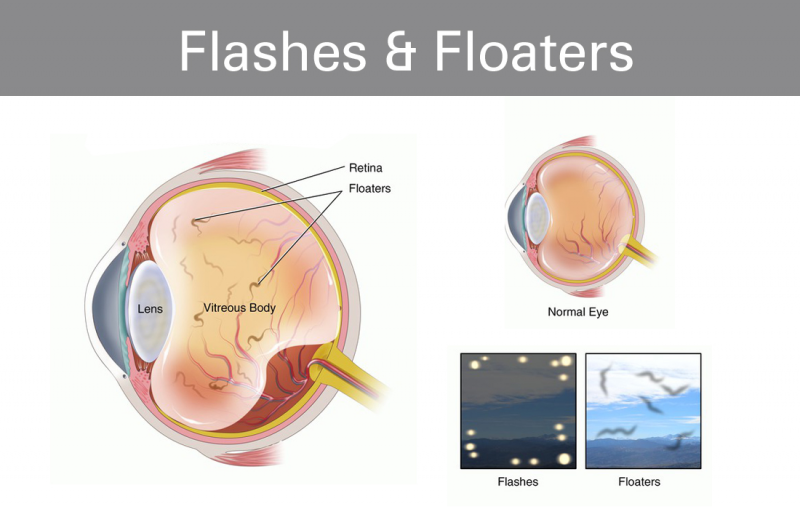
Have you ever noticed tiny specks floating across your vision or seen flashes of light out of the corner of your eye? You're not alone. Millions of people experience eye floaters and flashes, often dismissing them as a normal part of aging. But did you know that these symptoms can also be a warning sign of a serious eye condition, such as a retinal detachment? Recent studies suggest that up to 7% of people with sudden flashes and floaters may have a retinal tear or detachment. With digital devices dominating our daily lives, it's time to pay attention to what's floating in our eyes. Let's dive into the world of eye floaters and flashes, and learn to distinguish between harmless symptoms and those that require immediate medical attention.
Spotting the Warning Signs
You're sitting at your desk, staring at your screen, when you notice tiny specks floating in your vision. Or maybe you've experienced a sudden burst of light, like a camera flash, out of the corner of your eye. Eye floaters and flashes can be pretty common, especially as you age. But here's the thing: they can also be signs of serious conditions that require immediate attention.
According to Dr. Rohit Varma, spokesperson for the American Academy of Ophthalmology, most eye floaters are harmless and are caused by age-related changes in the vitreous, the gel-like substance inside your eye. However, new or sudden onset of floaters and vision changes are a different story. They're like a warning signal that something might be wrong, and you need to get it checked out ASAP.
When to Hit the Panic Button
If you experience any of the following symptoms, don't wait – get medical help right away. A dark area or shadow in your vision, gradual shading or a "curtain" across your field of vision, or a sudden increase in eye pressure are all red flags. These could be signs of a retinal detachment, which is a medical emergency.
- A sudden increase in eye pressure
- A dark area or shadow in your vision
- Gradual shading or a "curtain" across your field of vision
The good news is that if caught early, many conditions can be treated effectively. So, if you're experiencing any unusual eye symptoms, don't hesitate – schedule an appointment with your eye doctor or head to the emergency room if it's severe. Your eyes are precious, and it's always better to err on the side of caution.
What Are Eye Floaters?
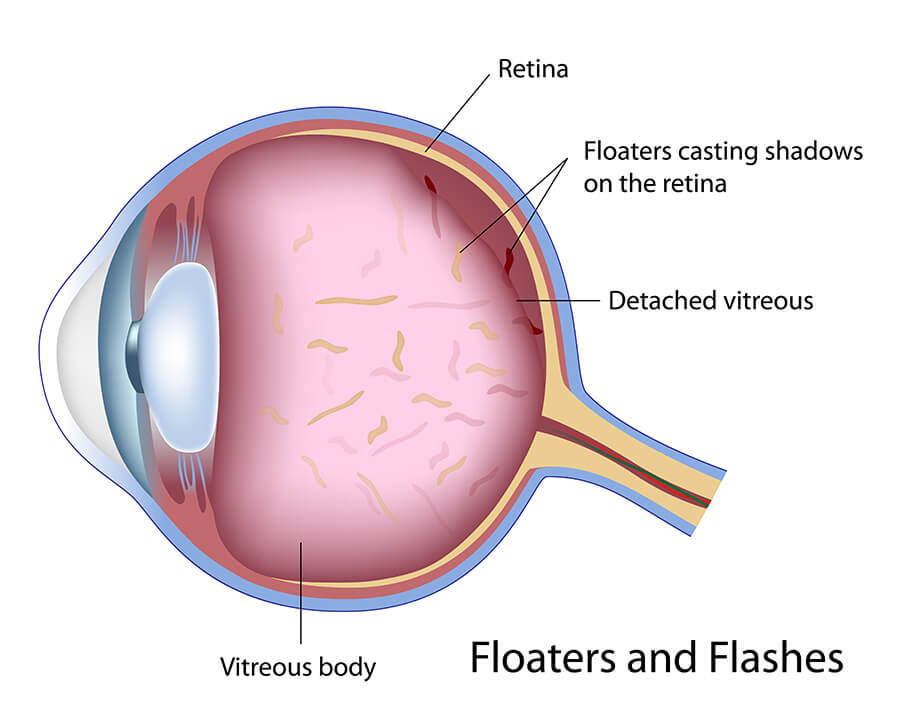
You've probably noticed those tiny specks or threads floating across your vision at some point. They're called eye floaters, and they're usually harmless. But what exactly are they?
Eye floaters are tiny clumps of gel or cells inside the vitreous, the clear gel-like substance that fills the center of your eyeball. As light enters your eye, it casts shadows on the retina, which is the light-sensitive tissue at the back of your eye. These shadows are what you see as floaters. They're more noticeable when you're looking at bright backgrounds, like a clear blue sky or a white wall.
What Do Floaters Look Like?
Floaters can appear as specks, threads, or even cobweb-like images in your vision. Some people describe them as tiny bugs or strings floating across their field of vision. They're usually more noticeable when you're looking at something bright, and they tend to move as you move your eyes.
For example, Sarah, a 30-year-old graphic designer, noticed that she was seeing tiny dots floating across her screen while working on a project. At first, she thought it was just her tired eyes, but when she mentioned it to her eye doctor, he explained that it was just eye floaters. They're a common occurrence, especially as we age.
- Floaters can be caused by age-related changes in the vitreous
- They can also be caused by eye injuries or inflammation
- In some cases, floaters can be a symptom of a more serious condition, like retinal detachment
The good news is that most eye floaters are harmless and don't require treatment. However, if you notice a sudden increase in floaters or flashes of light, you should see an eye doctor right away.
What Are Eye Flashes?
You've probably seen those sparkly lights out of the corner of your eye, like a shooting star or a lightning bolt. That's what we call eye flashes. They're like tiny fireworks in your vision, and they can be pretty startling if you're not expecting them.
So, what's happening in your eye when you see these flashes? Well, it's all about the vitreous, the gel-like fluid that fills the back of your eye. As you age, the vitreous starts to shrink and pull away from the retina, the light-sensitive tissue at the back of your eye. When it rubs or tugs on the retina, you see flashes. It's like a tiny little tug-of-war going on in there.
What Triggers These Flashes?
There are a few common culprits. Aging is a big one – as we get older, the vitreous is more likely to shrink and cause flashes. Migraines can also trigger them; some people see flashes as part of their migraine aura. And then there's eye injuries – a bump to the head or a blow to the eye can cause the vitreous to tug on the retina and trigger flashes.
- Aging (especially after 50)
- Migraines (often accompanied by other symptoms like headache, sensitivity to light)
- Eye injuries (like a direct blow to the eye or a severe head injury)
- Retinal detachment (a medical emergency – if you experience sudden, severe flashes, get to a doctor ASAP)
Let's look at a real example. Sarah, a 55-year-old retiree, started seeing flashes in her left eye. She thought it was just a floater, but when the flashes got more frequent and intense, she saw an eye specialist. Turns out, her vitreous was pulling on her retina, and she needed treatment to prevent further damage.
The takeaway? If you're seeing flashes, especially if they're sudden or severe, don't ignore them – get them checked out.
Common Causes and Risk Factors
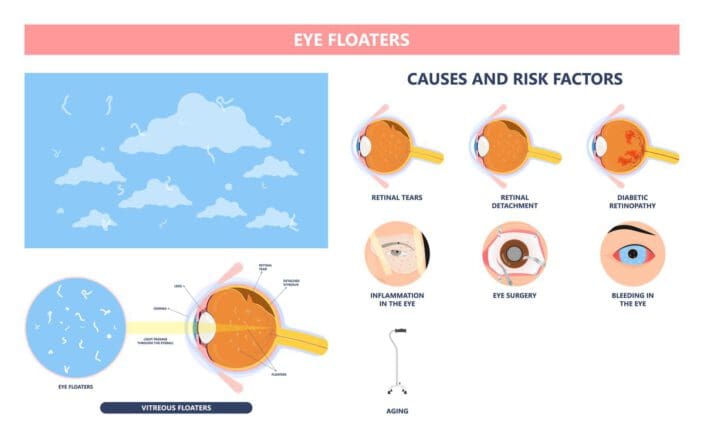
Aging is the primary cause of eye floaters and flashes, and it's something we all have to deal with as we get older. As Dr. John G. Flannery, a renowned ophthalmologist, explains, "The vitreous gel in our eyes starts to shrink and pull away from the retina, causing those pesky floaters and flashes." You're more likely to experience these symptoms if you're over 50, as the vitreous gel tends to liquefy and shrink with age.
Other Potential Culprits
But aging isn't the only cause. Other factors can contribute to eye floaters and flashes, like nearsightedness, cataract surgery, diabetes, and eye injuries. Take Sarah, a 35-year-old nearsighted woman who noticed a sudden increase in floaters after a bout of eye surgery. Her doctor attributed it to the surgery, and sure enough, the symptoms subsided over time.
Diabetes is another major player. Diabetic retinopathy can cause the growth of abnormal blood vessels in the retina, leading to flashes and floaters. "I've seen patients with diabetic retinopathy experience severe floaters and flashes due to bleeding in the vitreous," says Dr. Flannery.
- Family history: If your parents had eye floaters and flashes, you're more likely to experience them too.
- Certain medical conditions: Conditions like hypertension, migraines, and autoimmune disorders can increase your risk.
- Eye trauma: A blow to the eye can cause the vitreous gel to detach from the retina, leading to flashes and floaters.
These risk factors don't guarantee you'll develop eye floaters and flashes, but being aware of them can help you take proactive steps to protect your eye health. And if you're experiencing sudden changes in your vision, don't hesitate to get them checked out – better safe than sorry, right?
When to Seek Medical Attention
You've been noticing those floaters and flashes, and you're wondering if it's time to see a doctor. Here's the thing: most of the time, they're harmless, but sometimes they can be a sign of something more serious.
Red Flags
If you experience any of the following, get to an eye doctor ASAP:
- Sudden increase in floaters or flashes - like someone's turned on a sparkler in your eye
- A shadow or curtain creeping into your peripheral vision - think retinal detachment
- Blurred vision or vision loss - that's not normal, get it checked
- Eye pain or trauma - if you've hit your eye, don't wait, get help
Let's talk about a real example. Sarah, a 45-year-old teacher, noticed a sudden increase in floaters and flashes. She ignored it for weeks, thinking it was just age-related. But when she finally saw an eye doctor, they diagnosed her with a retinal tear. She needed laser treatment, but it could've been a lot worse if she'd waited longer.
The key is to be proactive. If you're experiencing any of these symptoms, don't hesitate. Schedule an appointment with an ophthalmologist, like Dr. Smith at the Eye Care Centre in Mumbai. They'll do a thorough examination, including a dilated eye exam, to figure out what's going on.
You don't want to risk permanent vision loss. Conditions like retinal detachment, diabetic retinopathy, or even a brain tumor can cause these symptoms. It's always better to err on the side of caution when it comes to your eyes.
Bottom line: if you're concerned, get checked. Your eyes are worth it.
Diagnosis and Treatment Options
So, you've noticed those pesky eye floaters and flashes, and you're wondering what's going on. The first step is to get a proper diagnosis. Your eye doctor will likely start with a dilated eye exam, where they'll use special drops to widen your pupils and take a good look at your retina. It's a straightforward process, but it might feel a bit uncomfortable – think of it like getting a quick eye makeover!
What's Next?
If your doctor suspects something more serious, like a retinal detachment or tumor, they might order additional tests. These could include an ultrasound, OCT (Optical Coherence Tomography), or even an MRI. Don't worry, these tests are painless and can provide valuable insights. For instance, a study published in the Journal of Ophthalmology found that ultrasound was able to detect retinal detachment in 95% of cases.
Treatment depends on what's causing your symptoms. If it's just age-related changes, you might not need any treatment at all – just keep an eye on them (pun intended!). However, if there's an underlying condition, treatment could range from laser therapy to surgery. Let's look at a real example: a 55-year-old woman experiencing sudden flashes and floaters was diagnosed with a retinal tear. Her doctor treated her with laser photocoagulation, and she was back to her normal activities in no time.
- A dilated eye exam is usually the first step in diagnosing eye floaters and flashes
- Additional tests like ultrasound or OCT might be needed to rule out underlying conditions
- Treatment options vary depending on the cause, from observation to surgery
Your eye health is important, so don't hesitate to schedule that appointment if you're experiencing symptoms. Early detection can make all the difference.
Living with Eye Floaters and Flashes

You've got floaters and flashes, and you're wondering what's next. Here's the good news: most of them are harmless and will fade over time. It's like your eye's way of saying, "Hey, I've got this, don't worry!" But still, keep an eye on them – literally.
Simple movements can help shift floaters temporarily. Try rolling your eyes or focusing on a different point in the room. It's not a fix, but it can give you some relief. Dr. Vipul Shah, a renowned ophthalmologist, says, "Floaters can be a nuisance, but they're often a sign of a healthy eye. Just make sure to get your eyes checked regularly."
Staying on Top of Eye Health
Regular eye exams are crucial to monitor eye health and detect potential issues early. Schedule check-ups with your eye doctor, especially if you notice any changes or have a family history of eye problems. Conditions like retinal detachment, diabetic retinopathy, and macular degeneration can be caught early with regular exams.
- Get your eyes checked every 6-12 months if you're high-risk or have existing eye issues
- Notice any sudden changes? Don't wait – book an appointment ASAP
- Know your family history and share it with your eye doc
The takeaway? Floaters and flashes might be a part of life, but they don't have to be a big deal. Stay proactive, and keep your eyes healthy. As they say, eyes are the windows to the soul – keep the view clear!












Comments ()