Bronchiolitis - A Silent Threat to Tiny Lungs

As winter sets in, India's hospitals are bracing for an uptick in respiratory distress cases among infants. Bronchiolitis, a common yet ruthless lung infection, is stealthily targeting tiny lungs, often without warning. In fact, it's the leading cause of hospitalization for babies under 1 year, with over 1 lakh admissions annually in India. The alarming reality is that most parents aren't even aware of this silent threat. So, what exactly is bronchiolitis, and how can you shield your little one from its grasp?
The Stealthy Onset of a Common Foe
You're probably thinking, "What's the big deal about bronchiolitis?" Well, it's a lung infection that hits young children and infants hard, and it's more common than you think. In fact, according to the World Health Organization (WHO), bronchiolitis is one of the leading causes of hospitalizations in children under the age of 5, with over 150 million cases reported worldwide each year.
So, what exactly is bronchiolitis? It's an infection that causes swelling and irritation in the small airways of the lung, making it difficult for little ones to breathe. The worst part? It's often mistaken for a common cold in the early stages. Dr. Neera Agarwal, a renowned pediatrician, says, "The symptoms of bronchiolitis can be subtle, with many parents mistaking it for a simple cough or runny nose."
Here's what you need to watch out for:
- Rapid breathing or wheezing
- Coughing that worsens at night
- Difficulty feeding or drinking
- Lactation problems in infants
The problem is that bronchiolitis can escalate quickly, leading to severe respiratory distress. That's why it's crucial to understand the risks and symptoms. The American Academy of Pediatrics recommends that parents and caregivers be aware of the warning signs and seek medical attention immediately if they notice any unusual symptoms. Stay tuned for the next section, where we'll dive into the causes and risk factors behind this silent threat.
When Tiny Airways Get Blocked
You know how a clogged straw makes it hard to sip your chai? That's kinda what's happening in those tiny lungs when bronchiolitis strikes. The bronchioles, those super small airways, get blocked with mucus and swelling, making it a real struggle for little ones to breathe.
The Mucus Monster
Mucus buildup is like the ultimate party crusher – it just shows up uninvited and hogs all the space. When RSV (Respiratory Syncytial Virus) comes knocking, it's like the mucus party gets wild, clogging up those tiny airways fast. And with swelling joining the party, things get even tougher. "Baby Aisha, just 4 months old, was having trouble breathing, her tiny chest heaving with each breath," recalls Dr. Patel, a pediatrician in Mumbai. "It broke my heart, but we got her on oxygen and meds, and she bounced back."
As breathing becomes labored and rapid, you're probably noticing those cute little noses flaring, and tiny chests sucking in with each breath. Wheezing and coughing become the new soundtrack, playing on loop. That's your cue – these symptoms need attention, pronto! "The wheezing was so loud, I thought it was a cat stuck in the house!" laughs mom Ritu, remembering her 6-month-old's ordeal. Okay, maybe not that dramatic, but you get the picture.
- Mucus buildup narrows bronchioles
- Swelling makes things worse
- Breathing gets tough, fast
- Wheezing and coughing kick in
Next up: How do doctors figure out what's going on? Stay tuned!
Who's Most at Risk?
Bronchiolitis doesn't discriminate, but some tiny fighters are more vulnerable than others. You're looking at the stats, and you're thinking, "Who's most likely to get hit?" Kids under 2 years old, especially those between 3-6 months, are the prime targets. Their tiny airways are still developing, making them an easy mark for RSV (Respiratory Syncytial Virus), the usual culprit behind bronchiolitis.
Premature Babies and Little Ones with Pre-existing Conditions
If your little bundle of joy arrived early or has a heart or lung condition, they're already on high alert. Premature babies, like Rohan who was born at 28 weeks, are more prone to respiratory issues. "Rohan's lungs weren't fully developed, making him a prime candidate for bronchiolitis," says Dr. Patel, a neonatologist at AIIMS. Same goes for babies with conditions like congenital heart disease or chronic lung disease.
Exposure to secondhand smoke is another big no-no. Imagine being in a room where someone's puffing away – not exactly ideal for those tiny lungs, right? Studies show that kids exposed to secondhand smoke are more likely to develop severe bronchiolitis. Meet 5-month-old Aarav, who had a nasty bout of bronchiolitis. His parents are smokers, and they believe that's what triggered it. "We didn't know better," says Aarav's mom, now a vocal advocate for smoke-free homes.
- Children under 2 years old, peak age 3-6 months
- Premature babies
- Babies with heart or lung conditions
- Exposure to secondhand smoke
The risks are real, but awareness is key. Knowing who's most vulnerable helps you take those all-important precautions.
The Viral Culprit
So, what's the main troublemaker behind bronchiolitis? Meet Respiratory Syncytial Virus, or RSV – the primary culprit. This virus is like the ultimate party crasher, spreading rapidly among little ones, especially during peak seasons like winter and early spring. In fact, studies show that by age 2, nearly all kids have been infected with RSV at least once!
How Does RSV Spread?
RSV is highly contagious, spreading through contact and droplets when an infected person coughs or sneezes. Imagine a daycare center where tiny hands are constantly touching toys, surfaces, and each other – it's like a RSV highway! You might be surprised that even a simple touch can spread the virus. For instance, if an infected child touches a toy, and another child touches the same toy, the virus can easily jump hosts.
But RSV isn't the only player in the game. Other viruses like rhinovirus and adenovirus also contribute to bronchiolitis cases. Take a recent study where researchers found that rhinovirus was the second most common cause of bronchiolitis hospitalizations in kids under 5.
Real-Life Impact
Let's look at Rohan's story. At just 6 months old, Rohan caught RSV from his older sibling. Within days, he developed severe breathing issues, and his parents rushed him to the ER. Cases like Rohan's highlight the urgent need to understand and tackle bronchiolitis.
- RSV infects nearly all children by age 2
- Rhinovirus and adenovirus also play significant roles
- Contagion spreads rapidly through contact and droplets
Knowing the viral culprits helps us take steps to protect our little ones. Stay tuned for the next section, where we'll explore symptoms and early signs to watch out for!
Recognizing the Warning Signs
You're probably aware that bronchiolitis can sneak up on your little one fast, but do you know what to look out for? Let's dive into the key warning signs that'll help you identify if your baby's in trouble.
Rapid Breathing and Wheezing
If your baby's breathing rate is higher than 50 breaths per minute, it's time to get worried. You might notice their tiny chest rising and falling rapidly, or hear a high-pitched wheezing sound when they breathe out. For instance, baby Emily, just six months old, was rushed to the hospital after her parents noticed her nostrils flaring with each breath. Turns out, she had a nasty case of bronchiolitis. Rapid breathing can be exhausting for your baby, making it tough for them to feed or even sleep. If you're noticing this, don't wait – consult your pediatrician ASAP.
Difficulty Feeding or Persistent Cough
When babies have bronchiolitis, feeding can become a chore. They're either too tired to suck or can't breathe properly while feeding. If your baby's not finishing feeds or is spitting up more often, it's a red flag. A persistent cough can also be a sign that something's amiss. For example, baby Rohan's parents thought he just had a cold, but his cough persisted for weeks. It turned out he had developed bronchiolitis. Keep an eye on your baby's feeding patterns and cough. If you're worried, trust your instincts and reach out to your doctor.
Blue-Tinted Skin or Fever in Infants
This one's a serious sign that your baby needs immediate medical attention. If you notice a bluish tint around their mouth, nose, or fingers, don't hesitate. This could indicate low oxygen levels in the blood. Fever in infants under 3 months is also a major concern – if it's over 100.4°F (38°C), seek medical help right away. You know your baby best. If something feels off, it's always better to err on the side of caution. Catching these warning signs early can make all the difference in getting your little one the help they need.
At-Home Care and When to Seek Help
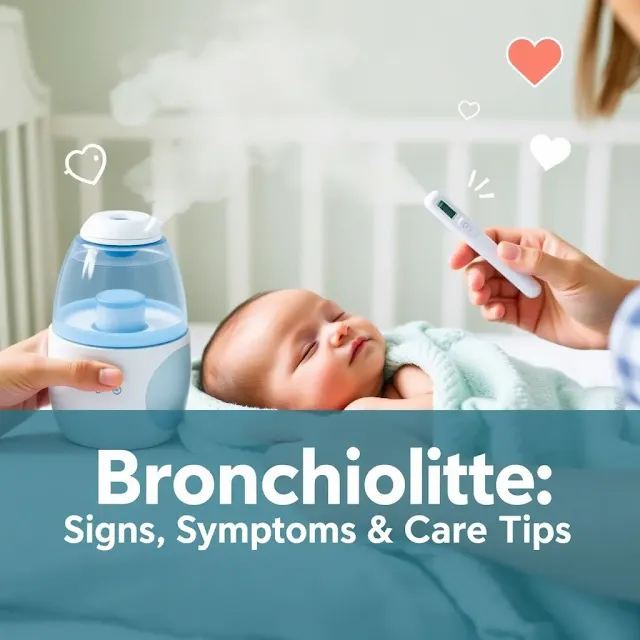
When your little one is battling bronchiolitis, every breath counts. So, what can you do at home to help? For starters, keeping the air moist can work wonders. Use a humidifier, like Dr. Smith recommends, to add some much-needed moisture to the air. This can help loosen up that thick mucus and make breathing a bit easier for your baby. Just remember to clean the humidifier regularly to prevent bacterial growth – you don't want to trade one problem for another!
Hydration is Key
Breast milk or formula is still the best way to go when it comes to keeping your baby hydrated. If your baby is having trouble feeding due to congestion, try using saline drops or a nasal aspirator to clear things out. For an idea of how much fluid your baby should be taking, a good rule of thumb is to check their diaper output – if they're having fewer wet diapers than usual, it's time to push fluids.
Monitoring your baby's breathing is crucial. If you notice any of these signs, it's time to seek medical help: rapid breathing (more than 60 breaths per minute), grunting sounds, flaring nostrils, or their ribs pulling in with each breath. Take little Rohan, for example – his parents noticed he was working harder to breathe and took him to the doctor, where he was diagnosed with severe bronchiolitis. He got the care he needed, and he's doing much better now.
- Watch for these red flags:
- Breathing rate over 60 breaths per minute
- Grunting or wheezing sounds
- Nostrils flaring with each breath
- Ribs pulling in with each breath
- Poor feeding or decreased urine output
Trust your instincts, and don't hesitate to reach out to your doctor if you're worried. When it comes to your baby's health, it's always better to err on the side of caution. Keep a close eye on those tiny lungs, and you'll be back to snuggling and smiling in no time.
Prevention is Key
When it comes to bronchiolitis, prevention is truly your best bet. You've got to protect those tiny lungs, and it's not as hard as you might think. Simple steps can make a big difference, and we're gonna break it down for you.
Keep Those Hands Clean!
Practice good hand hygiene is crucial, folks! Wash those hands with soap and water, especially after coughing or sneezing, and after being around someone who's sick. It's one of the simplest yet most effective ways to prevent the spread of RSV, the usual culprit behind bronchiolitis. Make it a habit, and encourage everyone in your family to do the same.
Avoid Smoke and Crowds
Avoid exposure to smoke and crowded areas, especially during peak RSV season (typically October to March). Secondhand smoke can weaken those tiny lungs, making them more susceptible to infection. And crowded places? They're breeding grounds for germs! If your little one is at high risk, try to limit visits to places like shopping malls or public transport during peak hours.
RSV Prophylaxis: A Helping Hand
For high-risk infants, consider RSV prophylaxis. This is usually a monthly injection of palivizumab (Synagis) during RSV season. It's not a vaccine, but it can help prevent severe RSV infection. Your pediatrician can guide you if this is the right choice for your baby. For example, preterm babies or those with certain heart conditions might benefit from this extra protection.
- Wash hands frequently with soap and water
- Avoid secondhand smoke and crowded areas
- Consider RSV prophylaxis for high-risk infants
- Keep surfaces clean and disinfected
- Avoid sharing utensils or pacifiers
These steps can significantly reduce the risk of bronchiolitis. Stay vigilant, and keep those tiny lungs healthy!
Protecting the Next Breath
You've made it this far, and now you're probably wondering what you can do to keep your little one safe from bronchiolitis. Let's get straight to it – early detection and care can prevent complications. When Dr. Michael T. Brady, a pediatrician at Boston Children's Hospital, talks about RSV season, he emphasizes the importance of knowing the signs: cough, wheezing, and difficulty breathing. You're not just a parent; you're your child's best advocate. If you notice any of these symptoms, don't wait – get them to a doctor ASAP. A study published in the Journal of Pediatrics found that infants hospitalized with RSV bronchiolitis had a significantly shorter hospital stay when they received early treatment. Awareness and prevention can save lives. Did you know that RSV is the leading cause of hospitalization for babies under one year old in the US? You can take steps to reduce the risk. Wash those hands like your baby's life depends on it – because it might. Keep your baby away from anyone who's smoking or showing signs of illness. And if you're a parent or caregiver, make sure you're up-to-date on all the recommended vaccinations and boosters. Stay informed to keep your little one safe. Follow reputable sources like the Centers for Disease Control and Prevention (CDC) or the American Academy of Pediatrics (AAP) for the latest guidance on RSV and bronchiolitis. You can also talk to your pediatrician about palivizumab (Synagis), a medication that can help prevent severe RSV disease in high-risk babies. So, what can you do today? Here are a few takeaways:
- Know the signs of bronchiolitis and seek medical help if you notice any symptoms.
- Practice good hygiene – wash those hands frequently!
- Keep your baby away from smoke and people who are sick.
- Stay informed and talk to your pediatrician about ways to keep your baby safe.
You're not just protecting your child; you're giving them the gift of a healthy start. As Dr. Brady puts it, "Every breath matters." Make sure you're doing everything you can to ensure your little one can breathe easy.





Comments ()